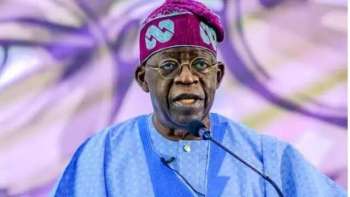
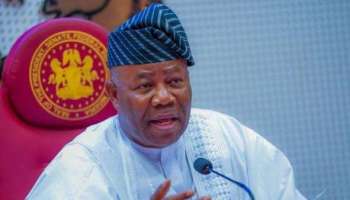
As millions of Nigerians struggle with soaring living costs, unemployment and deepening economic pressures, the reported distribution of seven brand-new 2026 Toyota Land Cruiser Prado SUVs to APC youth leaders has ignited a fierce debate over political priorities, campaign spending and the meaning of youth empowerment.
Seven luxury SUVs. An estimated ₦1.12 billion. And a country where millions of citizens are struggling to make ends meet.
That is the striking contrast confronting Nigerians following the announcement by Dayo Israel, the All Progressives Congress (APC) National Youth Leader, that he had presented brand-new 2026 Toyota Land Cruiser Prado SUVs to selected youth leaders to support election mobilisation ahead of the 2027 general elections.
The announcement, made on X, immediately raised questions about the scale of the expenditure, the source of the funding and the message the ruling party is sending to young Nigerians at a time of widespread economic anxiety.
Israel expressed gratitude to First Lady Oluremi Tinubu for her continued support for the party’s youth structure.
“Today, I presented a brand new 2026 Prado to my committed selected youth leaders to aid their election mobilisation activities,” he wrote.
He also declared that the APC would demonstrate its political strength during the coming election season, promising to deliver “polling unit by polling unit”.
The message was unmistakable: the party is gearing up for 2027, and its mobilisation machinery is already being assembled.
But beyond the political symbolism and the gleaming new vehicles lies a more uncomfortable question: what does a billion-naira fleet of luxury SUVs say about political priorities in a country where many young people are struggling to secure jobs, finance businesses or afford basic necessities?
Seven SUVs, more than ₦1 billion
The figures are staggering.
According to prices listed on the Nigerian website of Toyota's authorised distributor, CFAO Mobility, the 2.4-litre turbo-petrol Adventure version of the Land Cruiser Prado costs approximately ₦160 million, while the Premium version is listed at ₦190 million.
At the Adventure price, seven vehicles would cost about ₦1.12 billion.
At the Premium price, the bill would rise to approximately ₦1.33 billion.
These are estimates based on advertised retail prices, not confirmed figures for the vehicles presented by Israel. Their exact specifications and actual purchase costs have not been independently established.
Nevertheless, the estimates provide a sense of the financial scale involved.
Using a reported Central Bank of Nigeria exchange rate of ₦1,329.51 to the dollar on September 25, 2026, the estimated ₦1.12 billion translates to roughly $842,000.
At the Premium price, the seven vehicles would be worth approximately $1 million.
The figures are estimates, not proof of the amount actually spent. And the announcement does not establish who paid for the vehicles, whether they were purchased by the party, donated privately or financed through another arrangement.
That distinction is important.
There is currently no established evidence in the announcement that public funds were used to acquire the SUVs. Nor does the statement provide enough information to determine the identity of the funder or the precise financial arrangements behind the presentation.
Yet the absence of those details makes transparency even more important.
Who financed the vehicles? Were they purchased outright or donated? What criteria determined which youth leaders received them? And what mechanisms will ensure that the vehicles are used for the stated purpose of election mobilisation?
These are legitimate questions about a high-value political expenditure, particularly when the recipients belong to the youth structure of the party controlling the federal government.
Election mobilisation or a display of political privilege?
Political parties need resources to organise campaigns. Vehicles can help officials travel, coordinate volunteers, attend meetings and reach communities that might otherwise be difficult to access.
Providing transport to campaign officials is not, in itself, evidence of wrongdoing.
The controversy lies in the scale of the reported investment and the broader economic circumstances in which it has occurred.
For many young Nigerians, the struggle is not about choosing between a luxury SUV and another premium vehicle. It is about finding a job, paying rent, securing affordable transportation, raising business capital or keeping a small enterprise alive amid rising costs.
Against that backdrop, seven high-value SUVs intended for political mobilisation inevitably invite questions about whose needs receive priority and what the ruling party considers an effective investment in young people.
The APC's youth leadership operates within the political organisation supporting President Bola Tinubu's administration. Its activities therefore attract scrutiny beyond ordinary party logistics, especially when they are presented as part of preparations for another presidential election.
The question is not whether campaign officials deserve transportation.
It is whether the scale of political spending is matched by a comparable commitment to expanding economic opportunities for the millions of young Nigerians whose support political parties seek.
What else could ₦1.12 billion achieve?
Consider the alternatives.
At an estimated cost of ₦1.12 billion, the money represented by the seven vehicles could equal:
- 11,200 grants of ₦100,000 for aspiring entrepreneurs.
- 1,120 grants of ₦1 million for small businesses requiring greater start-up capital.
- 16,000 monthly wage payments of ₦70,000, using Nigeria's national minimum wage as a benchmark.
These are illustrative comparisons, not claims that distributing money alone would solve unemployment or guarantee sustainable businesses. Effective empowerment programmes require careful beneficiary selection, training, oversight, access to markets and mechanisms to prevent waste.
But the comparisons expose the opportunity cost of expensive political investments.
A young graduate searching endlessly for employment might see a different kind of hope in a credible job-creation programme. A trader struggling to expand a business might benefit from affordable credit. A skilled young person with a viable business idea might need equipment and training more than another political rally.
The seven Prados may improve the mobility of their recipients. They do not, by themselves, create jobs, lower food prices, expand vocational training or provide affordable credit to young people outside the party's political network.
Those challenges require action from government, financial institutions, employers and other stakeholders.
But for a ruling party seeking another mandate, the contrast between the resources devoted to election mobilisation and the economic difficulties facing ordinary citizens is difficult to ignore.
Opposition voices question APC's priorities
The announcement has drawn criticism from political opponents, who argue that the reported expenditure highlights a disconnect between the ruling party's political preparations and the hardship confronting Nigerians.
An African Democratic Congress (ADC) chieftain, Samuel Ede, said the development raised serious questions about the party's priorities.
“At a time when millions of Nigerians are battling hunger, unemployment and rising living costs, the APC is preparing for 2027 with seven luxury SUVs worth an estimated ₦1.12 billion. This raises serious questions about the party’s priorities. Nigerian youths need jobs, opportunities and economic relief, not just political mobilisation ahead of elections,” he said.
Political analyst Sunday Tukur also questioned what the vehicles would achieve beyond their stated electoral purpose.
“The question Nigerians should be asking is what seven Prados worth an estimated ₦1.12 billion will achieve beyond electoral mobilisation. That amount could support meaningful youth empowerment initiatives if properly invested. Political parties have a right to organise for elections, but the contrast between luxury campaign spending and the economic hardship facing ordinary Nigerians deserves serious scrutiny,” he said.
Their comments reflect a wider debate over whether political parties should be judged solely by their ability to build campaign structures or also by the economic vision they offer citizens.
The APC could argue that an effective mobilisation network is essential to electoral competition. Critics, however, contend that the scale of the reported expenditure deserves explanation in a country where economic insecurity remains a central public concern.
Neither argument eliminates the need for transparency about the vehicles' funding and intended use.
Economic hardship meets political extravagance
The controversy has unfolded against a difficult economic backdrop.
A Reuters report published in August 2026 highlighted continuing cost-of-living pressures in Nigeria despite signs of improving investor confidence. The report cited World Bank estimates indicating that more than half of Nigerians lived in poverty in 2025, compared with approximately 42 per cent in 2022.
Those figures provide important context for understanding why the announcement has attracted such strong reactions.
For households struggling with food bills, transport fares, rent and other essentials, the image of brand-new luxury SUVs being distributed for political activities can become a symbol of the distance between the political establishment and everyday economic realities.
The vehicles are not proof that government funds were misused. But the announcement has reopened a difficult debate about the relationship between political power, wealth and the expectations placed on leaders during a period of economic strain.
And because the vehicles are intended to support election mobilisation, the timing makes the questions even more pointed.
As the 2027 campaign season approaches, political parties will be seeking votes, loyalty and public confidence. Their spending decisions will inevitably become part of the wider conversation about what they prioritise and how they intend to govern.
Nigerians react: “What is this?”
On X, the announcement triggered a wave of criticism, with some users drawing sharp comparisons between the luxury vehicles and the financial difficulties confronting ordinary Nigerians.
Political commentator Kayode Ogundamisi questioned the symbolism of the presentation, arguing that it reflected a widening disconnect between the ruling party's political elite and citizens enduring economic hardship.
He wrote:
“For context, @dayoisrael is the youth leader of Nigeria’s ruling APC, the same party whose president, Tinubu, is asking Nigerians to endure more suffering.
“When a party’s youth leader can donate multiple Prados to party loyalists, you begin to understand why more Nigerians are turning against Tinubu and the APC.”
Ogundamisi also questioned the broader culture of political gift-giving and the display of wealth by influential figures associated with the ruling establishment.
Other reactions were more confrontational, with critics accusing the party of prioritising electoral machinery over the needs of struggling citizens.
One X user questioned the contrast between calls for ordinary Nigerians to engage in small-scale economic activities and the distribution of luxury vehicles to political operatives.
The user wrote:
“These are the issues. Remi Tinubu asked our mothers and us to go and be frying Ankara, roasted corn and kulikuli, but APC National Youth Leader, Dayo Israel, presented a brand-new 2026 Prado SUV to APC youth leaders for election mobilisation activities.”
Another user expressed disbelief over the announcement, writing:
“You’re a disgrace, Dayo Israel. For one moment, I thought these were ambulances for FMC, Abeokuta. What is this?”
Other comments contained partisan accusations and calls for political change ahead of 2027. Such statements reflect the views of individual users and should not be treated as evidence of wrongdoing or as a measure of nationwide public opinion.
Still, the intensity of the reactions illustrates how quickly a political spending announcement can become a wider debate about economic hardship, fairness and accountability.
The questions APC must answer
For all the anger and political rhetoric surrounding the presentation, the central issues remain straightforward.
The public deserves clarity about the source of funding, the actual purchase price, the specifications of the vehicles and the conditions attached to their use.
The APC should also explain how the distribution fits into its broader youth engagement strategy and what measurable benefits its political activities are expected to deliver.
If the vehicles were privately funded, transparent disclosure could help clarify that point. If they were purchased with party resources, the party could explain the expenditure in the context of its campaign budget.
And if the presentation is being promoted as an example of support for young people, the party should be prepared to explain how that support extends beyond the selected recipients to the much larger population of young Nigerians outside its political structure.
These questions do not presume that the expenditure was unlawful. They recognise that large political expenditures, especially those publicly associated with election mobilisation, deserve scrutiny.
Seven Prados cannot answer the bigger question
Ultimately, the controversy is about more than seven vehicles.
It is about the kind of political priorities Nigerians see as the country moves towards another general election.
For the APC, the Prados may represent a practical investment in campaign organisation, intended to strengthen its presence across polling units and improve coordination among youth leaders.
For critics, the estimated ₦1.12 billion cost represents a troubling contrast between the resources available to political operatives and the challenges confronting young people who need jobs, affordable credit, skills and economic opportunities.
Both the stated purpose of the vehicles and the questions raised by their distribution deserve to be examined on the available evidence.
The critical issue is whether political mobilisation is accompanied by a credible commitment to improving the lives of the citizens whose votes political parties seek.
As 2027 approaches, Nigerians will be weighing campaign promises against economic realities, political displays against policy outcomes, and declarations of youth empowerment against the opportunities actually available to young people.
Seven luxury SUVs can transport party officials across the country. They can support meetings, campaigns and electoral coordination.
But they cannot, on their own, answer the questions of an unemployed graduate, finance a struggling entrepreneur or relieve a household burdened by rising living costs.
The APC has signalled its readiness to mobilise for 2027. The bigger test is whether its vision for young Nigerians extends beyond the campaign trail—and whether it can demonstrate, with measurable results, how its promises translate into better lives for the people it hopes to represent.