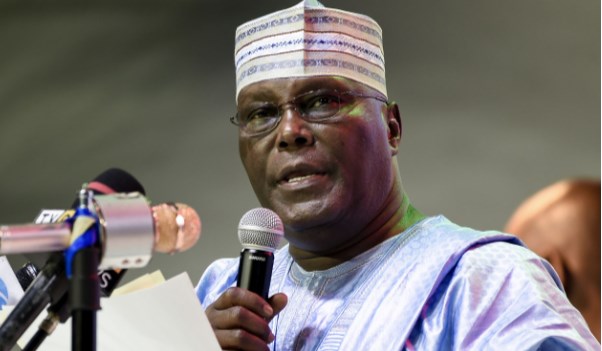


Former Vice President and African Democratic Congress (ADC) presidential candidate, Atiku Abubakar, has launched a blistering attack on the Federal Government’s proposed 30-day petrol discount, describing the measure as a panic-driven publicity stunt and a desperate political response to Nigeria’s worsening economic hardship.
Atiku’s reaction followed the Federal Government’s announcement of a temporary discount on petrol sold through Nigerian National Petroleum Company Limited (NNPCL) stations.
The government says the initiative is designed to cushion the impact of soaring fuel prices and stabilise pump prices. Finance Minister and Coordinating Minister of the Economy, Taiwo Oyedele, said the arrangement was not a subsidy, but an intervention that would allow petrol to be sold at cost for an initial 30 days.
But Atiku dismissed the move as too little, too late.
In a statement issued by Phrank Shaibu, Director of Strategic Communication of the ADC Presidential Campaign Council, Atiku accused the Tinubu administration of trying to manufacture temporary relief after years of rising fuel prices, transport costs and food inflation.
He described the intervention as a “calendar-scheduled, election-laced subsidy package”, arguing that Nigerians cannot be handed one month of cheaper petrol and expected to forget years of economic pain.
“Nigerians are not fools to be offered a month of discounted fuel after years of punishing prices and then expected to forget the hardship when the discount expires.”
Atiku said the government’s move was “not an economic plan but a political bandage on a wound the government had helped create.”
He challenged the administration to explain what happens when the 30-day window closes.
“What happens on Day 31?” he asked.
According to Atiku, Nigerians could simply wake up to the same crushing petrol prices, soaring transport fares and rising food costs once the temporary intervention expires.
He also questioned the reach and effectiveness of the policy, noting that the discount is restricted to NNPCL stations. He demanded clarity on how much motorists would actually save per litre and whether transport operators would pass any savings to passengers through reduced fares.
Atiku further argued that the government’s decision represents an implicit acknowledgment that the hardship facing Nigerians has become too severe to ignore.
He said the administration’s latest move also vindicates his earlier proposal for capped and budgeted production support tied to petrol refined in Nigeria, with safeguards designed to ensure that consumers benefit while domestic refining is strengthened.
“What was dismissed as impossible is now being attempted in another form because the pain has become impossible to ignore,” Atiku said.
He accused the government and its supporters of spending years telling Nigerians to endure economic hardship, only to now unveil a short-term measure as pressure mounts.
“Nigerians need lasting relief, not a countdown to the return of hardship,” he said.
For Atiku, the real test is not whether Nigerians get cheaper petrol for 30 days. The real question is what happens on Day 31.
Tinubu’s 30-Day Fuel Discount Is a Political Bandage, Not Relief — Atiku