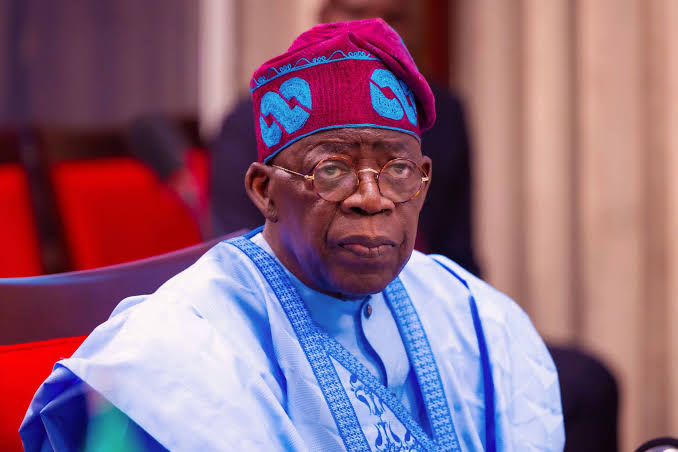


President Bola Tinubu’s promise of cheaper transportation powered by Compressed Natural Gas has hit a major roadblock, with commuters across several states entering October still paying the same fares — and, in some cases, more.
Despite the President’s directive that Nigerians should begin to feel the impact of cheaper CNG-powered transportation from October 1, checks across the country showed that the much-anticipated fare reductions remained largely out of reach for millions of passengers.
From Anambra to Ogun, commercial transport operators continued to charge existing fares, blaming soaring petrol prices, expensive spare parts, poor roads and inadequate CNG infrastructure.
In several states, transport unions said they had yet to receive CNG buses. In others, buses were available but operated on only a handful of routes, leaving the majority of commuters dependent on conventional petrol-powered vehicles.
The result: **October 1 arrived, but for many Nigerians, cheaper transportation did not.**
President Tinubu had on September 19 called on state governments to ensure that savings from the switch to cheaper energy were passed directly to commuters through reduced fares.
The President, while giving an update on the National Affordable CNG Transit Programme, said the Federal Government and the 36 state governors had agreed that Nigerians should begin experiencing “measurable reductions in transportation costs” from October 1.
He urged governors to work with transport unions and commercial operators, support vehicle conversion and accelerate the deployment of alternative-fuel buses.
“Above all, ensure that savings from cheaper energy reach Nigerian citizens through lower fares,” Tinubu said.
But findings across the states suggest that the President’s call has yet to translate into a nationwide reduction in what passengers pay at motor parks.
Government: October 1 Was Not a Nationwide Cut-Off
The Chairman of the Presidential Initiative on Compressed Natural Gas and Electric Vehicles, Ismaeel Ahmed, pushed back against the impression that every state was expected to slash fares simultaneously on October 1.
According to him, the date marked the beginning of federal monitoring of fare reductions on routes where CNG and electric vehicles were already being deployed.
Ahmed said some states had already recorded reductions, citing Abuja, Kaduna, Borno, Zamfara and Ebonyi as examples.
He said CNG buses had been operating on several Abuja routes, while Lagos had received 20 CNG buses for deployment by the Lagos Metropolitan Area Transport Authority.
Kaduna, he added, had recorded significant savings after adopting CNG buses, while Zamfara had launched 100 electric taxis.
In Ebonyi, government buses were reportedly providing free transportation to civil servants and students.
Borno was another example highlighted by Ahmed, with electric vehicles reportedly charging about N15 on some routes where conventional fares could range from N200 to N500.
But Ahmed acknowledged that the programme had not yet reached every part of the country.
“It is not everywhere yet but it is a beginning,” he said, adding that the Federal Government would continue working to expand the scheme.
Anambra: Fares Hold Firm as CNG Remains Elusive
In Anambra, commuters saw little evidence of the promised October 1 relief.
Passengers continued paying about N700 from Upper Iweka to Oba, while the fare from Awka to Onitsha remained around N2,000.
Some commercial drivers said they had not seen the Federal Government’s CNG buses, while reports indicated that gas stations in the state were not operating adequately.
Transport operator Uche Daniel blamed the situation on the cost of spare parts, poor roads and the disruption caused by the closure of the First Niger Bridge.
According to him, poor road conditions were forcing motorists to take longer routes, increasing fuel consumption, vehicle wear and maintenance costs.
For operators already struggling with those expenses, he argued, simply introducing CNG buses would not immediately solve the problem.
Delta: “They Have Not Given Us Any Buses”
In Delta State, the situation was equally stark.
Only five CNG-branded buses were observed parked at the Commissioner for Transport’s lodge in Asaba, while transport operators said they had not received buses for commercial deployment.
Emeka Okoro, Chairman of the NURTW Summit Motor Park in Asaba, said the union had not reduced its fares.
“They have not given us any buses, and we have not reduced transport fare,” he said.
His explanation was blunt: operators could not cut fares while they continued buying expensive petrol.
Imo: N9,000 Journey, No Sign of CNG Relief
In Imo State, passengers continued to face steep fares.
A journey from Owerri to Akokwa was reported at N4,500, while Owerri to Awka could cost as much as N9,000.
Drivers said they had yet to see CNG buses in operation.
One driver complained that fares on some routes had increased by as much as 50 per cent, arguing that the Federal Government should focus on reducing petrol prices.
Another operator pointed to a fundamental problem with the CNG strategy: much of Imo’s transport system is controlled by private bus owners.
For such operators, he said, the question was not simply whether CNG existed, but how vehicles would be converted, financed and integrated into the private transport system.
North-West: Cheaper Transport Still a Distant Promise
In Sokoto and Kebbi, fares also remained largely unchanged.
Passengers travelling from Sokoto to Kebbi continued to pay between N5,000 and N6,000, while journeys to Kano or Kaduna were reported at around N20,000 on commercial vehicles.
In Kebbi, the fare to Sokoto remained about N5,000 on commercial buses.
State-owned vehicles offered some relief, charging about N3,500 for the same journey, but their limited coverage meant most passengers still depended on private operators.
In Jigawa, passengers at Dutse Central and Shuwarin motor parks said there had been no reduction.
A passenger travelling to Kano said he was still paying N3,500 — exactly what he paid before October 1.
The fare to Hadejia also remained around N5,000.
Yet the state’s NARTO chairman, Bello Usman Dunaro, said the CNG programme was already making progress, revealing that about 100 vehicles had been converted with government support.
He said the objective was to reduce fares but acknowledged that the process was still ongoing.
Gombe: Passengers Wait for the Savings
In Gombe, commuters similarly reported no significant reduction.
Passengers travelling to Abuja and Kaduna said fares remained unchanged.
The Managing Director of the Gombe State Transport Service, Dr Sani Sabo, said the agency was exploring alternative measures to prevent further increases and was working towards converting some buses to CNG.
For passengers, however, the promised savings remained largely theoretical.
Edo: CNG Buses Coming, But Not Yet Cheap
Benin commuters continued paying between N200 and N300 for short trips, while longer journeys ranged from N500 to N600.
Even some vehicles already converted to CNG had not reduced their fares.
Transport officials cited the high cost of spare parts and the shortage of gas infrastructure, saying some drivers had to spend hours — and sometimes days — waiting to refill.
The Edo State Government said it planned to launch more than 50 52-seater CNG buses later in October.
The government argued that once passengers had access to cheaper CNG alternatives, commercial operators would face pressure to lower their own fares.
For commuters, that reduction was still a promise rather than a reality.
Enugu Shows What CNG Can Do — and Its Limits
Enugu offered one of the clearest examples of both the potential and limitations of the programme.
Government-operated CNG buses charged a flat N300 on routes where conventional commercial buses could charge N600.
That represents a significant saving for passengers who can actually access the buses.
But there was a catch.
The CNG buses operated mainly on major routes and during morning and evening periods. Outside those corridors and hours, commuters were forced back onto conventional commercial buses.
The state had previously rolled out 100 CNG mass-transit buses from an intended 200, but it remained unclear whether the remaining buses had been procured.
For many passengers, therefore, the cheaper fare existed — but only within a narrow window.
Kaduna: Free Buses, But Only Where They Run
Kaduna presented perhaps the most extensive government intervention among the states surveyed.
The state operated 100 CNG buses across eight routes, with about 200 bus stops.
The government said the buses carried approximately 3.2 million passengers during their first year and saved commuters more than N3.5bn.
The state described the service as free CNG-powered mass transit.
But outside the designated network, commuters still faced conventional fares.
A trip from Kawo to Kasuwa, for example, was reported at about N500 on commercial vehicles, while Kasuwa to Sabon Tasha also cost around N500.
The lesson was clear: **where the CNG buses ran, commuters could benefit; where they did not, the old fares remained.**
Plateau: Subsidised, But CNG Infrastructure Missing
In Plateau State, commercial fares in Jos remained unchanged.
CNG buses were not yet operating, although government-supported metro buses charged N200.
The state said its subsidised buses transported around 13,000 passengers daily at N200, compared with commercial fares above N500.
But the state acknowledged a major obstacle: the absence of a CNG refuelling station.
Authorities said they were working with the National Institute of Transport Technology in Zaria to establish a CNG and hybrid vehicle conversion centre in Jos.
Until then, the transition remained constrained by infrastructure.
Ondo, Osun: Waiting for the Buses
Ondo commuters also reported no significant fare reduction.
No CNG buses were observed operating across the state, while transport officials said work was underway on conversion centres and additional gas outlets.
In Osun, fares also remained unchanged.
The state Commissioner for Information and Public Enlightenment, Kolapo Alimi, said Osun was still waiting for CNG buses promised by the Federal Government.
He said the state’s financial constraints had made it difficult to immediately introduce its own subsidised transport scheme.
Oyo: October 1 Arrives, Fares Stay Put
In Oyo State, fares across major Ibadan routes remained at levels introduced after the increase in petrol prices.
Ojoo to Mokola remained N600, up from N500 before the latest petrol price increase.
Ojoo to Iwo Road remained between N400 and N500.
Passengers said they saw no immediate change.
For many, October 1 looked no different from September 30.
Ogun: Same Fare, Different Fuel
In Ogun State, a particularly striking situation emerged.
A trip from Kuto to Ijebu Ode remained around N3,500, regardless of whether the vehicle was powered by CNG or petrol.
Kuto to Ita Oshin cost between N600 and N700, while Kuto to Sagamu was N2,000 or more.
Drivers blamed petrol prices, maintenance costs and the broader increase in living expenses.
The state government said it would announce its response to the Federal Government’s directive in the days ahead.
The Roadblock: From Promise to the Passenger
The CNG programme was designed to address one of Nigeria’s most painful economic pressures: the cost of getting from one place to another.
But the findings across the states reveal a complicated reality.
A cheaper fuel source does not automatically produce a cheaper bus fare.
For that to happen, CNG vehicles must reach operators, conversion facilities must be available, gas must be accessible, roads must support efficient routes, and the savings must actually be passed on to passengers.
In some states, that chain is already beginning to work.
In many others, one or more links are missing.
That is why, as October 1 arrived, two very different transportation realities existed side by side.
There were commuters riding free or heavily subsidised CNG and electric buses.
And there were millions more standing at motor parks, paying the same old fares — or higher ones — waiting for the promised relief to reach their routes.
For the Federal Government, October 1 may mark the beginning of monitoring.
For commuters struggling with the cost of daily transportation, however, **the real deadline is much simpler: the day the fare at the bus park finally comes down.
CNG Promise, Same Old Fares: Tinubu’s October 1 Directive Falls Flat Across States