













The All Progressives Congress (APC) on Thursday held its primaries to select candidates for the 2015 governorship election across the country with some states recording violence, anger and boycott.
In some of the states where the governors on the platform of the party are serving their first terms, such governors were mostly unanimously endorsed by the party for another term in office.
For example, in Kwara State, Governor Abdulfatah Ahmed, who was part of the governors that moved from the Peoples Democratic Party to the All Progressives Congress, won as the sole candidate for the election after recording a total of 3,016 votes at the exercise held inside the main bowl of the Kwara State Stadium, Ilorin.
The governor got all the votes from delegates from the 16 local government areas of the state according to the leader of the national delegation of APC, Prince Azu Uwandu, who gave the figure of those that votes as 3,016 with nine of the nine votes declared invalid.
The election was peaceful and devoid of any rancour and Governor Ahmed commended the delegates for participating in the election, adding that it shows that the government had been successful with its developmental programmes for the state.
He used the opportunity to reel out more programmes for the people including youth empowerment and job creation.
Senator Bulola Saraki also thanked the delegates for their peaceful conduct, promising that the party would not let them down. He also urged the delegates to continue to support the party through the 2015.
Aspirants Boycott Election in Taraba
In Taraba State, three aspirants for the governorship ticket on the platform of the APC boycotted the primaries, citing lack of transparency and irregularities in the process leading to the exercise as their excuse.
The three aspirants who boycotted the exercise include Dr. Muhammad Julde, Alhaji M T Tumba and Barr. Yusufu Akirikwen.
Though they were earlier cleared for the exercise, they had petitioned the APC Primaries Committee in the state, accusing the committee of partisanship in the process instead of being neutral.
They copied the resident commissioner of Independent National Electoral Commission (INEC), the state Commissioner of Police, the state Director of SSS, the national and zonal chairmen of the party claiming that they had the knowledge that the committee was not transparent.
"We committed ourselves in various ways to see that we participate as democrats in the primaries. We further in pursuit of this purpose applied for all the information necessary for our successful participation in the process of the primaries," the petitioners said.
"It is true that we asked for the list of delegates accredited by the party for the exercise of electing a sole candidate from all the aspirants but this request has not been honored by you the primaries committee.
"Up to this moment even though you are eager to go ahead with the process of the primaries regardless of the fact that our request has been denied.
"Take note that we are ready and also prefer to opt out of the primaries as our request as aforementioned has not been met by your committee."
In his reaction, the state chairman of the party, Hasan Jika Ardo, said there were no grievances and that none of the aspirants complained to him prior to the election.
Violence in Benue
The chairman of the party in Benue State, Mr. Abba Yaro, turned the supposed peaceful exercise into a war situation as he terrorised and beat up aspirants and elections committee members both by himself and the thugs that followed him to the party secretariat, according to sources who spoke with Huhuonline.com.
Though it was difficult to know what actually caused the trouble, the chairman, according to some of the party members at the secretariat, stormed out of his party immediately the election materials were brought into the secretariat by a Toyota van.
One of the aspirant confirmed that as the chairman shouted and cursed till he got to the van, he started tearing into shreds the ballot papers and shouting at everyone present to leave the premises.
A female committee member who dared confront him was beaten to a pulp by the thugs loyal to the chairman while another aspirant for the House of Assembly was beaten up for recording the incident with his phone.
The police however intervened and shot severally to scare the thugs and all those engaged in the free-for-all that ensued, but at this stage, many of the election materials had been stolen.
Angry Senator Abbey Boycotts Primary in Rivers
Angered by the development in the APC in Rivers State, one of the aspirants for the governorship election on the party's platform, Senator Magnus Abe, refused to turn up for the primaries thus leaving Dakuku Peterside, another aspirant to have a field day.
Peterside had been endorsed weeks ago by the party ahead of Abe and the party's Publicity Secretary in the state was quoted as saying that Peterside was endorsed by the party because of his integrity.
This had angered Abe, who claimed the statement had endangered his good name as it could be an indirect way of saying he lacked integrity and was not qualified for the position. Abe had demanded a public apology over the statement.
Chairman of the election panel, Prince Austin Eweka, declared Peterside winner of the primaries saying that though 3,914 delegates voted, 3773 of the votes were valid while 140 votes were voided.
Prince Austin Eweka said the earlier endorsement of Peterside had made the committee's job very easy confirming that the exercise was peaceful.
"What you have done in the state is a new dimension in our political history. It has brought peace, and harmony among party members. In some states there are about thirteen aspirants for the governorship primaries. Those of us from Abuja are so happy that the governor has taken the party to another level."
In his reaction to the exercise, Governor Rotimi Amaechi said Abe was eminently qualified to contest but that the party endorsed Peterside to ensure equity.
"Senator Magnus Abe is eminently qualified to be our governor. He is a very intelligent man; there are two Nigerians I respect for their intelligence, Senator Magnus Abe and Odein Ajumogobia. I told Magnus that he is eminently qualified to be governor in the same manner I told them that my Deputy, Engr Tele Ikuru is eminently qualified.
"The caucus decided we should present Hon Dakuku Peterside. It does not mean that he is more qualified than others. But somebody has to carry our flag.
"The choice of Dakuku is for the purpose of equity. Equity as it stands in Rivers state demands that it should go to the South-East and he has emerged the consensus candidate of APC in the forth coming election. By the grace of God, very soon I will be walking behind him as he becomes the governor of the state," Amaechi said.
He also said lawmakers loyal to his administration were returned during the primary election for House of Assembly as a reward for standing by him during the trying period. "We are rewarding those who stood by us in the House of Assembly. This is a way to pay them back," he said appealing for a free and fair election.
Peterside, a member of the House of Representatives, thanked the party and the delegates for supporting him adding that he would continue to uphold the party's manifesto.
Governor Amosun Wins Ogun Primaries
With a total of 3,554 votes caste in his favour, Governor Ibikunle Amosun was declared winner of the APC primary election for the 2015 governorship election in Ogun State.
Though there was a total number of 3,861 delegates who participated in the primaries, many of the votes were voided and Amosun had nothing to worry about being a sole candidate for the exercise.
He was declared winner by head of the election team, Tunde Oladunjoye and Kehinde Mustapha, in a voting that commenced at 1pm.
Describing the exercise as peaceful, Amosun said the election was a demonstration to what APC stood for.
"We must abide by the rule of the game which says that primaries must be conducted. It is a call for further service to the people of Ogun; they have given me the mandate to continue the service that we have been rendering to the people of Ogun.
"No one person can do it alone; it will take collective responsibility of all of us; all the support you have been giving to us will not be taken for granted and we will continue to serve you better," he said while wishing his deputy, Segun Adesegun, who has started campaigning against him through the Social Democratic Party (SDP) well as, according to him, that is the beauty of democracy.
Ezea Endorsed in Enugu
It was a case of endorsement in Enugu where the party gave its nod to Chief Okey Ezea as its consensus flagbearer for the governorship election in 2015
The decision of the party was announced by the state Chairman, Dr. Ben Nwoye, after a meeting with the delegates.
He said the delegates and party members unanimously adopted the Ezea against other aspirants adding that the party saw him as one of those who could successfuly rescue the state from the Peoples Democratic Party (PDP)
Ezea, who welcomed the development, said the mandate was given to him in trust adding that he would always have this in his consciousness.
He appealed for support especially as campaigns begin just as he promised to change the face of the state for better if voted into office as governor.
Election Commences Late in Plateau
The election that was aimed to start by 9am did not commence in Plateau State even at 5pm. This was because one of the aspirants who entered the race very late was given the opportunity to meet with the delegates and lobby before the election.
One of the aspirants, Alex Kwapnoe, stepped down while other aspirants include former Speaker of the State Assembly, Barr. Simon Lalong, Barr. Solomon Dalung, Senator Venmark Dangin, Prof. Emmanuel Garba and the late joiner, Dr. Selchang Maina.
The total number of delegates for the election at the Crest Hotel, Jos was 2,900 delegates across the 17 Local Government Areas of the state.
Sunny Moniedafe, one of those from the APC headquarters, said there was need to allow for equal opportunities among the aspirants.
In Lagos, the election was yet to be concluded at the time of this report, but it is believed the exercise is a battle for supremacy between Governor Babatunde Fashola, who is supporting the State Commissioner for Works, Obafemi Hamzat, and former Attorney-General of the State, Olasupo Shasore against Bola Tinubu, the party's national leader who is believed to be backing Akinwunmi Ambode, a former Accountant-General for the state.
 |
|

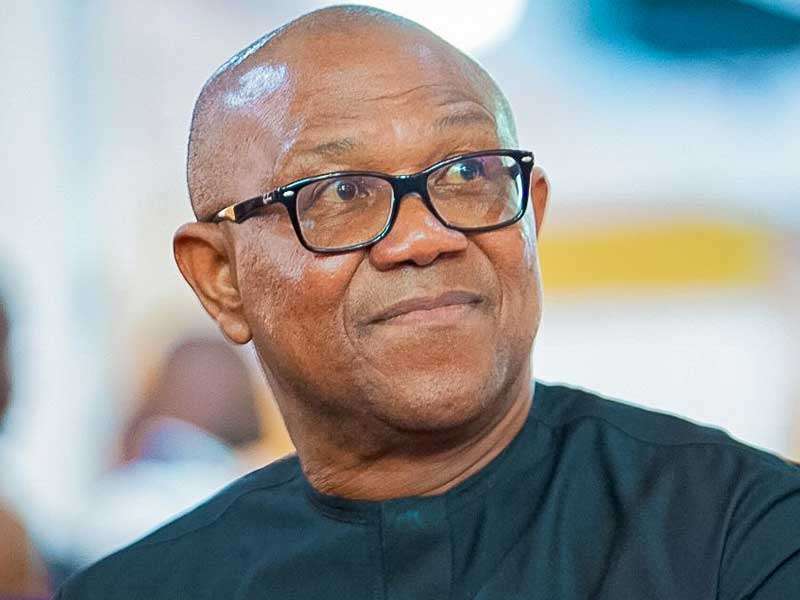
Former Anambra State governor and presidential candidate Peter Obi has disagreed with Atiku Abubakar’s proposal to restore Nigeria’s fuel subsidy if elected president in 2027.
Speaking on Monday at the Nigerian Bar Association conference in Port Harcourt, Rivers State, Obi argued that removing the subsidy was necessary but faulted the Federal Government for failing to properly manage the resources generated from its removal.
Atiku, who supported the removal of fuel subsidy during the 2023 presidential election, has since indicated that he would reconsider the policy and restore the subsidy if he wins the 2027 election.
Obi, however, maintained that reversing the policy would not address the underlying problems. According to him, the major failure has been the poor management of the funds saved after the subsidy was removed.
He said the government should have accompanied the policy with measures designed to reduce the hardship faced by Nigerians and should have channelled the resulting savings into productive areas of the economy.
“What we should have done is that when we removed it, we should have given the people alternative usage for the subsidy,” Obi said.
He further alleged that the funds recovered from subsidy removal had not been adequately accounted for, claiming that the resources were being “mismanaged and stolen.”
Obi said he had advocated a more structured approach to subsidy removal before the 2023 election, arguing that the savings should have been deliberately invested in areas capable of improving the lives of Nigerians and strengthening the economy.
“Go to my manifesto, I said it before, I said I will do it in an organised manner and whatever we recover would be invested appropriately,” he said.
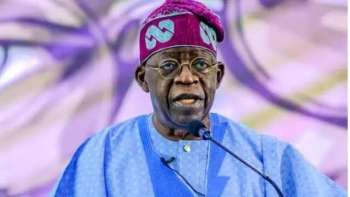
President Bola Tinubu announced the removal of petrol subsidy during his inauguration on May 29, 2023. The decision led to a significant increase in petrol prices and intensified concerns over inflation and the rising cost of living.
While the Federal Government has defended the policy as necessary to reduce pressure on public finances and redirect government resources, the implementation of the reform and the management of the resulting savings remain contentious issues.
With the 2027 election approaching, the contrasting positions of Obi and Atiku have added fuel subsidy to the growing debate over how Nigeria should manage its economy, protect vulnerable citizens and use public resources more effectively.
News
The Nigerian Upstream Petroleum Regulatory Commission (NUPRC) has warned the 31 companies that emerged successful in the 2025 oil and gas licensing round to pay their required signature bonuses within the statutory timeframe or risk losing their provisional awards.
The warning comes one month after the commission conducted the commercial bid conference in Abuja, where the successful bidders were announced for 37 oil and gas blocks.
In a notice issued on Sunday, the NUPRC said the compliance process had commenced following the issuance of provisional award letters to the successful companies.
The commission stated that bidders who failed to meet the payment deadline in accordance with the Petroleum Industry Act (PIA) would forfeit their bid guarantees and have their provisional awards transferred to the next-ranked reserve bidders.
“Exactly a month ago, the NUPRC hosted the 2025 commercial bid conference in Abuja where 31 companies emerged winners of 37 oil and gas blocks. Having issued the winners with the provisional awards, compliance with the payment of signature bonuses has already begun,” the commission said.
The 37 blocks awarded in the licensing round cover several areas, including the Niger Delta onshore and shallow-water fields, deep offshore assets and frontier basins.
The assets include PPL 2A29 to PPL 2A62 in the Niger Delta, PPL 2010 in the deep offshore, PPL 308 in the Benin Basin, PPL 900 to PPL 903 in the Anambra Basin, PPL 700 in the Chad Basin, and PPL 800 and PPL 801 in the Benue Trough.
The NUPRC also released the names of the 31 successful companies, together with the ranked reserve bidders for each of the 37 blocks.
A total of 143 companies participated in the licensing exercise, submitting about 200 bids for the assets on offer. However, 13 of the 50 blocks originally listed for the round received no bids.
Under the PIA and the applicable licensing guidelines, successful bidders are required to pay signature bonuses ranging from $3 million to $7 million for each awarded block.
In addition to the signature bonus, the companies must provide the required guarantees, pay first-year rents and fulfil other post-award obligations within the prescribed period.
Failure to satisfy these requirements will result in the forfeiture of the affected company's bid guarantee and the revocation of its provisional award. The block will then be offered to the designated reserve bidder.
The NUPRC Chief Executive Officer, Oritsemeyiwa Eyesan, had previously urged the successful bidders to complete their payments promptly and move ahead with the development of their awarded assets.
The commission has advised bidders, industry stakeholders and members of the public to consult the 2025 Licensing Round portal for additional information on the awards and compliance requirements.
Under the applicable PIA framework, successful bidders have 90 days from the issuance of their provisional awards to complete the required payments and other conditions.
With the provisional awards issued following the July 21, 2026 commercial bid conference, the 90-day compliance period expires on October 19, 2026.
As of August 23, 2026, 33 days of the 90-day period have elapsed, leaving 57 days for the successful companies to complete their statutory obligations.
Companies that fail to pay their signature bonuses and first-year rents within the deadline risk losing both their bid guarantees and the provisional awards. The affected blocks would subsequently be reassigned to the respective reserve bidders in line with the licensing rules.
The NUPRC's latest notice therefore signals that the successful bidders have entered the final stages of the award process, with compliance now required before the provisional awards can progress toward full development of the assets.
Business
In The Spotlight
Vanguard recently published pathetic pictures of the Benin-Sapele-Warri Expressway; and Punch revealed to us what happens to the Lagos-Calabar Expressway, not even 15 per cent completed, each time there is a heavy downpour in the Lekki peninsula.
The road becomes so flooded, it becomes barely usable. Morning shows the day. If Tinubu-Umahi’s legacy road already shows evidence of long-term stress, pity the Nigerians who will ply that road ten years from now.
The Minister was in Lagos State recently, half-begging, half attempting to blackmail Governor Sanwo-Olu to cough up funds to repair the mistakes made by Engineer Umahi and the contractors who hastily embarked on the road without Environmental Impact Assessment. He is building in Lagos and coastal states the sort of rickety roads he left in Ebonyi State. He has the right President for that sort of shoddy business. Right now, parts of the road have been vandalized – even before completion. Fellow Nigerians are not paying attention as they should. Pity.
Vanguard, Punch and Daily Trust have been doing Nigerians a favour by pointing to one of the greatest failures of the Tinubu administration – the maintenance of federal highways under Minister David Umahi – whose major achievement in three years had been attracting attention to himself through a scandal involving homicide. On the whole, Nigerian roads, federal and state, have not been receiving the attention they deserve in the last eleven years; the neglect just got worse.
Experience on Nigerian roads from 1974-2019
“Hit the road, Jack”. Advice from my Sales Manager, in Boston, USA, 1968.
My first full time job was in selling. It was as a salesman for a leading pharmaceutical company, Lederle Laboratories, in 1968, that Mr. Al, for Albert, Abby, came into my life. As my Sales Manager, he monitored my activities and also as my mentor. He drilled into my head the idea that a salesman’s work consists of being on the road as much as possible; in order to meet customers. By the time I arrived in Nigeria, in 1974, to start work as the Marketing Manager of Abbott Laboratories, marketers of SIMILAC baby food, being on the road 70 per cent of the time had become routine. It was new to my sales staff, but proved rewarding for all concerned – company, staff and especially me.
Until August 1974, Ughelli, Delta State, was the farthest distance I ever traveled in Nigeria. I hit the road. By August 1975, I had covered all the 12 State capitals created by General Gowon, at least three times; and the trips had just begun. By 1998, after Abacha had increased the number of states to 36, I was in charge of Circulation in Vanguard; and my annual itinerary called for visiting all the offices at least once a quarter. In fact, I opened new Vanguard Offices in Ado-Ekiti, Yenagoa, Abakaliki, Gombe, Damaturu, Birnin Kebbi and Dutse. From 2001 to 2007, I traveled to all the stations at least three times a year. Over 80 per cent of the trips were by road – even though flight options were available to me. I got to know Nigerian roads as nobody I have ever met knew them. Divorce was threatened by the occupants of the home front. There was no major road constructed, expanded or diverted which I was not familiar with. By 2017, the trips were reduced to about 20 states every year.
Thus, each time a new Minister of Works is appointed, at least until 2019, I know the problems he faces. Shortly after President Jonathan assumed office, I published an article titled Nigeria’s 70 Most Important roads. These are the roads over which 70 to 80 per cent of goods are transported every day. Lagos-Ibadan Expressway remains the first one in all respects. I went further. The biggest map available at the CMS Bookshop was obtained and all the 70 roads were identified for the Minister in charge of roads with the advice: “take care of these roads and Nigerians will never forget you”. I wasted my time and effort; and Nigerians have been paying dearly for it. Since then, two Ministers of Works were appointed; each left Nigerian roads infinitely worse than when he started.
Three years of Umahi, more of the same
“It aint the things you don’t know that cause the problem; it’s things that you think you know that aint so.” Ralph Waldo Emerson, 1803-1882
To the best of my knowledge, no Minister of Works has been appointed in Nigeria, with the exception of late General Mamman Kontagora, who can be said to have had a fairly good knowledge of Nigerian roads by the time he was appointed. Consequently, we have selected so many good men; but, for the wrong task. Many people, including me, would have protested if Fashola was not appointed Minister by Buhari after his sterling performance as Governor of Lagos State. But, he failed dismally as Minister of Works. So, in all fairness to Umahi, many of the roads in terrible condition were inherited from past administrations. That said; it is also a fact that every new appointee is not compelled to accept the offer; and “if you can’t stand the heat, get out of the kitchen”. Umahi inherited several death traps; but, like all members of the All Progressives Congress, APC, he also helped to conceal the truth from Nigerians. Now, he is holding the bag; with all the incriminating evidence of poor performance. Umahi should also be excused for the failure to establish priorities. His boss, without consultations, despite all the lies told, had already conceived of a new road – the Lagos-Calabar Expressway – and the preferred contractor was determined, without bidding. The Minister spent his first year defending a decision made without his input. He added his own.
Umahi started out sounding like a “know-it-all”. He is an Engineer; so he knows all there is about road construction. He even dictated that all federal roads, irrespective of terrain, would be paved with cement – without consideration for the impact on the price of cement; which is essential for building construction.
Perhaps, not establishing objective priorities was his biggest blunder. Some Nigerian roads carry most of the heavy loads and require more attention. The Lapai-Bida, the Benin-Sapele and the Asaba-Onitsha roads each carry more loads than all the Federal roads in Taraba, Ebonyi and Kebbi states put together. I could not agree more with Senator Adams Oshiomole who recently carpeted Umahi for lack of priority in his selection of roads receiving his attention. The Okene-Auchi-Benin road carries the largest load of cement heading for Southern States, as well as fuel tankers moving North. Without prioritizing the most important federal roads, we are indirectly slowing down economic development, making products made in Nigeria less competitive and entrenching poverty. In the absence of rail nationwide, roads constitute the life-blood of our nation. They are soaked now with our blood.
By Dele Sobowale
In The Spotlight
How many fake agencies can the Tinubu Presidency go after at a time? When I posed this question in my column in early August, I intended it as rhetoric. The fake agencies and their operators apparently took it as a challenge.
On Friday evening, the ICPC Chairman, Dr Musa Aliyu, SAN, emerged from his second meeting with the President in 48 hours to announce the discovery of yet another fake agency, grandly named the National Brands Development and Made-in-Nigeria Special Project Office and promoted by one Prince George Buchi Nwabueze.
Side note: Because of the length of these agency names, I’ll refer to them by their promoters, who happen to be ‘Princes’. Say, Prince Adeyemi’s PFIFC or Prince George’s agency. Okay?
So, I sat there among my colleagues, listening to Aliyu reel out another episode of an ongoing soap opera whose production studio is in the Nigerian civil service. We were arguably the first set of ears to get the gist, a privilege that comes with the burden of sharing it with the rest of the world.
Twenty-four hours earlier, I spotted the ICPC chairman making his way through the corridors leading to the President’s office for the umpteenth time. Aliyu had since become a standard feature at the State House since revelations about Prince Adeyemi’s fake agency, the Presidential Foreign Investment Promotion Council, first went public.
Draped in a white agbada, Aliyu sounded fulfilled as he announced another big catch, Prince George. Unlike his counterpart in the PFIFC, Prince George did not settle for a spot in the Federal Secretariat. No! He operated from inside the Office of the Secretary to the Government of the Federation. He was also found to operate under at least five variations of his own name, which is fitting. A fake agency deserves a fake agency’s worth of aliases.
The President ordered his immediate arrest and suspended three permanent secretaries: M.S. Danjuma, Nadungu Gagare and Richard Pheelangwah.
If you are keeping count, you would have counted six fake agencies or actors in the past few months. Four! First came Prince Adeyemi’s now-dissolved PFIFC. Then the ICPC’s interim report of August 6 unearthed two more: the FCT Investment Promotion Agency and the Foreign Investment Promotion Agency and Public-Private Partnership.
There is also the Presidential Implementation Committee on the Alienation of Federal Government Properties, a body created in 2000 under Obasanjo to manage the sale and lease of federal landed assets.
Though now dissolved, its erstwhile secretary, B.S. Dutsin-Ma, had continued operating. In early August, the Presidency directed him to cease acting on behalf of the committee and the Federal Government.
Last September, the Presidency distanced itself from Mr Fegho Umunubo, an erstwhile Special Assistant on Digital and Creative Economy in the Vice President’s office, whom it warned was still acting in his old capacity despite being let go.
Now Prince George’s outfit makes six similar instances in under a year. At this rate, the fake agencies and actors may soon require their own coordinating ministry. And who knows if the next ‘Prince’ may be found operating from the Presidential Villa itself?
Lest we think this plague is new, history says otherwise. You see, Nigeria has always had people who understood that in a country where government is everywhere, the most profitable business is to impersonate it. From the 1980s and 1990s, there are tales of fake recruitment syndicates selling appointment letters into the Army, Customs and NNPC from rented offices with convincing letterheads. Some past regimes responded with periodic raids, tribunals and occasional decrees. But the racket always reincarnates.
Over the years, the ICPC and EFCC have busted fake job-racketeering “ministries” in Abuja that interviewed hundreds of applicants and collected “processing fees” for years before anyone really noticed. The sobering reality is that we have always chased the “Princes” one at a time. And there will always be another ‘Prince’ to sit on that throne.
Also, it is not uniquely a Nigerian thing. In California in 2015, authorities uncovered a self-declared “Masonic Fraternal Police Department”, a policing outfit with its own badges, uniforms and a website claiming a 3,000-year history. It was run by three “Princes” until the state of California charged them with impersonating officers.
The difference is not that other countries breed fewer fraudsters than we do. It is that their systems make the fraud quite short-lived because the list of legitimate agencies is knowable by the public, leaving the fake ones to glow in the dark.
Moreover, if government ministries, departments and agencies were fewer than they are now, there would be fewer hiding places for the fakes.
Which brings me, once again, to one document still gathering dust on the President’s desk: the Oronsaye report. Commissioned in 2011 and submitted in 2012, Steve Oronsaye’s committee found 541 federal parastatals, commissions and agencies and recommended pruning them to about 263. It recommended mergers, scrapping, subsuming and anything else that could shrink that number.
To his credit, President Tinubu revived it in February 2024, ordering full implementation. Two and a half years later, however, the rathole of redundant agencies has only widened, and now fake ones are camouflaging among the real ones. Implementing Oronsaye would arguably leave fewer agencies with clearer supervision and a slimmer cost of governance. Again, it is not a silver bullet. Matter of fact, the report is 14 years old; some recommendations would need fresh legislation. But why chase rats one by one when we can fumigate the entire network of holes?
While the ICPC is hunting “Princes”, President Tinubu is assembling his Avengers. According to the APC Presidential Campaign Council list the Presidency released on Saturday morning, Tinubu will sit as chairman; Vice President Kashim Shettima and party chairman Nentawe Yilwatda will co-chair the council. Ex-Zamfara governor Abdulaziz Yari will serve as DG, and Hope Uzodimma, still fresh from surviving the storm that rocked the Progressives Governors’ Forum months ago, will serve as secretary.
Senate President Godswill Akpabio, Speaker Abbas and Governor Buni will serve as zonal heads; Oshiomhole will head mobilisation, while James Faleke will return to his 2022 role in election planning.
The media directorate already looks like a special-purpose media house of its own. Information Minister Mohammed Idris will coordinate alongside Dr Dele Alake, Bayo Onanuga, Issa-Onilu, Mr Tunde Rahman, Dr Sunday Dare, Daniel Bwala and Felix Morka.
By Stephen Angbulu