












As expected, many residents of Anambra refused to turn up for the supplementary election conducted on Saturday by the Independent National Electoral Commission (INEC) for the governorship seat of Anambra State.
Following this mass voter apathy, the Campaign for Democracy (CD) asked Nigerians to blame INEC for the lack of interest shown by the people for the exercise.
Many observers who were in the state to monitor the exercise conducted in the 210 polling units scattered across the state returned with complaints that apart from the refusal of residents to come out to vote, they also flouted the INEC directive restricting movement of people during the exercise. Many of the residents, it was learnt, went about the duties with the excuse that the result of the election had been concluded even before the exercise was conducted.While some said they refused to vote in protest of the poor outing of INEC in the previous exercise, others admitted that they were obeying instructions from some of the candidates not to partake in the election.
Senator Chris Ngige of the All Progressives Congress (APC), Ifeanyi Uba of the Labour Party (LP) and Tony Nwoye of the Peoples Democratic Party (PDP) had vowed not to partake in the supplementary election.
Chairman of Campaign for Democracy in the South-East Region, Mr Uzor Uzor linked the refusal of the people to come out to INEC’s refusa to carry out enough sensitization programmes before the election.
He described the poor outing as unfortunate, saying in some areas, the residents said they were not aware that the exercise would be held on Saturday and that they were surprised to see electoral officers in their various communities.
According to him, “they should have been informed over and over again before the election on the need to cancel their various engagements and attend the exercise. I even learnt that some of the people were not told or made to know that there will be a fresh election in their units due to some irregularities”.He however confirmed that some of the voters refused to vote because they believed some of the candidates had boycotted the supplementary election. Uzor further said where residents would have come out to vote, the presence of heavily armed security operatives did not help the situation.
“The heavy presence of security men could have given the impression that all is not well in the minds of the residents of the areas affected”, he lamented.
Election peaceful
Huhuonline.com can confirm that the election went peacefully and that materials arrived in many of the units as early as possible. However, despite this, the number of eligible voters was very low. In most units, electoral officials were seen idling away and waiting for the voters.
In some of the units, officials explained that they only accredited not more than 24 throughout the exercise. A visit to the Akpakaogwe polling unit, Ogidi Ward 1 in Idemili Local Government showed that the residents were not prepared for the exercise as the officials said residents stayed put in their houses while others went about their normal businesses as if nothing was happening. In the unit, a little over 56 voters were accredited out of 830 registered voters at the unit. At Nkpor Uno in Isingwu village, out of the 983 registered voters, only 30 were accredited to vote.
PDP against its candidate
The Peoples Democratic Party (PDP) had a hard time with its candidate in the election, Tony Nwoye, as the party insisted that it was going ahead with the supplementary election while its candidate said he remained resolute that he was not part of the exercise.
Nwoye had joined Ngige and Uba to reject the November 16 exercise in which his name and the names of his family members were absent from the voters' register. He also complained of a series of irregularities that marred the exercise.
When contacted, Nwoye said he did not partake in the election and was not even close to Awka throughout the supplementary election. But the party chairman in the state, Prince Ken Emeakayi insisted that the party would partake. It sent its agents to the polling units to show that it took part in the exercise.
Did APC Participate?There were allegations that the All Progressives Congress took part in the supplementary as against its stand that it was boycotting the exercise with its candidate.
Chris Ngige, its candidate in the election, had called a joint press conference where he made the collective grievances of some of the candidates known and said they were boycotting the supplementary election.However, most of the polling units where the exercise was conducted had agents of the APC. But the governorship candidate of the party was nowhere around any of the polling units.
Although the party is yet to react to this, many within the party claim that the agents were planted by the All Progressives Grand Alliance (APGA) to give the impression that Ngige had betrayed Uba and Nwoye.
Confirming that the APC agents were present at the polling units, the PDP chairman in the state said: “While they (APC) are out there saying they are not participating, APC agents are everywhere, including this polling unit”.
 |
|

As millions of Nigerians struggle with soaring living costs, unemployment and deepening economic pressures, the reported distribution of seven brand-new 2026 Toyota Land Cruiser Prado SUVs to APC youth leaders has ignited a fierce debate over political priorities, campaign spending and the meaning of youth empowerment.
Seven luxury SUVs. An estimated ₦1.12 billion. And a country where millions of citizens are struggling to make ends meet.
That is the striking contrast confronting Nigerians following the announcement by Dayo Israel, the All Progressives Congress (APC) National Youth Leader, that he had presented brand-new 2026 Toyota Land Cruiser Prado SUVs to selected youth leaders to support election mobilisation ahead of the 2027 general elections.
The announcement, made on X, immediately raised questions about the scale of the expenditure, the source of the funding and the message the ruling party is sending to young Nigerians at a time of widespread economic anxiety.
Israel expressed gratitude to First Lady Oluremi Tinubu for her continued support for the party’s youth structure.
“Today, I presented a brand new 2026 Prado to my committed selected youth leaders to aid their election mobilisation activities,” he wrote.
He also declared that the APC would demonstrate its political strength during the coming election season, promising to deliver “polling unit by polling unit”.
The message was unmistakable: the party is gearing up for 2027, and its mobilisation machinery is already being assembled.
But beyond the political symbolism and the gleaming new vehicles lies a more uncomfortable question: what does a billion-naira fleet of luxury SUVs say about political priorities in a country where many young people are struggling to secure jobs, finance businesses or afford basic necessities?
Seven SUVs, more than ₦1 billion
The figures are staggering.
According to prices listed on the Nigerian website of Toyota's authorised distributor, CFAO Mobility, the 2.4-litre turbo-petrol Adventure version of the Land Cruiser Prado costs approximately ₦160 million, while the Premium version is listed at ₦190 million.
At the Adventure price, seven vehicles would cost about ₦1.12 billion.
At the Premium price, the bill would rise to approximately ₦1.33 billion.
These are estimates based on advertised retail prices, not confirmed figures for the vehicles presented by Israel. Their exact specifications and actual purchase costs have not been independently established.
Nevertheless, the estimates provide a sense of the financial scale involved.
Using a reported Central Bank of Nigeria exchange rate of ₦1,329.51 to the dollar on September 25, 2026, the estimated ₦1.12 billion translates to roughly $842,000.
At the Premium price, the seven vehicles would be worth approximately $1 million.
The figures are estimates, not proof of the amount actually spent. And the announcement does not establish who paid for the vehicles, whether they were purchased by the party, donated privately or financed through another arrangement.
That distinction is important.
There is currently no established evidence in the announcement that public funds were used to acquire the SUVs. Nor does the statement provide enough information to determine the identity of the funder or the precise financial arrangements behind the presentation.
Yet the absence of those details makes transparency even more important.
Who financed the vehicles? Were they purchased outright or donated? What criteria determined which youth leaders received them? And what mechanisms will ensure that the vehicles are used for the stated purpose of election mobilisation?
These are legitimate questions about a high-value political expenditure, particularly when the recipients belong to the youth structure of the party controlling the federal government.
Election mobilisation or a display of political privilege?
Political parties need resources to organise campaigns. Vehicles can help officials travel, coordinate volunteers, attend meetings and reach communities that might otherwise be difficult to access.
Providing transport to campaign officials is not, in itself, evidence of wrongdoing.
The controversy lies in the scale of the reported investment and the broader economic circumstances in which it has occurred.
For many young Nigerians, the struggle is not about choosing between a luxury SUV and another premium vehicle. It is about finding a job, paying rent, securing affordable transportation, raising business capital or keeping a small enterprise alive amid rising costs.
Against that backdrop, seven high-value SUVs intended for political mobilisation inevitably invite questions about whose needs receive priority and what the ruling party considers an effective investment in young people.
The APC's youth leadership operates within the political organisation supporting President Bola Tinubu's administration. Its activities therefore attract scrutiny beyond ordinary party logistics, especially when they are presented as part of preparations for another presidential election.
The question is not whether campaign officials deserve transportation.
It is whether the scale of political spending is matched by a comparable commitment to expanding economic opportunities for the millions of young Nigerians whose support political parties seek.
What else could ₦1.12 billion achieve?
Consider the alternatives.
At an estimated cost of ₦1.12 billion, the money represented by the seven vehicles could equal:
- 11,200 grants of ₦100,000 for aspiring entrepreneurs.
- 1,120 grants of ₦1 million for small businesses requiring greater start-up capital.
- 16,000 monthly wage payments of ₦70,000, using Nigeria's national minimum wage as a benchmark.
These are illustrative comparisons, not claims that distributing money alone would solve unemployment or guarantee sustainable businesses. Effective empowerment programmes require careful beneficiary selection, training, oversight, access to markets and mechanisms to prevent waste.
But the comparisons expose the opportunity cost of expensive political investments.
A young graduate searching endlessly for employment might see a different kind of hope in a credible job-creation programme. A trader struggling to expand a business might benefit from affordable credit. A skilled young person with a viable business idea might need equipment and training more than another political rally.
The seven Prados may improve the mobility of their recipients. They do not, by themselves, create jobs, lower food prices, expand vocational training or provide affordable credit to young people outside the party's political network.
Those challenges require action from government, financial institutions, employers and other stakeholders.
But for a ruling party seeking another mandate, the contrast between the resources devoted to election mobilisation and the economic difficulties facing ordinary citizens is difficult to ignore.
Opposition voices question APC's priorities
The announcement has drawn criticism from political opponents, who argue that the reported expenditure highlights a disconnect between the ruling party's political preparations and the hardship confronting Nigerians.
An African Democratic Congress (ADC) chieftain, Samuel Ede, said the development raised serious questions about the party's priorities.
“At a time when millions of Nigerians are battling hunger, unemployment and rising living costs, the APC is preparing for 2027 with seven luxury SUVs worth an estimated ₦1.12 billion. This raises serious questions about the party’s priorities. Nigerian youths need jobs, opportunities and economic relief, not just political mobilisation ahead of elections,” he said.
Political analyst Sunday Tukur also questioned what the vehicles would achieve beyond their stated electoral purpose.
“The question Nigerians should be asking is what seven Prados worth an estimated ₦1.12 billion will achieve beyond electoral mobilisation. That amount could support meaningful youth empowerment initiatives if properly invested. Political parties have a right to organise for elections, but the contrast between luxury campaign spending and the economic hardship facing ordinary Nigerians deserves serious scrutiny,” he said.
Their comments reflect a wider debate over whether political parties should be judged solely by their ability to build campaign structures or also by the economic vision they offer citizens.
The APC could argue that an effective mobilisation network is essential to electoral competition. Critics, however, contend that the scale of the reported expenditure deserves explanation in a country where economic insecurity remains a central public concern.
Neither argument eliminates the need for transparency about the vehicles' funding and intended use.
Economic hardship meets political extravagance
The controversy has unfolded against a difficult economic backdrop.
A Reuters report published in August 2026 highlighted continuing cost-of-living pressures in Nigeria despite signs of improving investor confidence. The report cited World Bank estimates indicating that more than half of Nigerians lived in poverty in 2025, compared with approximately 42 per cent in 2022.
Those figures provide important context for understanding why the announcement has attracted such strong reactions.
For households struggling with food bills, transport fares, rent and other essentials, the image of brand-new luxury SUVs being distributed for political activities can become a symbol of the distance between the political establishment and everyday economic realities.
The vehicles are not proof that government funds were misused. But the announcement has reopened a difficult debate about the relationship between political power, wealth and the expectations placed on leaders during a period of economic strain.
And because the vehicles are intended to support election mobilisation, the timing makes the questions even more pointed.
As the 2027 campaign season approaches, political parties will be seeking votes, loyalty and public confidence. Their spending decisions will inevitably become part of the wider conversation about what they prioritise and how they intend to govern.
Nigerians react: “What is this?”
On X, the announcement triggered a wave of criticism, with some users drawing sharp comparisons between the luxury vehicles and the financial difficulties confronting ordinary Nigerians.
Political commentator Kayode Ogundamisi questioned the symbolism of the presentation, arguing that it reflected a widening disconnect between the ruling party's political elite and citizens enduring economic hardship.
He wrote:
“For context, @dayoisrael is the youth leader of Nigeria’s ruling APC, the same party whose president, Tinubu, is asking Nigerians to endure more suffering.
“When a party’s youth leader can donate multiple Prados to party loyalists, you begin to understand why more Nigerians are turning against Tinubu and the APC.”
Ogundamisi also questioned the broader culture of political gift-giving and the display of wealth by influential figures associated with the ruling establishment.
Other reactions were more confrontational, with critics accusing the party of prioritising electoral machinery over the needs of struggling citizens.
One X user questioned the contrast between calls for ordinary Nigerians to engage in small-scale economic activities and the distribution of luxury vehicles to political operatives.
The user wrote:
“These are the issues. Remi Tinubu asked our mothers and us to go and be frying Ankara, roasted corn and kulikuli, but APC National Youth Leader, Dayo Israel, presented a brand-new 2026 Prado SUV to APC youth leaders for election mobilisation activities.”
Another user expressed disbelief over the announcement, writing:
“You’re a disgrace, Dayo Israel. For one moment, I thought these were ambulances for FMC, Abeokuta. What is this?”
Other comments contained partisan accusations and calls for political change ahead of 2027. Such statements reflect the views of individual users and should not be treated as evidence of wrongdoing or as a measure of nationwide public opinion.
Still, the intensity of the reactions illustrates how quickly a political spending announcement can become a wider debate about economic hardship, fairness and accountability.
The questions APC must answer
For all the anger and political rhetoric surrounding the presentation, the central issues remain straightforward.
The public deserves clarity about the source of funding, the actual purchase price, the specifications of the vehicles and the conditions attached to their use.
The APC should also explain how the distribution fits into its broader youth engagement strategy and what measurable benefits its political activities are expected to deliver.
If the vehicles were privately funded, transparent disclosure could help clarify that point. If they were purchased with party resources, the party could explain the expenditure in the context of its campaign budget.
And if the presentation is being promoted as an example of support for young people, the party should be prepared to explain how that support extends beyond the selected recipients to the much larger population of young Nigerians outside its political structure.
These questions do not presume that the expenditure was unlawful. They recognise that large political expenditures, especially those publicly associated with election mobilisation, deserve scrutiny.
Seven Prados cannot answer the bigger question
Ultimately, the controversy is about more than seven vehicles.
It is about the kind of political priorities Nigerians see as the country moves towards another general election.
For the APC, the Prados may represent a practical investment in campaign organisation, intended to strengthen its presence across polling units and improve coordination among youth leaders.
For critics, the estimated ₦1.12 billion cost represents a troubling contrast between the resources available to political operatives and the challenges confronting young people who need jobs, affordable credit, skills and economic opportunities.
Both the stated purpose of the vehicles and the questions raised by their distribution deserve to be examined on the available evidence.
The critical issue is whether political mobilisation is accompanied by a credible commitment to improving the lives of the citizens whose votes political parties seek.
As 2027 approaches, Nigerians will be weighing campaign promises against economic realities, political displays against policy outcomes, and declarations of youth empowerment against the opportunities actually available to young people.
Seven luxury SUVs can transport party officials across the country. They can support meetings, campaigns and electoral coordination.
But they cannot, on their own, answer the questions of an unemployed graduate, finance a struggling entrepreneur or relieve a household burdened by rising living costs.
The APC has signalled its readiness to mobilise for 2027. The bigger test is whether its vision for young Nigerians extends beyond the campaign trail—and whether it can demonstrate, with measurable results, how its promises translate into better lives for the people it hopes to represent.
News
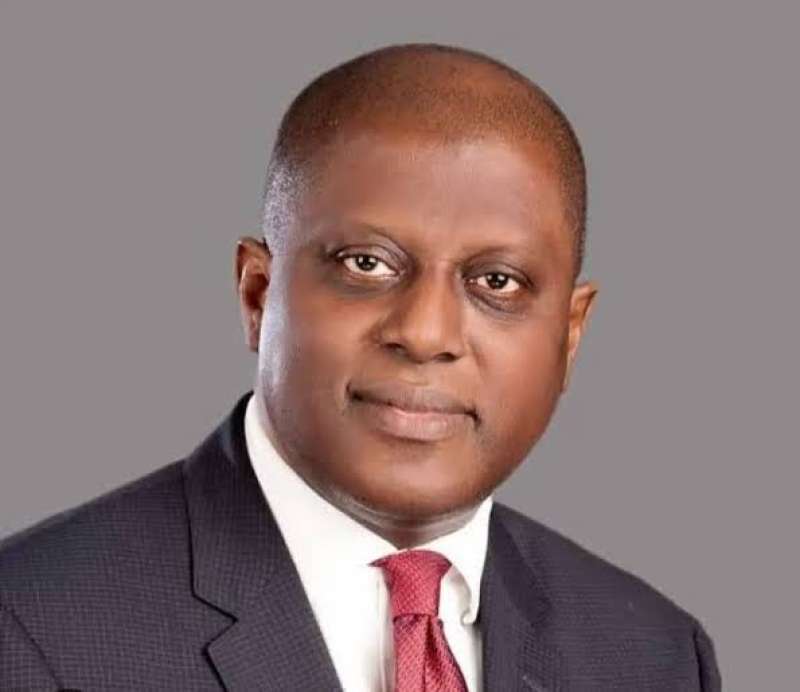
Ayobami Oyalowo, Executive Director of Finance and Administration at the Ogun-Oshun River Basin Authority, has said reforms implemented under Central Bank of Nigeria (CBN) Governor Olayemi Cardoso have improved the foreign exchange market, strengthened external reserves and enhanced the resilience of the banking sector.
Assessing Cardoso’s three-year tenure, Oyalowo said the apex bank had shifted towards a more orthodox monetary policy framework, prioritising price stability, market discipline and stronger financial sector supervision.
Cardoso assumed office in September 2023 amid significant economic challenges, including foreign exchange market distortions, declining external buffers and rising inflation. Headline inflation stood at 25.80 per cent in August 2023, while multiple exchange rates, foreign currency shortages and accumulated foreign exchange obligations weakened business confidence.
According to Oyalowo, the reforms marked a departure from the CBN’s extensive involvement in intervention programmes across sectors such as agriculture, aviation and power.
He recalled that Cardoso disclosed at the November 2023 Annual Bankers’ Dinner that the CBN had injected more than ₦10 trillion into the economy through various intervention programmes.
Oyalowo said the scale of the interventions raised concerns about excess liquidity, policy effectiveness and the central bank’s involvement in activities that could be better handled by fiscal authorities and development finance institutions.
“The economic significance of this shift lies in restoring consistency between the CBN’s objectives and its policy instruments,” he said.
Forex Market Reforms and Reserve Growth
Oyalowo identified the foreign exchange market as one of the major areas affected by the reforms, following years of multiple exchange rates, restricted access to foreign currency and accumulated obligations.
He said the CBN’s measures were designed to improve price discovery, enhance liquidity and rebuild confidence in the official market.
Among the key initiatives, he highlighted the Electronic Foreign Exchange Matching System, introduced in December 2024, and the Nigerian Foreign Exchange Code, launched in January 2025. Both measures were aimed at improving transparency, accountability and market conduct.
He also pointed to the settlement of verified foreign exchange obligations from an inherited backlog estimated at $7 billion, noting that the move helped address concerns among international investors, airlines and multinational companies over capital repatriation and legitimate financial claims.
However, Oyalowo acknowledged that the adjustment came at a significant economic cost, including sharp naira depreciation, higher import costs, increased production expenses for manufacturers and mounting pressure on household purchasing power.
On external reserves, he said Nigeria’s gross foreign exchange reserves increased from approximately $33 billion when Cardoso assumed office to about $55 billion in October 2026.
He added that net external reserves had risen to approximately $46 billion, compared with $34.80 billion at the end of 2025 and $3.99 billion at the end of 2023, citing figures disclosed by the CBN.
Oyalowo also referenced the CBN’s 2025 Annual Report, which showed that aggregate foreign exchange inflows rose by 13.81 per cent to $109.86 billion in 2025, from $96.53 billion in 2024.
Net foreign exchange inflows stood at $60.81 billion, while autonomous sources accounted for approximately 64 per cent of total inflows.
He described the growing contribution of autonomous sources as significant, explaining that private-sector inflows, export earnings and remittances could provide a more sustainable supply of foreign exchange than administrative allocation.
Improved Credit Outlook and Investor Confidence
Oyalowo further cited improvements in Nigeria’s international credit assessments as evidence of renewed confidence in the country’s economic direction.
He noted that S&P Global upgraded Nigeria’s sovereign credit rating from ‘B−’ to ‘B’ with a Stable Outlook in May 2026. Fitch Ratings also affirmed Nigeria’s ‘B’ rating in October 2026 and revised its outlook from Stable to Positive.
He said Nigeria’s return to the FTSE Russell Frontier Market classification in September 2026 reflected improvements in foreign exchange market accessibility and capital repatriation.
Despite these developments, Oyalowo acknowledged that Nigeria’s sovereign credit ratings remained below investment grade.
He also cited National Bureau of Statistics data showing that capital importation increased to $23.22 billion in 2025, compared with $12.32 billion in 2024.
Portfolio investment accounted for approximately $19.74 billion, representing 85 per cent of total capital importation, while foreign direct investment stood at about $923 million.
According to him, the figures indicated renewed investor interest but underscored the need to attract more long-term capital into manufacturing, infrastructure, energy and technology.
Inflation, Interest Rates and Household Pressures
On inflation, Oyalowo said the CBN had maintained a restrictive monetary policy stance through higher interest rates and liquidity management measures.
He noted that headline inflation moderated to 15.39 per cent in August 2026, from 15.43 per cent in July and 25.80 per cent in August 2023.
However, he cautioned that the rebasing of the Consumer Price Index in 2025 meant historical inflation comparisons needed to be interpreted carefully.
“Moreover, lower inflation does not mean prices have returned to previous levels,” he said, stressing that households continued to bear the cumulative effects of earlier price increases.
He added that while tighter monetary policy could help contain inflationary pressures, high borrowing costs had made it more expensive for businesses to access credit, potentially constraining investment and economic expansion.
Bank Recapitalisation Strengthens Financial Sector
Oyalowo also highlighted the CBN’s banking sector recapitalisation programme, introduced in March 2024, as a major component of the reforms.
The programme raised minimum capital requirements to ₦500 billion for commercial banks with international authorisation, ₦200 billion for national banks and ₦50 billion for regional banks.
By March 2026, he said, 33 banks had met the revised requirements, collectively raising ₦4.65 trillion in fresh capital.
Domestic investors contributed 72.55 per cent of the capital raised, while international investors accounted for 27.45 per cent.
According to Oyalowo, the recapitalisation exercise had strengthened banks’ capacity to absorb financial shocks and finance larger transactions.
However, he emphasised that increased capital must be supported by sound governance, effective risk management and responsible lending practices.
“Stronger balance sheets must be accompanied by sound governance, effective risk management and responsible lending,” he said.
He noted that the challenge for policymakers was to balance financial sector resilience with affordable access to credit, particularly for businesses operating under restrictive monetary conditions.
CBN, Finance Ministry Deepen Policy Coordination
Oyalowo identified the September 18, 2026, Memorandum of Understanding between the CBN and the Federal Ministry of Finance as another important development.
He said the agreement established a framework for closer coordination between fiscal and monetary authorities, covering government cash management, debt issuance planning, liquidity forecasting and macroeconomic analysis.
According to him, the arrangement could reduce the risk of fiscal and monetary policies working at cross-purposes, particularly where government borrowing and spending influence inflation, liquidity conditions and access to credit.
He added that the framework recognised the structural factors driving inflation in Nigeria, including food supply constraints, energy costs, transportation and logistics expenses.
Consolidating the Gains of Reform
Three years into Cardoso’s tenure, Oyalowo said the CBN had recorded measurable changes in foreign exchange market accessibility, external reserves, banking sector capitalisation and investor participation.
He maintained that the governor’s emphasis on monetary orthodoxy had provided the apex bank with a clearer institutional direction, while acknowledging the economic costs associated with the adjustment process.
He stressed, however, that sustaining the gains would require consistent policies, stronger productive investment and measures to ease the pressure on households and businesses.
“The next responsibility is to consolidate these reforms, preserve the gains in macroeconomic stability and create conditions for stronger productive investment, more affordable credit and improved living standards,” Oyalowo said.
Business
In The Spotlight
From ending hunger to eradicating poverty, President Tinubu is making big promises ahead of 2027. But after more than three years in power, Nigerians deserve answers, evidence and measurable results—not another round of political assurances.
Nigeria is hungry for change. Yet, as President Bola Ahmed Tinubu asks Nigerians to give him another four years, he is offering a familiar menu of promises: prosperity, economic recovery, cheaper food, more jobs and an end to poverty.
At the All Progressives Congress (APC) campaign flag-off in Kaduna, the President sought to reassure Nigerians that better days were ahead. He promised growth, opportunity and recovery, insisting that his administration was working to eradicate hunger and poverty.
But Nigerians have heard these promises before.
In 2023, Tinubu campaigned on the promise of Renewed Hope. Today, as he prepares to seek another mandate, the question confronting his administration is unavoidable: what has happened to the hope Nigerians were promised the first time?
For millions of citizens battling soaring living costs, struggling businesses and shrinking purchasing power, another promise of prosperity may sound less like reassurance and more like a demand for patience from people who have already waited long enough.
Campaign rallies are designed to inspire. Governing, however, demands results.
And it is on that score—not the volume of applause at a stadium—that Tinubu’s promises must be judged.
The President Promises Prosperity. But Where Is the Relief?
Tinubu’s declaration that Nigeria is on the path to prosperity raises an uncomfortable question: prosperity for whom?
The government has defended its economic reforms, particularly the removal of petrol subsidies and changes to the foreign-exchange system, as necessary steps towards stabilising public finances and correcting longstanding economic distortions.
There may be a case for reforms that address structural weaknesses. But economic policies cannot be judged by government revenue, market confidence or official declarations alone.
They must also be judged by what happens in the homes of ordinary Nigerians.
Can families afford three meals a day? Can workers pay their bills without exhausting their salaries? Can small businesses survive rising operating costs? Can young graduates find decent jobs instead of spending years searching for employment?
These are the questions that matter.
Macroeconomic stability is important, but it means little to a family that cannot afford food or a worker whose salary loses purchasing power every month. Growth that fails to improve living standards risks becoming a statistic without meaning for those left behind.
Tinubu cannot simply ask Nigerians to trust that prosperity is coming. He must show them where it is, how it is being delivered and when they can reasonably expect to feel its benefits.
Poverty Will Go? Nigerians Want to Know When.
Perhaps no promise is more consequential—or more demanding—than Tinubu’s pledge to eradicate poverty.
At the Kaduna rally, the President blamed previous administrations and political opponents for hunger and poverty, insisting that his government was trying to eliminate both.
But blaming yesterday’s leaders cannot become an excuse for the shortcomings of today’s government.
Nigeria’s economic problems predate Tinubu’s presidency. Years of weak growth, insecurity, infrastructure deficits and policy failures have contributed to the country’s difficulties. Yet Tinubu has been in charge since May 2023, and his administration must accept responsibility for its own record.
The President cannot claim credit for every improvement while assigning every setback to his predecessors.
If his government is serious about ending poverty, Nigerians deserve clear targets, credible timelines and regular reports showing how many people have been lifted out of poverty and how many remain trapped in it.
Which programmes are working? Which have failed? How much has been spent? What has changed for the poorest households?
Without answers, the promise to eradicate poverty risks becoming another attractive campaign slogan—repeated at rallies while struggling families continue to count the cost of survival.
Fuel Subsidy: Nigerians Are Paying, But What Are They Getting in Return?
Tinubu’s declaration that petrol subsidy belongs to the past leaves little doubt about his intention to maintain the policy direction adopted in 2023.
His administration has argued that removing the subsidy would free public resources for infrastructure, education, healthcare and other essential services. It has also cited corruption and inefficiencies associated with the former system.
But a policy does not become successful merely because a president insists that there is no going back.
The removal of the subsidy has had far-reaching consequences for transport costs, food distribution and the operating expenses of businesses. For many households, the increased cost of getting to work, moving goods and meeting basic needs has become a daily burden.
The crucial question is whether the promised benefits are reaching the people who have borne the costs.
Where is the transparent accounting of the savings? How much has been channelled into public services? What measurable relief have vulnerable households received?
If the government believes the policy is working, it should demonstrate that success with verifiable evidence.
Nigerians cannot be expected to accept hardship indefinitely on the strength of promises about future benefits. Sacrifice without visible returns is not a sustainable economic strategy; it is a test of public patience.
Hunger Cannot Be Defeated With Speeches
Tinubu’s promise to eradicate hunger is another declaration that must be measured against reality.
Food is not a luxury. It is a basic necessity. When families struggle to afford it, the consequences extend beyond household budgets to public health, education, productivity and social stability.
The administration’s 2023 agenda included agricultural hubs, improved storage facilities, reduced post-harvest losses and other measures intended to strengthen food production and affordability.
These are relevant objectives. But Nigerians need to know how far the programmes have progressed and whether they are producing measurable results.
Farmers need security to cultivate their land. They need affordable fertiliser, seeds, equipment, financing and reliable access to markets. Food must also be transported and stored efficiently before it reaches consumers.
A serious food-security strategy must address the entire chain, not simply promise more agricultural production.
The government should publish clear figures on food production, food insecurity, agricultural investment and the prices consumers pay for essential commodities.
It must also explain what it will do differently where existing interventions have failed to deliver sufficient relief.
The President may declare war on hunger, but the victory will be determined at the market, in the kitchen and on the tables of Nigerian families.
One Million Digital Jobs: Where Is the Scorecard?
Tinubu’s 2023 campaign included a pledge to create one million jobs in the digital economy. His wider agenda also promised employment through industrial development, infrastructure and support for businesses.
As he seeks another term, these commitments demand a public accounting.
How many sustainable jobs have been created? How many young Nigerians have secured paid employment through government-backed initiatives? How many trained participants have found work? How many businesses have expanded their workforce because of government support?
These are basic questions, not political traps.
Nigeria’s young people need more than motivational speeches about opportunity. They need an economy in which education can lead to employment, enterprise can lead to growth and hard work can provide a route out of poverty.
Training programmes are useful, but training without employment opportunities cannot solve the jobs crisis. Entrepreneurship initiatives matter, but young business owners also need affordable finance, reliable electricity, dependable internet and a stable operating environment.
If the administration has made substantial progress, it should publish the figures. If it has fallen short, it should explain why and present a credible corrective plan.
A million-job promise should not remain suspended between campaign rhetoric and public expectation.
## Workers May Receive Their Salaries, But Can They Still Afford to Live?
Tinubu has defended his administration’s record on regular salary payments, praising APC governors for their performance.
But the regular payment of salaries, important as it is, cannot be the sole measure of workers’ welfare.
What matters is what those salaries can buy.
A worker may receive a salary on time and still struggle to pay rent, buy food, cover transport costs and meet school fees. A nominal increase in wages can also lose much of its value when prices rise faster than earnings.
Workers need purchasing power, decent working conditions and access to affordable essential services. They need an economy in which employment offers security rather than merely a monthly reminder of how much living has become.
The administration should therefore look beyond payroll compliance and demonstrate how its policies are affecting real wages, household incomes and living standards.
For millions of workers, the question is brutally simple: if they are earning, why are so many still struggling?
Roads Are Welcome. Accountability Is Essential.
Tinubu’s inauguration of an 81-kilometre section of the Abuja-Kaduna-Zaria-Kano dual carriageway provides a tangible infrastructure milestone for the administration to showcase.
Roads can improve connectivity, facilitate trade and help farmers move produce to markets. Infrastructure investment can also create jobs and support economic growth.
But an inauguration is not the end of the story.
Citizens deserve to know how much projects cost, whether they were delivered on schedule, whether construction meets the required standards and what economic benefits they are expected to generate.
The same scrutiny should apply to railways, electricity projects, ports and other major public investments.
Nigeria has enormous infrastructure needs and limited public resources. Every naira spent must therefore be justified by value, quality and public benefit.
The government should not merely count kilometres of roads inaugurated. It should demonstrate how completed projects reduce transport costs, improve access to markets and strengthen economic activity.
Public infrastructure is not a political gift to citizens. It is a public investment financed with resources that belong to them.
Four More Years? First, Account for the First Three.
Tinubu’s request for another term raises a legitimate question of continuity: should an administration have more time to complete reforms whose benefits may take years to materialise?
There is no automatic answer. Some reforms require sustained implementation, and governments cannot reasonably be expected to solve every structural problem in a single term.
But continuity cannot be an argument for postponing accountability.
Before asking Nigerians to renew his mandate, the President should provide a detailed performance report against his 2023 commitments. That report should distinguish completed promises from ongoing programmes, explain missed targets and establish measurable objectives for any proposed second term.
It should include:
- Poverty: Verifiable evidence of progress in reducing poverty and improving household incomes.
- Food: Measurable progress on food insecurity, agricultural productivity and consumer prices.
- Jobs: An independently verifiable account of employment created, including the durability and quality of those jobs.
- Economic reforms: Transparent information on fiscal savings, public spending and the distribution of benefits and costs.
- Workers: Evidence of improvements in real wages and purchasing power.
- Infrastructure: Project costs, delivery schedules, quality assessments and public benefits.
These are the foundations of responsible democratic accountability.
A second-term manifesto should not simply recycle the first term’s ambitions. It should explain what has been achieved, what has not, why the gaps exist and how the administration intends to close them.
Conclusion: Hope Must Not Become an Excuse for Broken Expectations
Tinubu’s Kaduna campaign has placed prosperity, poverty eradication, food security, employment and infrastructure at the centre of his re-election message.
These are precisely the issues on which Nigerians need decisive progress. But the importance of the promises makes scrutiny more necessary, not less.
The President can defend his reforms. He can argue that the economy needs more time to respond. He can point to projects completed and policies introduced. But he must also confront the hardship that persists and demonstrate that the benefits of his economic agenda are reaching ordinary citizens.
Nigerians should not have to choose between accepting every government explanation and dismissing every policy initiative. They deserve the evidence needed to judge the administration on its actual record.
The 2027 campaign must therefore be more than a contest of speeches, slogans and promises. It must be an opportunity to demand measurable commitments and hold those seeking power accountable for their performance.
Tinubu says poverty will go. Nigerians want to know when. He promises prosperity. They want to know for whom. He asks for four more years. They want to know what he has achieved with the years already given to him.
These are not hostile questions. They are democratic obligations.
The burden is on the President to show that his promises amount to more than words spoken from a campaign podium.
Nigeria does not need hope without evidence, reforms without accountability or promises without deadlines. It needs results that citizens can see, feel and afford.
In The Spotlight
The 2027 elections are just two months away, and nothing about the opposition tells you that they are serious and that they are ready to wrestle power from the ruling APC. The APC has a whopping 12.9 million registered members; the PDP has 2.4 million; the ADC has between 1.2 and 1.6 million; and the LP has 1.3 million. This registration is NIN-based, so figure manipulation is eliminated.
The figures speak volumes about the parties’ nationwide spread and presence, and their ability to mobilise supporters for elections. In the recent off-season elections held in Bauchi, Kano, Gombe and Delta states, the APC swept all the seats, with only the APM winning one seat in Bauchi state.
This is a glimpse of the level of preparedness of the parties across the country, 3 months away from an election. The APC has a controlling majority in terms of the number of state governors, leading with 31 governors, with the APM following with 2, while ACCORD, APGA, and Labour parties have one each. It is the same picture in the National Assembly, with the APC leading with 88 senators, followed by the ADC with 9 senators, PDP with 5 senators, NDC with 4 senators, while APGA, ACCORD, and Labour parties have 1 senator each. In the House of Representatives, the APC has 242 seats, the PDP has 72, the Labour Party has 22, the NNPP has 15, and the rest are shared among the other parties.
If the opposition was upbeat about Gov. Adeleke’s victory in Osun State, today, he is leading President Bola Ahmed Tinubu’s presidential campaign council in the state. This is not limited to Osun State alone in the ranks of the opposition parties, as Prof. Charles Soludo, the Governor of Anambra State, is also the coordinator of President Tinubu’s campaign council in his state. The FCT minister, Mr Nyesom Wike of the PDP, also leads President Tinubu’s campaign council in Abuja, even though he belongs to the PDP. Mr Wike is leading a rainbow coalition, a cross-party political platform convened by the FCT minister to support President Tinubu’s 2nd-term election. All these governors and party leaders have set aside political and party differences to support President Tinubu’s 2nd term. The political parties and their leaderships, namely the APC, APGA, ACCORD, and PDP, have reached a consensus on their preferred presidential candidate, even if they have different ideas or candidates at the grassroots level.
The Peter Obi/Kwankwaso ticket of the NDC has lost considerable steam for many reasons. The momentum Peter Obi gathered in 2023 has waned because he has been deemed to lack focus and a clear ideology. He has flip-flopped innumerable times on policies and has failed to produce a blueprint or manifesto for what he wants to do. The large followership he commanded in the North Central states has been considerably broken by President Bola Ahmed Tinubu’s forays into the region. Most of those states are now APC states, with the APC party chairman, Prof. Nentawe Yilwatda, and the Defence Minister, Gen. Christopher Musa, as well as Gov. Agbu Kefas of Taraba and Gov. Caleb Mutfwang of Plateau, leading President Tinubu’s charge for North Central votes. Prof. Soludo of Anambra State is also keen on making significant forays into the Obidients’ followership in his state. This is the same in Imo, with Gov. Hope Uzodinma curtailing Peter Obi’s influence in the state, thereby reducing Peter Obi’s support base in the South East. Kwankwaso’s influence on the ticket is limited to Kano alone, not to a single other northern state. Kano is likely to be evenly split between President Tinubu and Peter Obi/ Kwankwaso of the NDC.
Alh. Atiku Abubakar’s ADC charge has been lacklustre, uncoordinated, and lacking in momentum. It also seems to be lacking in funding, unlike previous campaigns he waged, in which he went toe-to-toe with the ruling party and matched their spending. His campaign also lacks heavyweights that could make a difference. It does not have the PDP structure it has run on previously, so the finances and the personnel are just not there. Unfortunately for him, his politicking only comes alive during election seasons, and he has been unable to build and maintain a political structure outside them. He has not been able to mobilise the opposition to come together under his umbrella, to launch a charge to unseat President Tinubu. The Kwankwasos and the Elrufais are missing from his campaigns, and so are the Wikes. Former Governor Rotimi Amaechi, as his running mate, lacks the support they require from the massive votes in Rivers and seems clueless in other South-South states. This is perhaps Atiku’s poorest outing yet, and I believe he ought to have relinquished his quest for the Presidency this time round. Changing political parties every election season does not exude ideology, vision, or focus. It reeks of desperation. The greatest undoing of the opposition, however, is their collective inability to come together as one and push a single candidate. They remain disunited in their quests.
President Tinubu’s wager for the Presidency back in 2023 was a well-organised, well-oiled, and properly structured campaign that made use of structures long built over the years. Against all odds, he emerged as the APC flagbearer and eventually the winner of the elections. Since then, his government has embarked on reforms and policy implementation that have led to the emancipation of our economy. Our foreign reserves are stronger, our GDP is on a continuous upward trend, we have stronger FDI inflows than we have seen in decades, and we are achieving food security. Agreed, more can be done to cushion the effects of these reforms on the common man, and the government is not resting on its laurels. The opposition does not have clear policies and programmes to run on.
Their only programme is to seize power, and that is it. As far as 2027 is concerned, President Tinubu’s campaign council is not only replicating the structure and mode of operation of its 2023 campaigns but also perfecting them, with 31 governors and their structures on board. The fact that President Tinubu is visiting a select number of states makes it even more efficient. Those states are the ones he needs to make a difference in from the last round of elections. He is better prepared and more equipped now, with more hands on deck. He is not ’emilokaning’ this one; he is bossing it as the C-in-C, without any gimmicks or cabals standing in his way.
By Tahir Ibrahim Tahir