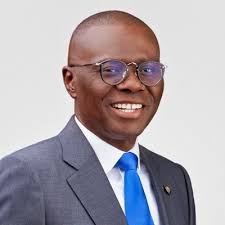


...Lagos alone accounts for ₦1.2tn domestic debt as governors head for 2027 exits...
As the political clock ticks towards the 2027 transition, 12 state governors are heading out of office with a combined mountain of debt estimated at about ₦5.3 trillion, raising fresh questions about the financial legacy they will leave behind.
The governors—who came into office promising development and economic transformation—will hand over states carrying billions of naira in domestic obligations and billions of dollars in foreign debt.
The affected states are Adamawa, Yobe, Nasarawa, Kwara, Ogun, Gombe, Bauchi, Lagos, Borno, Oyo, Imo and Bayelsa.
Figures obtained from the Debt Management Office (DMO) show that the 12 states had accumulated about ₦2.16 trillion in domestic debt by the first quarter of 2026, while their external obligations stood at approximately $2.33 billion based on the latest available state-level data.
For most of the governors, the countdown to departure ends in 2027 after completing their constitutionally permitted two terms. Governors Hope Uzodimma of Imo and Douye Diri of Bayelsa, however, will remain in office until January and February 2028 respectively.
But beneath the staggering combined figure lies a more complicated story.
While some governors have significantly reduced the debts they inherited, others have dramatically expanded their states' obligations. In several cases, domestic debt fell even as foreign debt increased, exposing states to the additional risk of naira depreciation.
Lagos towers over the rest
No state comes close to Lagos in domestic borrowing.
The state's domestic debt had surged to ₦1.205 trillion by Q1 2026, accounting for more than half of the combined domestic debt of the 12 states.
When Governor Babajide Sanwo-Olu assumed office, Lagos' domestic debt stood at ₦542.23 billion.
That means the state's domestic obligations have more than doubled under his administration.
Yet the picture changes when foreign debt is considered. Lagos reduced its external obligations from $1.421 billion in 2019 to $1.174 billion in the latest DMO profile.
Lagos therefore enters the final stretch of the administration with a strikingly mixed balance sheet: a massive increase in domestic debt alongside a reduction in external debt.
At the opposite end is Nasarawa, whose domestic debt stood at just ₦27.15 billion, the lowest among the 12 states.
Yobe recorded the smallest external debt at $46.67 million, while Lagos remained the biggest foreign borrower at $1.174 billion.
Who borrowed—and who paid down debt?
The debt records reveal sharply contrasting legacies.
In Adamawa, Governor Umaru Fintiri reduced domestic debt from ₦95.22 billion to ₦64.7 billion. But external debt moved in the opposite direction, rising from $100.61 million to $124 million.
In Yobe, the story is almost entirely upward. Governor Mai Mala Buni inherited domestic debt of ₦27.47 billion, but the figure has climbed to ₦98.60 billion. External debt also increased from $26.91 million to $46.67 million.
Nasarawa delivered one of the biggest domestic debt reductions. Governor Abdullahi Sule brought domestic obligations down from ₦89.95 billion to ₦27.15 billion. Its external debt currently stands at $60.82 million.
In Kwara, AbdulRahman AbdulRazaq reduced domestic debt modestly, from ₦59.58 billion to ₦56.92 billion, although external obligations increased from $47.96 million to $64.16 million.
Ogun, meanwhile, recorded a steep rise in both categories. Domestic debt jumped from ₦97.05 billion to ₦200.75 billion, while external debt more than doubled from $102.15 million to $217 million.
In Gombe, Governor Inuwa Yahaya reduced domestic debt from ₦76.90 billion to ₦65.17 billion, but external debt rose sharply from $36.96 million to $88.7 million.
Bauchi also saw substantial increases. Domestic debt rose from ₦93.32 billion to ₦154.45 billion, while external obligations climbed from $133.71 million to $220.6 million.
In Borno, Governor Babagana Zulum's administration increased domestic debt from ₦78.26 billion to ₦88.44 billion, while external debt more than tripled from $21.31 million to $69.9 million.
Bayelsa and Oyo emerge as debt reducers
Two states stand out for reducing both domestic and external obligations.
In Bayelsa, Governor Douye Diri slashed domestic debt from ₦147.93 billion to ₦50.17 billion. External debt also fell, from $59.55 million to $55.5 million.
Oyo recorded a similar pattern under Governor Seyi Makinde. Domestic debt dropped from ₦94.14 billion to ₦69.8 billion, while external obligations fell dramatically from $136.53 million to $87.5 million.
Imo also recorded a major domestic debt reduction. Governor Hope Uzodimma brought domestic obligations down from ₦164.44 billion to ₦81.65 billion. However, external debt increased from $64.76 million to $117.08 million.
The figures therefore paint a far more nuanced picture than the headline ₦5.3 trillion suggests.
Some administrations have borrowed aggressively. Others have paid down significant portions of inherited debt. Several have reduced domestic obligations while increasing foreign exposure.
And with governors still able to borrow before leaving office, the final debt figures could yet be considerably higher.
The real danger: what was the money used for?
Economists say the size of a state's debt should not be judged in isolation.
Professor of Development Economics at Nnamdi Azikiwe University, Uche Nwogwugwu, argued that borrowing becomes sustainable when it is invested in productive sectors capable of generating revenue and stimulating economic activity.
The danger, he said, arises when successive administrations abandon existing economic strategies and repeatedly start afresh.
According to him, states can escape the debt trap by identifying sectors where public investment can generate sustainable returns.
He cited Imo's push into the gas sector as an example of an attempt to create alternative economic drivers.
The warning is straightforward: borrowing is not necessarily the problem; borrowing without a credible return is.
Debt can build—or cripple—a state
Professor of International Economics, Jonathan Aremu, made a similar distinction.
If borrowed money produces economic value, he argued, the debt can be justified. A road that allows farmers to move their produce to markets, for example, can generate economic activity and ultimately strengthen the state's ability to repay.
But debt used for projects with little economic value becomes a burden that future administrations—and ultimately taxpayers—must carry.
The critical question, therefore, is no longer simply how much a state owes.
It is what the state owns because it borrowed.
The naira problem
External borrowing carries another danger.
As the naira loses value against the dollar, the domestic cost of servicing dollar-denominated debt rises—even if the actual dollar debt remains unchanged.
Emerging markets analyst Ike Ibeabuchi warned that states heavily exposed to foreign debt could face increasing pressure as the currency depreciates.
The naira, he noted, has fallen dramatically from roughly ₦465/$ in May 2023 to around ₦1,326/$, making dollar obligations far more expensive when converted into naira.
For governors approaching the exit door, that creates an uncomfortable inheritance.
They may leave office having completed their projects, but the bills will remain.
The 2027 question
The approaching change of government will therefore bring more than a political transition.
It will bring a financial reckoning.
The incoming administrations will inherit debt obligations, unfinished projects, repayment schedules and, in some cases, foreign-currency exposure that could become increasingly expensive.
For some states, the borrowing may ultimately prove worthwhile if the money has created productive infrastructure and new revenue streams.
For others, the debt could become a drag on budgets for years to come.
With 2027 rapidly approaching, one question will dominate the handover:
Will the next governors inherit productive assets—or simply inherit the bills?
Tenure Countdown: 12 Governors Leave States With ₦5.3TN Debt Time Bomb