






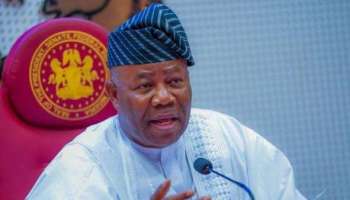







Efforts to oust Rt. Hon Otelemaba Amachree, incumbent speaker of the Rivers State House of Assembly, have failed, and the counterfeit mace smuggled in by the five anti-Amaechi lawmakers was broken.
Huhuonline.com reported previously that armed thugs sponsored by Hon Evans Babakaya Bipialaka on Tuesday besieged the Assembly chambers with a fake mace and bloodied the majority leader of the House, Chidi Loyd.
Despite the futile effort, the Rivers State Chapter of the Peoples Democratic Party (PDP) has issued a media advisory aimed at further fanning already-scorching political flame in the State.
“The Rivers State Chapter of the Peoples Democratic Party (PDP) has congratulated new Speaker of the State House of Assembly, Rt. Hon Evans Babakaya Bipialaka,” the statement, signed by one Barr Monday Oyenzeowu, said.
The party said that by the unanimous election of the new speaker, the state lawmakers have once again demonstrated the unity and sense of purpose that characterized the hallowed chamber before the crisis. It expressed optimism that the normal House proceedings, which had been stalled for months now due to executive interruption, will now pick up with the new House leadership.
The PDP statement also felicitated with other principal officers of the House elected alongside Rt. Hon Evans Bipialaka and wished them smooth and successful outing. The party called for law and order from all PDP faithful and the people of Rivers State, enjoining all the lawmakers to give their maximum cooperation to the new House leadership.
“It would be recalled that due to the suspension of some recalcitrant members of the State Legislature and the stalling of House proceedings, the lawmakers reconvened this morning, Tuesday July 9, 2013 to take far-reaching decisions, including the impeachment of the former Speaker, Rt. Hon Otelemaba Dan Amachree and his team to bring the legislature back to business,” the statement added.
However, Hon. Lloyd who sustained life threatening injuries is currently hospitalised at an undisclosed hospital in Port-Harcourt.
Speaker Amachree had convened a sitting of the House to allow Deputy Governor Tele Ikuru present amendments to the 2013 Appropriation Bill to the Assembly on behalf of Governor Rotimi Amaechi. After the presentation, the Assembly was enveloped in chaos.
According to Acting Press Secretary to the deputy governor, Godswill Jumbo, the deputy governor was exiting the Assembly when thugs loyal to the anti-Amaechi lawmakers thronged the Assembly complex, chanting solidarity songs in support of Hon. Evans Bipi and going on to damage the deputy governor’s car.
According to the statement, other cars in the deputy governor’s convoy were also badly damaged while some members of Ikuru’s entourage only escapes by foot.
Reacting to the crisis, Senator representing Rivers South-East in the National Assembly, Magnus Abe described the attack on Speaker Amachree and House Leader Lloyd under the watchful eyes of the police as a shame and slap on democracy.
“He has therefore charged lovers of democracy and Nigerians to not only condemn the dastard and barbaric act but resist moves being orchestrated by those under democratic oath to make the state ungovernable,” Boma Pepple, his spokesperson said.
Senator Abe was reacting to the incident in the House of Assembly today where five members on a mission to impeach House officers resulted to physical attacks, injuring the speaker, leader and other members before the House could sit formally.
“The Senate Committee Chairman on Petroleum (Downstream) wondered the kind of democracy we were practising in the country if democratic institutions and those elected to make laws cannot be protected,” the statement added.
Senator Abe maintained that plans to throw the state into anarchy will not succeed and urged well-meaning people of Rivers to stand by Governor Amaechi whom he said was being persecuted for defending the state.
Before Monday’s sitting, 27 of the 32 members of the Rivers State House of Assembly were in support of Governor Chibuike Amaechi while five were at the other end.
Trouble started during exchange of pleasantries, when Michael Chinda and Chidi Lloyd exchanged heated words to the extent that Chinda punched Lloyd. Three of the pro-Amaechi lawmakers who were overpowered in the House left, after which some thugs came into the chambers demanding to see the speaker.
Kelechi Wogu emerged with a mace that was markedly different from the usual one in the Assembly, and Evans Bipi was made Speaker Pro-tempore to superintend over the sitting. Once it began, Hon. Martins Amaehule moved a motion for the impeachment of the speaker for ineptitude. The five members present supported it.
Chinda subsequently nominated Evans Bipi as Speaker. The motion was carried by the five members and they immediately addressed the press. The three lawmakers who left earlier returned with other Amaechi loyalists and the governor himself, who invited soldiers for protection despite that Lloyd had initially written through Clerk of the House to the state’s police commissioner.
In the ensuing free-for-all between legislators on opposite sides, Assembly staff were vacated. Chidi Lloyd was caught on camera hitting Kelechi Wogu with the mace and chasing him through the hallowed chambers. Various properties in the Assembly Complex were vandalised.
The governor left and the 27 lawmakers loyal to him sat while Deputy Governor Ikuru presented an amendment to the state’s 2013 budget, after which the House adjourned indefinitely. By this time, the governor had left the assembly.
Evans Bipi who was elected Speaker by his faction claimed that 15 members voted to impeach the speaker. He claimed that 25 members were present but eyewitnesses said otherwise.
Narrating his account of the incident, Majority leader Lloyd said;
“Well, yesterday Speaker of the House, Rt. Hon. Otelema Dan Amachree directed that the House be reconvened to consider an amendment to the 2013 appropriation law, which the governor had communicated to him via a letter; and as if Mr. Speaker saw what was going to happen today, he wrote a letter through the Clerk of the House to the Commissioner of Police to provide security for today’s sitting and he also wrote to the commander of 2 Amphibious Brigade who doubles as the head of the internal JTF.”
He said that when the lawmakers got to work on Tuesday morning, they were surprised to notice heavy presence of policemen, and erroneously thought it was in response to the speaker’s request.
“Shortly thereafter, I noticed that the five anti-Amaechi members were discussing in clusters and calling on their boys to come in. Initially, the policemen were searching everybody who would come into the premises. I had to even come down at the gate and trek into the premises. So after a while, we learnt that there were phone calls and the commissioner of police personally called the unit, the man in charge to allow everybody in.
“We went in as members who have not seen ourselves for sometime because of the crisis in the state. I was on my seat, without provocation. Hon. Evans Bipi came to me in the full glare of everybody on camera and started raining punches on me. As his leader, I did not react because I felt that it is something we could settle. Whatever it is, maybe I didn’t greet him also. So he continued. The speaker intervened and said, ‘what’s happening?’
“Then he reached out for the tripod that stands the camera, used it freely on me — himself and Michael Okechukwu Chinda. They flogged me to their satisfaction, I didn’t just utter a word until Hon. Ihunwo graciously asked me to run for my dear life because they have brought people with guns and of course when I looked at the gallery they were shouting ‘Who is the Chidi Lloyd? Who is the Chidi Lloyd.’
So at that point, I’m sure somebody may have reached out to the governor of the state who came in with his own security because these other policemen were there standing helplessly, watching what was going on. So he came and rescued members out of the place.
“Then after a while we heard that they had sat, that they were meeting, they were trying to meet; they had procured a fake mace to the House. So we went back and I took the mace where they were sitting, then I sustained injury as a result of the violence by Michael Chinda and Evans Bipi.
“So while I was in the hospital the speaker and other members of the House sat and heard the amendment that the governor sent was presented on his behalf by the deputy governor. Now these amendments are that the governor said he was just seeking for us to enable him take care of certain unforeseen events such as flood and all that. That is why we went to work for the state only to be dealt with in the manner that they have dealt with us. I want to use this opportunity, while in the hospital here; I have received phone calls of threat to my life and to members of my family.
“Incidentally, I’m so helpless. I don’t know who to run to. I can’t go to the commissioner of police because he is already in the arena; he’s already on the other side. I’m appealing to well-meaning Nigerians to pray for me and my family. That is the last hope we have resorted to and that we also urge the National Assembly, the senate president and the speaker of the House of Reps not to turn the other way on the events of Rivers State.
“This could lead to something that we cannot imagine. It had happened in Anambra State, people were laughing. Today, it is Rivers State; nobody knows the next state it would be. If we are practising democracy, let us please for crying out loud play by the rules. Nigerians should pray for me and come to our aid. The state is under siege. You can’t even vouch for the safety of the governor. The people are getting more bashed on a daily basis.”
 |
|

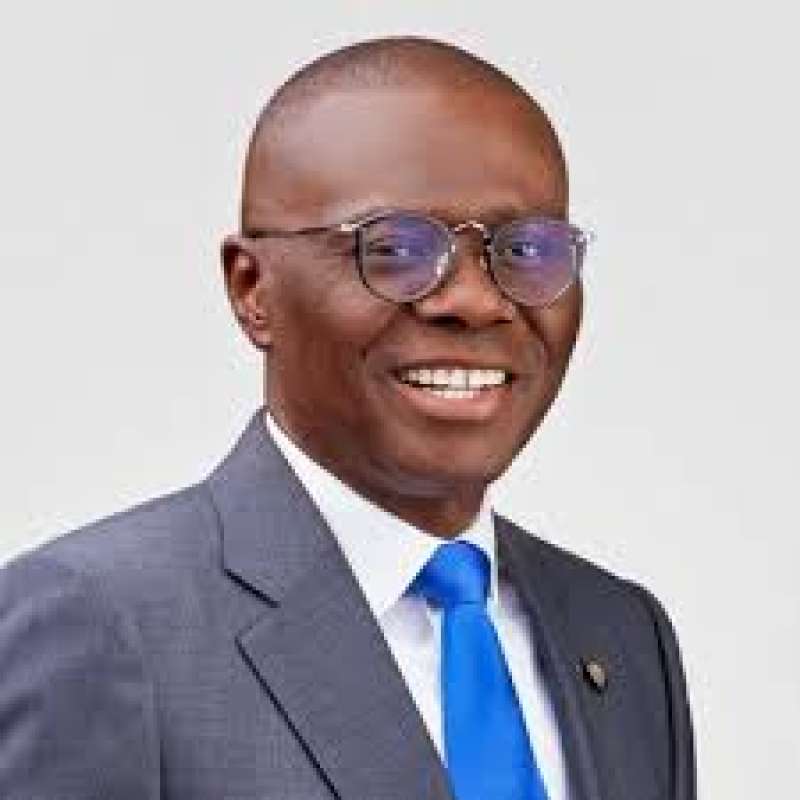
Lagos State Governor Babajide Sanwo-Olu has reportedly asked the Managing Director and Chief Executive Officer of the Lagos Waste Management Authority (LAWMA), Dr Muyiwa Gbadegesin, to resign amid growing concerns over the accumulation of refuse across the state.
The reported move follows mounting complaints about waste collection, with heaps of garbage littering roads, residential areas and drainage channels in several communities.
An unnamed source within the agency disclosed that the governor had become dissatisfied with the pace of waste evacuation and the implementation of his directives to address the situation.
According to the source, the governor's frustration reportedly intensified following his visit to the Olusosun Dumpsite in Ojota about a month ago, where he assessed operations and called for urgent measures to improve waste management.
Despite the directive and the subsequent declaration of a state of emergency on waste management, the source claimed that the governor remained concerned about the limited visible progress.
The source further alleged that Sanwo-Olu asked Gbadegesin to resign over the weekend, adding that the LAWMA chief had reportedly been seeking the intervention of influential figures in Lagos to retain his position.
Refuse Accumulation Raises Sanitation Concerns
Residents in several parts of Lagos have continued to experience waste collection challenges, with refuse reportedly accumulating along major roads, medians, residential streets and drainage channels.
Affected areas include Mushin, Egbeda, Surulere, Ajegunle, Ikorodu, Ojo, Obalende, Apapa and Mile 2.
The situation has raised concerns about environmental sanitation, public health risks and the potential impact on businesses and daily activities.
The state government had earlier announced emergency measures to tackle the problem and improve waste collection across the metropolis.
In September, Sanwo-Olu declared a state of emergency on waste management following an inspection of the Olusosun Dumpsite. The visit was attended by Deputy Governor Dr Obafemi Hamzat and other stakeholders in the waste management sector.
During the inspection, the governor acknowledged delays in waste evacuation and attributed some of the challenges to the failure of Private Sector Participation (PSP) operators to meet their obligations in recent weeks.
He also identified fires at dumpsites and ongoing waste-compaction projects as factors affecting operational efficiency.
According to the governor, the completion of projects at the Olusosun and Solous 3 dumpsites would increase their capacity, allowing each facility to receive approximately 450 trucks of municipal waste daily.
The planned improvements are expected to strengthen disposal operations and support more efficient waste collection by PSP operators.
LAWMA Reports Progress in Clearance Operations
Amid growing concerns over the waste situation, Gbadegesin announced on Saturday that clearance operations had recorded progress in several locations across Lagos.
In an update shared on his X account, the LAWMA chief said Mile 2 had been cleared, while three additional trucks had been deployed to Doyin-Orile and surrounding communities.
He also reported continued daily waste collection along Ijesha Road and Itire–Ikate, clearance operations at Bucknor–Ijegun, and ongoing collection activities in Ogolonto and Igbokusu.
According to the update, Okeira and Oluodo had been placed under interim LAWMA services following the termination of their PSP arrangements, while clearance operations continued at Iraye.
However, the agency was still awaiting field updates from four routes: Apapa, Abesan Estate, Idimu–Ejigbo Road and the Isheri–Igando corridor.
Gbadegesin said the agency's objective was to move beyond emergency clearance operations and establish consistent waste collection to prevent refuse from accumulating again in areas that had already been cleared.
Government Yet to Confirm Reported Resignation Request
As of the time of reporting, there had been no official confirmation of the alleged resignation request.
Efforts to obtain a response from Lagos State Commissioner for Information, Gbenga Omotosho, were unsuccessful, as an aide said the commissioner was attending a meeting and advised that contact be made later.
Gbadegesin was reappointed as LAWMA managing director by Sanwo-Olu following the governor's re-election.
The reported development comes as the state government faces continued pressure to address waste collection challenges and improve environmental sanitation.
Whether the alleged resignation request will result in a leadership change remains unclear, while residents continue to await sustained improvements in refuse evacuation across Lagos.
News
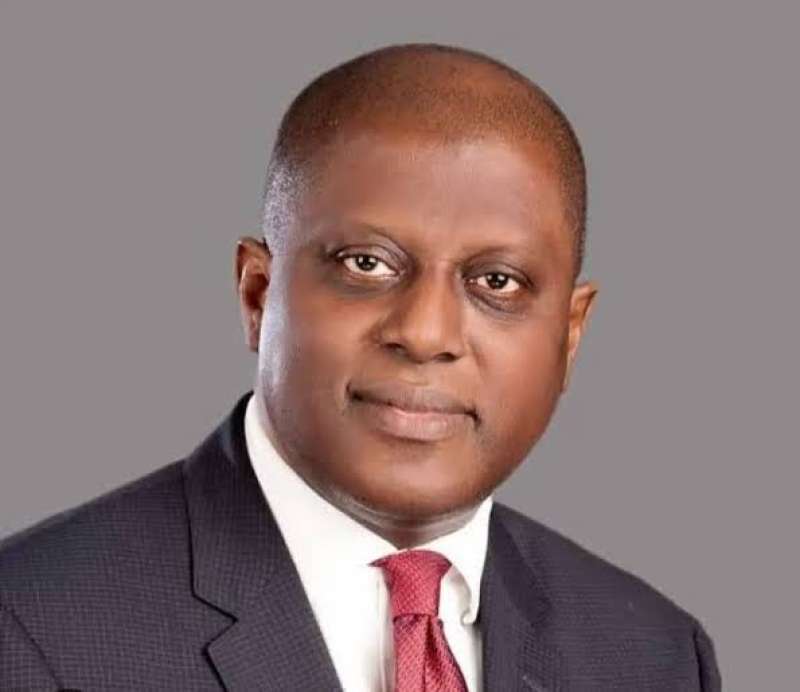
Ayobami Oyalowo, Executive Director of Finance and Administration at the Ogun-Oshun River Basin Authority, has said reforms implemented under Central Bank of Nigeria (CBN) Governor Olayemi Cardoso have improved the foreign exchange market, strengthened external reserves and enhanced the resilience of the banking sector.
Assessing Cardoso’s three-year tenure, Oyalowo said the apex bank had shifted towards a more orthodox monetary policy framework, prioritising price stability, market discipline and stronger financial sector supervision.
Cardoso assumed office in September 2023 amid significant economic challenges, including foreign exchange market distortions, declining external buffers and rising inflation. Headline inflation stood at 25.80 per cent in August 2023, while multiple exchange rates, foreign currency shortages and accumulated foreign exchange obligations weakened business confidence.
According to Oyalowo, the reforms marked a departure from the CBN’s extensive involvement in intervention programmes across sectors such as agriculture, aviation and power.
He recalled that Cardoso disclosed at the November 2023 Annual Bankers’ Dinner that the CBN had injected more than ₦10 trillion into the economy through various intervention programmes.
Oyalowo said the scale of the interventions raised concerns about excess liquidity, policy effectiveness and the central bank’s involvement in activities that could be better handled by fiscal authorities and development finance institutions.
“The economic significance of this shift lies in restoring consistency between the CBN’s objectives and its policy instruments,” he said.
Forex Market Reforms and Reserve Growth
Oyalowo identified the foreign exchange market as one of the major areas affected by the reforms, following years of multiple exchange rates, restricted access to foreign currency and accumulated obligations.
He said the CBN’s measures were designed to improve price discovery, enhance liquidity and rebuild confidence in the official market.
Among the key initiatives, he highlighted the Electronic Foreign Exchange Matching System, introduced in December 2024, and the Nigerian Foreign Exchange Code, launched in January 2025. Both measures were aimed at improving transparency, accountability and market conduct.
He also pointed to the settlement of verified foreign exchange obligations from an inherited backlog estimated at $7 billion, noting that the move helped address concerns among international investors, airlines and multinational companies over capital repatriation and legitimate financial claims.
However, Oyalowo acknowledged that the adjustment came at a significant economic cost, including sharp naira depreciation, higher import costs, increased production expenses for manufacturers and mounting pressure on household purchasing power.
On external reserves, he said Nigeria’s gross foreign exchange reserves increased from approximately $33 billion when Cardoso assumed office to about $55 billion in October 2026.
He added that net external reserves had risen to approximately $46 billion, compared with $34.80 billion at the end of 2025 and $3.99 billion at the end of 2023, citing figures disclosed by the CBN.
Oyalowo also referenced the CBN’s 2025 Annual Report, which showed that aggregate foreign exchange inflows rose by 13.81 per cent to $109.86 billion in 2025, from $96.53 billion in 2024.
Net foreign exchange inflows stood at $60.81 billion, while autonomous sources accounted for approximately 64 per cent of total inflows.
He described the growing contribution of autonomous sources as significant, explaining that private-sector inflows, export earnings and remittances could provide a more sustainable supply of foreign exchange than administrative allocation.
Improved Credit Outlook and Investor Confidence
Oyalowo further cited improvements in Nigeria’s international credit assessments as evidence of renewed confidence in the country’s economic direction.
He noted that S&P Global upgraded Nigeria’s sovereign credit rating from ‘B−’ to ‘B’ with a Stable Outlook in May 2026. Fitch Ratings also affirmed Nigeria’s ‘B’ rating in October 2026 and revised its outlook from Stable to Positive.
He said Nigeria’s return to the FTSE Russell Frontier Market classification in September 2026 reflected improvements in foreign exchange market accessibility and capital repatriation.
Despite these developments, Oyalowo acknowledged that Nigeria’s sovereign credit ratings remained below investment grade.
He also cited National Bureau of Statistics data showing that capital importation increased to $23.22 billion in 2025, compared with $12.32 billion in 2024.
Portfolio investment accounted for approximately $19.74 billion, representing 85 per cent of total capital importation, while foreign direct investment stood at about $923 million.
According to him, the figures indicated renewed investor interest but underscored the need to attract more long-term capital into manufacturing, infrastructure, energy and technology.
Inflation, Interest Rates and Household Pressures
On inflation, Oyalowo said the CBN had maintained a restrictive monetary policy stance through higher interest rates and liquidity management measures.
He noted that headline inflation moderated to 15.39 per cent in August 2026, from 15.43 per cent in July and 25.80 per cent in August 2023.
However, he cautioned that the rebasing of the Consumer Price Index in 2025 meant historical inflation comparisons needed to be interpreted carefully.
“Moreover, lower inflation does not mean prices have returned to previous levels,” he said, stressing that households continued to bear the cumulative effects of earlier price increases.
He added that while tighter monetary policy could help contain inflationary pressures, high borrowing costs had made it more expensive for businesses to access credit, potentially constraining investment and economic expansion.
Bank Recapitalisation Strengthens Financial Sector
Oyalowo also highlighted the CBN’s banking sector recapitalisation programme, introduced in March 2024, as a major component of the reforms.
The programme raised minimum capital requirements to ₦500 billion for commercial banks with international authorisation, ₦200 billion for national banks and ₦50 billion for regional banks.
By March 2026, he said, 33 banks had met the revised requirements, collectively raising ₦4.65 trillion in fresh capital.
Domestic investors contributed 72.55 per cent of the capital raised, while international investors accounted for 27.45 per cent.
According to Oyalowo, the recapitalisation exercise had strengthened banks’ capacity to absorb financial shocks and finance larger transactions.
However, he emphasised that increased capital must be supported by sound governance, effective risk management and responsible lending practices.
“Stronger balance sheets must be accompanied by sound governance, effective risk management and responsible lending,” he said.
He noted that the challenge for policymakers was to balance financial sector resilience with affordable access to credit, particularly for businesses operating under restrictive monetary conditions.
CBN, Finance Ministry Deepen Policy Coordination
Oyalowo identified the September 18, 2026, Memorandum of Understanding between the CBN and the Federal Ministry of Finance as another important development.
He said the agreement established a framework for closer coordination between fiscal and monetary authorities, covering government cash management, debt issuance planning, liquidity forecasting and macroeconomic analysis.
According to him, the arrangement could reduce the risk of fiscal and monetary policies working at cross-purposes, particularly where government borrowing and spending influence inflation, liquidity conditions and access to credit.
He added that the framework recognised the structural factors driving inflation in Nigeria, including food supply constraints, energy costs, transportation and logistics expenses.
Consolidating the Gains of Reform
Three years into Cardoso’s tenure, Oyalowo said the CBN had recorded measurable changes in foreign exchange market accessibility, external reserves, banking sector capitalisation and investor participation.
He maintained that the governor’s emphasis on monetary orthodoxy had provided the apex bank with a clearer institutional direction, while acknowledging the economic costs associated with the adjustment process.
He stressed, however, that sustaining the gains would require consistent policies, stronger productive investment and measures to ease the pressure on households and businesses.
“The next responsibility is to consolidate these reforms, preserve the gains in macroeconomic stability and create conditions for stronger productive investment, more affordable credit and improved living standards,” Oyalowo said.
Business
In The Spotlight
While delivering the 2026 edition of the Annual Omolayole Management Lecture, President, Chartered Institute of Directors and immediate past Managing Director of 11 PLC, formerly Mobil Oil Nigeria Plc, Adetunji Oyebanji, presented President Bola Tinubu with something to think about.
He declared, “Based on a 2025 normal Gross Domestic Product baseline of approximately US$290.79bn, Nigeria would need to sustain a compound growth rate of approximately 28.02 per cent over the five-year period from 2026 to 2030” to achieve the $1tn economy.
He added, “This rate far exceeds Nigeria’s historical performance and underscores the scale of economic expansion required,” and “Rather than serving as a forecast, this calculation establishes the benchmark against which future economic performance may be assessed.”
As if the priest spoke and thunder rumbled, Nigeria’s National Bureau of Statistics reported that Nigeria’s year-on-year GDP growth rate for the second quarter of 2026 was 4.43 per cent, while the World Bank projected 4.3 per cent growth rate for Nigeria in 2026, up from nearly 4.0 per cent recorded for 2025.
As Oyebanji observed, Nigeria’s economy experienced low growth rates and reversals in the last decade: from 2.65 per cent in 2015, to -1.62 per cent contraction in 2016, a modest 2 per cent rebound in 2017, another reversal, of -1.79 per cent occasioned by Covid-19 in 2020, to a positive rebound of 3.87, or nearly 4, per cent in 2025.
If anyone says President Tinubu has a yeoman’s job ahead of him, they’re spot on. And if he merely coveted the $1tn economy by faith and not with data, it would appear that the President is planning to fail.
And somebody should tell the Comptroller-General of the Nigeria Customs Service, Adewale Adeniyi, who pledged to support the President’s ambition to build the $1tn economy, not to confuse government revenue with a country’s economy.
Oyebanji recognised “governance as the central determinant of success” in the $1tn economy quest, and identified oil, gas and energy; agriculture and agro-processing; manufacturing and industrial development; technology, digital economy and innovation; infrastructure; solid minerals; and services and the creative industry as the sectoral drivers.
But it appears that only the digital, mineral resources mining, service and creative sectors can thrive in the current Nigerian economic environment, and the real sector, agriculture and manufacturing, that produce the strategic consumer goods that are mostly imported at the moment, cannot thrive yet.
The governance structures that Oyebanji suggests for the takeoff of the $1tn economy are macroeconomic stability through disciplined fiscal and monetary policies, consistency of policies, rapid investment in infrastructure and nifty tinkering with the economic environment.
These are the direct opposites of the current negatives: power supply deficit, infrastructure gap, inefficiency in the oil sector, an unstable foreign exchange rate, a low tax-to-GDP rate, insecurity, policy inconsistencies and a huge human capital deficit that compromise the capacity of the real sector and even the service industry.
If the President really wants the $1tn economy to become a reality in 2030, he should review Oyebanji’s perspectives, data and prescriptions and seek competent economists, management and financial planning experts to help him articulate a clear path to achieving this laudable economic prosperity.
Some experts, convinced he may not achieve his objective within the period he has earmarked, think he could at least set himself on the way by making ambitious efforts in electricity, security and logistics, including extensive road, railway, water and air travel networks.
Nigeria’s current electricity generating capacity is somewhere between 4,500 and 5,400 megawatts, whereas it is projected that Nigeria probably needs to generate anywhere between 20,000 and 28,000 megawatts for its 230 million population.
Some even argue that 28,000 megawatts of electricity won’t service the population of Nigeria that is projected to increase to 262 or 270 million by the magical 2030 that the President has set as a deadline for the $1tn economy.
If the electricity infrastructure is not addressed pointedly by the Federal and the state governments that have now been enabled by the transfer of electricity from the Exclusive Federal List to the Concurrent List of the Nigerian Constitution, the economy will not lift off as expected.
The declaration by the Nigerian Constitution that security and the welfare of the people of Nigeria is Job Number One of government confirms the nexus or relationship between public security, public order and the nation’s economic wellbeing.
The classic definition of the state, which is the final, supreme, absolute coercive power within a political realm, speaks to the place of the state, whose public face is the government, as both the arbiter and safeguard of the lives and economic livelihoods of the citizens of a country.
The current inability of the state or the government, which is supposed to have a monopoly on police and military force within the country, is consistently having a negative impact on the security and the economies of the North-East, North-West, North-Central and some corridors of Southern Nigeria.
The rural areas, where insurgency, terrorism, banditry, herder-farmer clashes, and kidnapping have become rampant, are unsafe for lives and unconducive for the farmers who produce the food consumed by the citizens and the cash crops that provide the raw materials for the growth of agro-allied and chemical industries.
Maybe it bears repeating that in addition to preventing harvests from the farms, insecurity is disrupting the transportation of food to the dining tables of Nigerian homes, as well as the cash crops that provide the raw materials for Nigerian industries.
The third basic aspect of the Nigerian economy that the President must take a long, hard look at, if he really wants to make the $1tn economy a reality, is logistics, which is already taking a beating from the insecurity running through most of Nigeria.
The Federal Government must find the funds and speed up the completion of Lagos-Calabar Coastal Road, the Sokoto-Badagry Expressway, the Calabar-Abuja Superhighway and additional longitudinal and lateral highways to link Nigerian farms, industries and homes.
No one can deny that roads encourage the founding and development of modern communities that later become metropolises. Look at the organic growth of urban communities from the Berger end of the Lagos-Ibadan Expressway to the Shagamu Interchange.
To prepare for the heavy lifting necessary to realise the $1tn economy, President Tinubu needs to study and take the best of the railway systems of America, which has the longest rail network in the world; China, with the largest high-speed rail network; Russia, the leader in heavy freight; and India, with the highest passenger rail network.
Cargo airports are more than necessary for quick evacuation of fresh agricultural produce from the farm gates to the urban centres where they will be consumed fresh or converted into raw materials for the agro-allied industries.
The President must find a way to harness the strength of Nigeria’s inland rivers not only to generate hydroelectric power, but also as an integral part of a transportation network that will include roads, railways and airports.
If electricity, security and logistics are taken care of, it shouldn’t be too difficult for the $1tn economy to take off organically.
By Lekan Sote
In The Spotlight
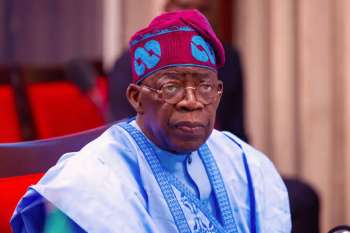
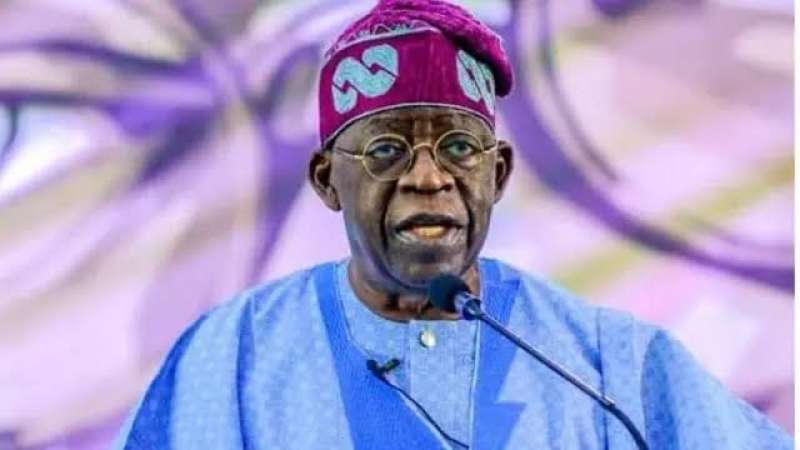
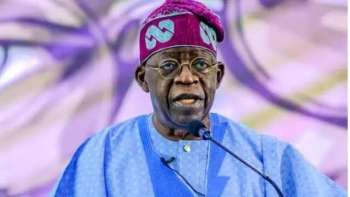
There is a question President Bola Ahmed Tinubu must answer before the 2027 presidential election: if he wants another four years in Aso Rock, why should Nigerians not expect him to stand before them, state by state, and defend his record?
His decision not to accompany his campaign team to every state has ignited a political storm, drawing criticism from opposition leaders, activists and ordinary citizens, while others insist that governance must not grind to a halt because of electioneering. The President argues that Nigeria’s pressing needs demand his attention and that members of the All Progressives Congress (APC) Presidential Campaign Council can carry his message to voters nationwide.
That argument is not entirely without merit. A sitting president has constitutional responsibilities that do not disappear during an election campaign. Government must function, security must be addressed, and the business of the nation must continue.
But there is a dangerous flaw in the President’s position: governance is not an escape route from accountability, and a campaign surrogate is no substitute for the candidate whose record is on trial.
Tinubu is not seeking a ceremonial extension of his stay in office. He is asking Nigerians to entrust him with another four years of power. That request demands more than carefully choreographed rallies, rehearsed speeches and party loyalists singing his praises. It demands answers.
What has happened to the promises made in 2023? What tangible relief have millions of struggling households received? How should Nigerians assess the consequences of petrol subsidy removal and naira reforms? What is the administration’s scorecard on electricity, food prices, employment, insecurity and the cost of living?
These are not questions that can be wished away by delegating campaign appearances to governors and party leaders. They are questions that belong to the President.
THE PEOPLE ARE NOT FOOLS
Across the country, the mood is unmistakable: Nigerians want to be heard. From the trader counting the dwindling contents of her purse to the worker whose salary struggles to survive the month, from the farmer threatened by insecurity to the young graduate searching desperately for employment, the public is entitled to demand a reckoning.
For many citizens, the election will not be an abstract contest of political slogans. It will be a verdict on their lived experience.
That is why Tinubu’s proposed absence from some campaign stops has struck such a sensitive nerve. To his critics, it suggests an unwillingness to confront public anger. Some have questioned his physical fitness; others believe he may be reluctant to defend his administration’s performance. These are allegations, not established facts. The President’s decision alone does not prove that he is unwell or afraid of voters.
Nevertheless, he should understand the political consequences of leaving such questions unanswered. In politics, a vacuum rarely remains empty. Suspicion rushes in where explanation is absent.
If the President is physically capable of discharging his duties, he should have no reason to leave Nigerians guessing about his willingness to engage them. If health or other legitimate considerations constrain his campaign schedule, he should communicate his plans clearly. Nigerians deserve honesty, not speculation.
Silence may be convenient, but it is a poor campaign strategy.
GOVERNANCE IS NOT A SHIELD
The argument that the President must remain focused on governance sounds reasonable. Indeed, Nigeria cannot afford a government that abandons its responsibilities whenever politicians hit the campaign trail.
But the same argument raises another question: what exactly is the President doing with the time he saves by skipping campaign stops, and how will Nigerians see the benefits?
If governance is the priority, then the evidence should be visible in improved security, greater economic stability, reliable electricity, better access to essential services and a meaningful reduction in the hardship confronting ordinary families.
The President cannot invoke the demands of governance as a shield against political scrutiny while asking the same citizens to renew his mandate. The two responsibilities are not mutually exclusive. A president can govern and explain his governance. He can attend to national business and still make himself available to voters.
Nor should the APC confuse the ability to organise rallies with the ability to win public confidence. Party machinery can mobilise crowds. Governors can deliver speeches. Spokespersons can defend policy. But none of them can erase the consequences of decisions taken by the President.
The mandate belongs to Tinubu. So does the responsibility to defend it.
THE OPPOSITION MUST DO MORE THAN SHOUT
Opposition figures, including former Vice President Atiku Abubakar and Peter Obi, have seized on the President’s position to question his commitment to accountability. The Labour Party and the Makinde/Daura Presidential Campaign Organisation have also criticised the plan.
Their central argument—that a president seeking re-election should personally defend his record—is persuasive. But criticism alone is not a credible alternative to leadership.
The opposition must do more than exploit public frustration. It must present workable policies, credible economic proposals, a serious security strategy and a clear plan for restoring public confidence. Nigerians deserve alternatives, not merely louder accusations.
Claims about poverty, economic failure, insecurity and government performance should be supported by verifiable evidence, not inflated for political effect. A campaign that demands accountability from the incumbent must be prepared to practise it itself.
Democracy suffers when the ruling party evades scrutiny. It suffers equally when opposition parties substitute rhetoric for substance.
THE PRESIDENCY IS NOT A PARTY HEADQUARTERS
There is another troubling issue in this controversy: the use of the Presidential Villa for the inauguration of the APC Presidential Campaign Council.
The Presidency is a public institution, not the private property of a political party. The President is entitled to lead his party and campaign for re-election, but the distinction between official state functions and partisan political activities must remain clear.
Public institutions must not be made to appear subordinate to party interests. The symbolism matters, particularly in a democracy where public trust is already under pressure. The appropriate rules governing the use of official premises and public resources must be respected without exception.
The President should set the standard, not leave Nigerians wondering whether the lines between state and party have become dangerously blurred.
FACE THE PEOPLE
Tinubu is under no obligation to conduct an exhausting, state-by-state campaign simply to satisfy political theatrics. Campaign schedules must accommodate legitimate security, administrative and personal considerations. No responsible editorial judgment should demand that a president jeopardise his health or neglect urgent national duties for the sake of appearances.
But there is a difference between not visiting every state and refusing to account for one's stewardship.
The President can publish a transparent record of his administration’s achievements and failures. He can hold substantive town halls, grant unscripted interviews, answer questions from citizens and journalists, and ensure that his campaign team presents verifiable evidence rather than political slogans. He can also visit a representative cross-section of states while explaining clearly why other stops may not be possible.
What he cannot reasonably expect is that Nigerians will accept delegation as a substitute for accountability.
Ultimately, the 2027 election must be about more than who can draw the biggest crowd or deliver the most electrifying speech. It must be about performance, policy, integrity and the willingness to answer difficult questions.
Tinubu has the right to seek another term. Nigerians have an even more fundamental right to scrutinise that ambition.
A second-term mandate is not a gift to be collected. It is a verdict to be earned.
The President should therefore face the nation with candour, defend his record with evidence and explain why he deserves another four years. If his achievements speak for themselves, let him present them. If his policies have delivered the promised gains, let him demonstrate them. If mistakes have been made, let him acknowledge them and explain what he intends to do differently.
No surrogate can do this convincingly on his behalf.
In the final analysis, the campaign may belong to the APC, but the verdict belongs to Nigerians. Their hardship cannot be delegated. Their questions cannot be outsourced. And their votes cannot be commanded.
Tinubu must face the people—not because every campaign rally is sacred, but because accountability is.