








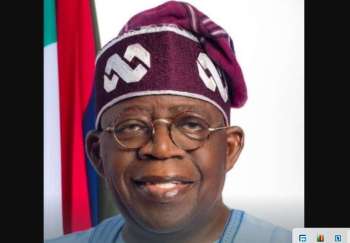
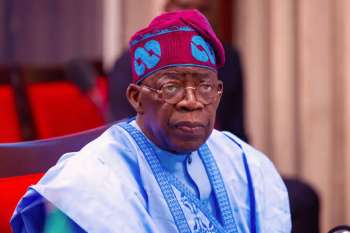

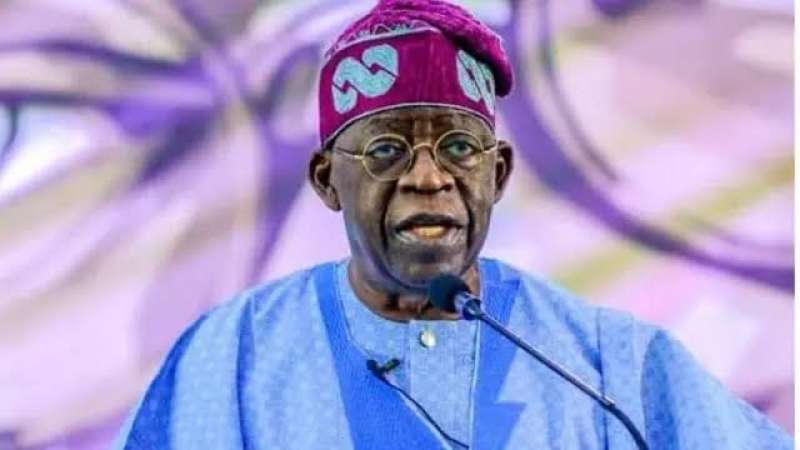


President Goodluck Jonathan on Wednesday evening told Nigerians that he was not consulted before the country's electoral umpire, the Independent National Electoral Commission (INEC) postponed the general elections earlier scheduled for February this year. This is against insinuations that the election postponement had some political undertone.
Jonathan, who answered questions from journalists at a special edition of his Media Chat, also expressed confidence in INEC as is currently composed and further expressed optimism that the INEC would conduct free and fair elections in the country.
Jonathan further promised that he remains resolute that a new government would be formed in May this year whether he lost or won the presidential election. He warned Nigerians against believing all stories they hear and read about his alleged plot to truncate the country's democracy.
"Let me reassure Nigerians that elections would be conducted and an inauguration would be made this year. Let them not be perturbed by statements like the President wants to send INEC chairman on a three months leave...it is better for INEC to conduct elections that we all believe to be free and fair," the President said.
He said he understood that Nigerians are concerned about the shift in the election date, but that during the Council of State meeting, "we met and discussed. They emphasised issues of security, which details they did not tell everybody. When INEC came up with the date for the election, there was no much issues until we began our campaign," he said complaining also that most people in the country do not have their Permanent Voters Cards. "In Lagos for example, only about 38 percent have their PVCs. There are some states where you have up to 68 percent and some states 38 percent and there are security implications to it," he said, adding that he wants a situation where eligible voters would be able to vote.
He said though he was not assuring that Boko Haram, being a major reason for the shift, would be totally wiped out in the six weeks demanded by the service chiefs, the government would make substantial progress in the confrontation and ensure that elections hold in the states currently being ravaged by Boko Haram.
"Adamawa, before this time, there were seven Local Governments taken over by Boko Haram. But as we talk now, it is Madagali that it left," he said promising that enough progress would be made and the internally displaced people could then go back to their villages where they can vote and that the government would build tents for those whose houses were destroyed.
Asked about what he would do differently if re-elected, President Jonathan gave the impression of not being satisfied with those currently working around him. He said would take seriously the impression people have of those working around him.
"We will need to adjust the way we do certain things because I have realised that in the society, what people assess you of is not the things you do, but how those things are done. The common things that people say is: 'oh! The President means well for this country'. Yes I mean well for this country because I am passionate about Nigeria. But they say: 'oh! People around the President are not good'.
"Then of course you must be very watchful of the actions and inaction of people around you so that they don't continue to drive the name of the government...it is not like many of them have done anything wrong, but the perception is worse...sometime you who are sitting there know the exact thing but if the perception is poor, then...
"Of course, we will manage the perception better. Most of the problems we are having is the perception. If you talk about concrete things that this government has done, I can challenge any group; if you look at the PTDF, the number of youths we are taking for technical training at the graduate level, masters and PhD, the number we have trained within this five years is more than the number we have trained from inception of that institution," he said.
Concerning the abducted Chibok girls, Jonathan promised that some of them would be recovered during this military onslaught. He however said Nigerians would begin to see the result of the confrontation from three weeks even though he does not want to make a specific promise.
He noted that it was not possible that all the abducted girls could be recovered and added that people had played much politics with the issue of the girls.
The President who confessed that he was always weighed down by the lack of support from Nigerians, noted that in other countries where terrorism reigns, people collapse political boundaries to find solutions to the challenge, but that in Nigeria, people take advantage of their contacts abroad to disgrace the country.
"Now that we are working with Chad and Cameroon, the story of the Chibok girls would get better. At least we can be able to rescue some of them. We have mapped out our configuration, just give us sometime.
"People try to misinform the world, play politics with the issue of Chibok girls. In most countries where you experience issues of terror, political boundaries collapse and people work together, but in this case, we have terror and you think the best way is to go to US and the others to celebrate.
"It is a collective responsibility. Is it by going to carry flags that you can bring back the girls? Those who have links outside used them negatively instead of positively.
"We will recover them alive. These girls have been in the hands of criminals. About 200 girls were kidnapped and you do not expect that the President would say he would bring back all the girls," he said while lamenting that some people even claim he is the one who has allowed the Boko Haram insurgency to fester.
Asked what would happen if the war against Boko Haram is not won in six weeks, the President answered: "in 2011, when we conducted elections, there was Boko Haram. Nobody is saying they must wipe out Boko Haram completely before conducting the elections. Definietly in the next six weeks or so, serious advancements would be made, we are not saying we would wipe out Boko Haram. Elections would be done."
He further lamented the rate at which politicians cross-carpet, saying it was not the best for Nigeria's politics. "In politics, there is no permanent friend or enemy but permanent interest. If you look at even the carpet crossing that is so much abused...some governors moved from the PDP to other parties and some moved to the PDP. It is not good.
"I know two presidents who have asked me what is wrong. It is because the courts have not taken a decision," he said.
Asked if this would not affect his support base, he said elections are about convincing people especially as history had shown that it is more difficult to win elections for a second term in office than in one's first term.
He also accused some unnamed politicians of instigating youths to pelt him with stones, saying it was a treasonable offence that could earn the perpetrators death, but that many of those who took part in the act were ignorant.
"You could be killed. The President is the only person that is guarded by soldiers. The Vice President is guarded by the police," he said maintaining that such actions and the provocative statements people have been making were not helping the electioneering.
He confessed that he got aggressive at the flag-off of his presidential campaign in Lagos because he was provoked by statements that the opposition had been making before that day.
Reminded that some people close to him have said there would be war if he lost, President Jonathan insisted that he was concerned about the people around the candidates. He recalled that it was the same Muhammadu Buhari, his main rival, that also contested against him in 2011 and the electioneering was not as bad as it is now.
He also insisted that the country was bigger and more important than any of their ambitions and that while other candidates could do what they liked, he cannot because he takes all the blames for whatever goes wrong including poor conduct of the elections where that happens.
"Within this campaign period, there are some instigations which are necessitated by some politicians. We are noticing some traces and no chief security would take it lightly," he noted.
Asked about the adverts of character assassination against some candidates contesting against him as well as those like chief Edwin Clark making provocative statements, President Jonathan said in most cases, he does not know those sponsoring such adverts adding that in politics, one must have friends and enemies but that for the friends, it is difficult to know what they do or say.
"One thing about politics is that you have a number of people who support you, but you do not know what they do or say. More than 80 percent of those who carry adverts about Jonathan, you may not even know," he said.
He however noted that hate speeches come from the two major candidates, "but we will do it in such a way that people do not go war. We must protect this country and those who are supporting us."
Asked why he visited churches and would not visit mosques, he said most of the pastors and churches invite him when they have events but that that it was not the same with the Muslims who prefer to invite the Vice President instead while he (President) only attends youth events but has not visited mosques because it is a purely religious issue.
Jonathan used the opportunity to clarify his much talked about controversial distinction between stealing and corruption. Jonathan who had said stealing was not corruption, said he was actually quoting a former Cheif Jistice of Nigeria, Dahiru Mustafa who had said when he checked the files, 80 percent of what people call corruption are stealing.
Explaining in details, he said many Nigerians do not know the difference and that as a result, they cover issues of stealing with the word 'corruption'. He said that in most villages and towns in the country, people saw stealing as more grievous than corruption.
"The good thing is that those who are making the statement did not say the President said stealing is good. I used that statement because I quoted Mustafa, a former ICPC chairman. Justice Mustafa said he took most of the files and more than 80 percent are just stealing. Our people hate thieves more than they hate people who are corrupt.
"If you say some people are corrupt, some people do not even know what you are talking about. A thief should be called a thief, ole should be called ole. If somebody is a thief, call him a thief. If somebody is ole, call him ole. Don't cover it with corruption. Let us communicate properly," he said adding that the ICPC is the legally authorised agency among the anti-corruption agencies that is saddled with the fight against corruption.
He also said in terms of prosecuting people, his government had achieved more conviction, "but even if you convict one million people, it won't stop it." He said the government was now making use of information technology to combat corruption just like the government had successfully done in the agricultural sector.
He disclosed that his government had not started drawing the $1b loan approved for security and the issue of the $9.3 billion seized by the South African government was in court. He said money had been paid to the company for the supply of arms and ammunition but that the company did not handle the cash well. He however said the arms for which the money was paid had been delivered.
The President further explained that the US refused to sell arms and hardware to Nigeria because of human rights concerns but that Nigeria was dealing with other countries even though some of the hardware were not as powerful as the ones needed for the battle.
He insisted that his government would not stay more than May 29 if he lost the forthcoming election. He however said the campaigns would continue since the elections had been postponed.
Concerning the failed ceasefire with the Boko Haram, the President said it was not that the government was swindled, but that though people actually met with the government, the Boko Haram seemed divided and factionalised, that was the reason the negotiation did not work.
Asked to assess Buhari, he said it was not a fair demand since they were both contesting for the same position.
"If I should assess Buhari, it is not fair of me. I think the garbage on me is much more than the one on Buhari. I don't even have the time to do social media. Some of the things I have observed I feel sad...I remember that the APC started their campaigns before me. If you listen to the way I spoke in Lagos, I was a bit aggressive because of the statements that have been made," he said.
 |
|

The daughters of veteran Yoruba actor Taiwo Hassan, popularly known as Ogogo, have appealed for urgent medical assistance for their father, who they say is battling stage-four cancer.
Lima and Kira Taiwo made separate emotional appeals on Instagram, asking Nigerians, medical professionals, cancer specialists and well-wishers to help the actor access further treatment.
The family stressed that the appeal was not for financial donations but for medical intervention and access to specialists or healthcare facilities capable of reviewing the actor’s condition and determining whether further treatment options are available.
In an emotional video, Lima said her father’s condition had deteriorated significantly and claimed that hospitals were no longer willing to continue treating him.
She explained that the family only became aware of the seriousness of his condition about three weeks earlier, noting that his appearance had not initially suggested that he was seriously ill.
According to her, the family was willing to explore any legitimate medical option that could give the actor another chance.
Lima appealed to anyone with connections to oncologists, hospitals or other qualified medical professionals to contact the family.
She also acknowledged the support of a relative who, according to her, had stepped in to assist the family during the difficult period.
Kira, in a separate video, disclosed that her father had been diagnosed with stage-four cancer and said the hospital treating him had informed the family that he could no longer continue with chemotherapy.
She similarly appealed for medical assistance, asking anyone with access to cancer specialists or facilities capable of managing advanced cancer to reach out to the family.
Kira also mentioned the support of Senator Yayi, whom she said had been helping the family with medical expenses.
While pleading for help, she became emotional as she described the pain her father was experiencing and said he had expressed his fear of dying.
The daughters' appeals have since attracted support from several prominent figures in the Nigerian entertainment industry.
Actor and filmmaker Femi Adebayo urged the public to rally around Hassan and help the family connect with qualified oncology specialists and advanced treatment centres.
Adebayo said the family's immediate need was medical direction rather than financial assistance. He encouraged people with contacts in the oncology field, both in Nigeria and abroad, to help the family have the actor's medical records reviewed and identify possible treatment options.
Actress Toyin Abraham also shared the family's appeal on Instagram, asking anyone who could assist to contact Kira, Lima or her directly.
Meanwhile, medical doctor Olusina Ajidahun, known on X as The Bearded Dr Sina, offered a different perspective on the daughters' description of the situation.
Ajidahun cautioned that saying hospitals had “refused to treat” the actor could create the impression that medical professionals were deliberately abandoning him.
He explained that patients with advanced, stage-four cancer may sometimes be moved from active cancer treatment to palliative care after available chemotherapy and other therapies have been considered or exhausted.
Palliative care focuses on controlling symptoms, relieving pain and improving quality of life when a disease can no longer be effectively cured. It does not necessarily mean that healthcare professionals have simply abandoned a patient.
Ajidahun also warned the public against unverified claims that herbal preparations can cure advanced cancer. He said such remedies could potentially cause additional complications, particularly if they interfere with established medical treatment or damage other organs.
He further explained that stage-four cancer generally indicates that a cancer has spread from its original site to other parts of the body, although the exact implications and available treatment options depend on the particular cancer and the individual patient's medical circumstances.
The doctor clarified that he was not involved in Hassan's treatment and was commenting independently in response to the videos posted by the actor's daughters.
Taiwo Hassan, 66, is one of the most recognisable figures in Yoruba-language cinema. With a career spanning more than four decades, he has appeared in hundreds of Nigerian films and has built a reputation as one of the industry's veteran performers.
As of the time of the reports, Hassan's management and family had not released a detailed official statement identifying the type of cancer, the hospital where he is receiving care, or the specific treatment he has undergone.
The family's appeal has nevertheless prompted renewed calls for qualified medical professionals and cancer treatment centres to review the actor's case and advise on any medically appropriate options that may remain available.
News
Twenty-four companies now account for nearly three-quarters of the total value of Nigeria’s equities market, highlighting the growing concentration of market wealth among a relatively small group of large-cap stocks.
As of August 17, 2026, the companies had a combined market capitalisation of N117.01 trillion, representing 74.8 per cent of the Nigerian Exchange Limited (NGX) equities market, whose total capitalisation stood at N156.52 trillion.
The NGX market capitalisation has increased by N57.14 trillion, or 57.5 per cent, from N99.38 trillion at the end of 2025.
The sharp rise has been supported by strong gains across several sectors, particularly banking, consumer goods, industrial goods and energy. However, the concentration of market value means that the performance of a relatively small number of heavyweight stocks can have a significant influence on the broader market.
Large-cap stocks dominate the market
Dangote Cement Plc emerged as the most valuable company on the NGX, with a market capitalisation of N17.15 trillion, overtaking MTN Nigeria Plc.
BUA Foods Plc and BUA Cement Plc followed with N13.69 trillion each, while Aradel Holdings Plc was valued at N6.72 trillion.
Other companies among the most highly capitalised stocks included First Holdco Plc, HBM Nigeria Plc, Zenith Bank Plc, GTCO Plc, Stanbic IBTC Holdings Plc, Transcorp Hotels Plc, Presco Plc and Nestle Nigeria Plc.
The 24 companies are spread across several major sectors, with banks accounting for a significant portion of the list.
Banks maintain a strong presence
First Holdco led the banking stocks with a market capitalisation of N6.37 trillion, followed by Zenith Bank at N5.04 trillion and GTCO at N4.70 trillion.
Stanbic IBTC Holdings was valued at N2.56 trillion, while United Bank for Africa (UBA) stood at N1.99 trillion.
Access Holdings and Fidelity Bank had market capitalisations of N1.45 trillion and N1.38 trillion respectively. Ecobank Transnational Incorporated and Wema Bank followed with N1.27 trillion and N1.16 trillion.
The strong performance of banking stocks has been linked to improved investor sentiment and the sector's recapitalisation programme, which has encouraged expectations of stronger balance sheets and greater capacity for future growth.
Consumer goods stocks remain prominent
BUA Foods was the largest consumer-related company on the list, with a market capitalisation of N13.69 trillion.
Presco followed at N2.40 trillion, while Nestle Nigeria was valued at N2.22 trillion.
Nigerian Breweries and International Breweries recorded market capitalisations of N2.10 trillion and N1.79 trillion respectively.
Although consumer-facing companies have benefited from expectations of improved operating conditions, the sector continues to contend with elevated production costs, inflationary pressures and weak household purchasing power.
Industrial giants drive market value
The industrial goods sector is another major source of market concentration.
Dangote Cement led the sector with a market capitalisation of N17.15 trillion. BUA Cement followed with N13.69 trillion, while HBM Nigeria had a market value of N5.38 trillion.
The size of these companies means that changes in their share prices can significantly affect overall market performance.
Energy stocks gain prominence
The energy segment also featured prominently among the largest companies.
Seplat Energy and Aradel Holdings each recorded market capitalisations of N6.72 trillion, while Geregu Power stood at N2.06 trillion and Transcorp Power at N1.65 trillion.
The growing representation of energy companies reflects increasing investor interest in Nigeria's oil, gas and power businesses.
Market rally masks wide differences among stocks
Despite the strong performance of the broader market, individual stocks have produced vastly different returns.
Zichis Agro Allied Industries was the best-performing stock year-to-date as of August 17, gaining 1,744.22 per cent to N18.35 per share.
SCOA Nigeria rose 365.49 per cent to N33.05, while Infinity Trust Mortgage Bank gained 221.43 per cent to N11.25.
Berger Paints Nigeria increased by 207.50 per cent to N147.60, while Premier Paints appreciated by 204 per cent to N30.40.
Other major gainers included First Holdco, up 198.51 per cent to N140; Vitafoam Nigeria, which gained 153.04 per cent to N194; and HBM Nigeria, which rose 149.25 per cent to N334.
However, the market rally did not benefit all investors.
Sovereign Trust Insurance was the worst-performing stock, falling 50.39 per cent to N1.89.
Ellah Lakes declined 41.52 per cent to N8.10, while Guinea Insurance dropped 43.37 per cent to N0.76.
SUNU Assurances Nigeria fell 39.64 per cent to N3.32, while Austin Laz declined 39.06 per cent to N2.84.
Royal Exchange, Triple Gee & Company, Champion Breweries and Universal Insurance also recorded significant declines.
Transcorp Power fell 28.45 per cent to N219.60 despite the overall strength of the market.
Asset size paints a different picture
Market capitalisation is not the only measure of corporate size.
When companies are ranked by total assets, the picture changes considerably.
Ecobank Transnational Incorporated had the largest asset base in the second quarter of 2026, with total assets of N49.15 trillion.
First Holdco followed with N30.65 trillion, while Aradel Holdings recorded N10.88 trillion.
FCMB had total assets of N8.36 trillion and Oando N7.89 trillion.
Dangote Cement reported N6.62 trillion in assets, followed by MTN Nigeria with N5.97 trillion and Sterling Holdings with N4.67 trillion.
BUA Cement and BUA Foods recorded total assets of N1.92 trillion and N1.67 trillion respectively.
However, a large asset base does not necessarily translate into high profitability or strong shareholder returns. For financial institutions in particular, substantial assets are often accompanied by significant liabilities.
Negative equity raises investor concerns
The second-quarter balance sheets also highlight differences in financial strength.
Ecobank Transnational had shareholders' equity of N3.17 trillion, while First Holdco recorded N3.63 trillion.
MTN Nigeria had positive equity of N930.61 billion, while Sterling Holdings reported N547.67 billion.
Dangote Cement had equity of about N3.17 trillion. Jaiz Bank and United Capital recorded positive equity of N93.6 billion and N187.09 billion respectively.
However, Aradel Holdings reported negative equity of N2.16 trillion despite having total assets of N10.88 trillion.
Oando also recorded negative equity of N530.45 billion against total assets of N7.89 trillion.
Negative equity does not automatically mean that a company is incapable of recovering, but it warrants closer examination of its debt obligations, cash flows, capital structure and plans to strengthen its balance sheet.
Analysts urge investors to look beyond the index
Market analysts have cautioned investors against interpreting the NGX's strong headline performance as evidence of a broad-based improvement across all listed companies.
David Adonri, an analyst and Chief Executive Officer of Highcap Securities Limited, said the concentration of market value among a relatively small number of companies makes it important for investors to examine individual stocks rather than rely solely on the All-Share Index.
According to him, strong market performance can conceal significant differences in company fundamentals, earnings and valuations.
He also warned investors against buying stocks simply because they have recorded exceptional year-to-date gains, noting that substantial price appreciation does not necessarily correspond with an equivalent improvement in underlying business performance.
Another analyst at InvestData Consulting Limited advised investors to pay particular attention to companies with negative shareholders' equity.
The analyst said investors should determine whether negative equity is temporary, whether management has a credible recapitalisation or restructuring strategy, and whether the underlying business generates enough cash to meet its financial obligations.
Analysts divided on investment prospects
Analysts' recommendations also show that the market rally has created both opportunities and valuation concerns.
Of the 32 stocks assessed, 17 received Buy or Strong Buy ratings, while 12 were rated Sell or Strong Sell. Three stocks received Neutral ratings.
Among those rated Buy or Strong Buy were Aradel Holdings, Access Holdings, Dangote Cement, Dangote Sugar, FCMB, GTCO, Guinness Nigeria, HBM Nigeria, Honeywell Flour Mills, Nigerian Breweries, Nestle Nigeria, UACN, Transcorp Corporation, UBA, Zenith Bank and Cadbury Nigeria.
Stocks receiving Sell or Strong Sell recommendations included BUA Cement, BUA Foods, Conoil, First Holdco, International Breweries, Julius Berger, Okomu Oil, Presco, PZ Cussons, Stanbic IBTC, TotalEnergies Marketing and Unilever Nigeria.
Fidelity Bank, Ecobank Transnational Incorporated and NASCON Allied Industries were rated Neutral.
The divergence in recommendations suggests that investors are becoming more selective as valuations rise.
Analysts said investors should focus on earnings growth, dividend potential, debt levels, cash generation and return on equity when assessing individual stocks.
Concentration presents both opportunity and risk
The dominance of 24 companies in the NGX's total market value underscores the growing influence of large-cap stocks on Nigeria's equity market.
For investors, the strong market rally presents opportunities, but it also highlights the importance of distinguishing between rising share prices and improving business fundamentals.
A stock market can deliver a strong headline return while individual companies experience very different outcomes.
With nearly three-quarters of market capitalisation concentrated in a small group of companies, movements in these stocks will remain critical to the direction of the NGX.
The message for investors is therefore clear: a rising market is not necessarily a uniformly attractive market. Understanding valuations, earnings, balance sheets and cash flows remains essential when deciding where to invest.
Business
In The Spotlight
The Osun election is over, and Governor Ademola Adeleke has won another term. That fact invites a revisit of the prophets, defectors and sages who explained why Osun voters must reject him. Hubris, the Greeks knew, often enters wearing wisdom’s costume and leaves carrying its shoes. In politics, certainty is often merely ignorance wearing a tailored suit.
The first lesson is elementary, yet apparently postgraduate in Nigeria: voters are not an audience waiting for pundits to announce the correct answer. Temitope Ajayi, a Senior Special Assistant to Mr President wanted the voters to elect a “CEO rather than an entertainer”. APC’s National Publicity Secretary, Mr Felix Morka called Adeleke first term “very dismal” and “lacklustre.” Benjamin Adereti called the administration a “colossal failure,” while Oluremi Omowaye predicted voters would remove him. Ajibola Basiru, Tajudeen Lawal and Iyiola Omisore joined the indictment. Their criticisms were legitimate; their certainty was the experiment.
The Court of Adjectives
One can accuse a government of failure; one cannot appoint oneself clerk of the voters’ conscience. “Dismal,” “lacklustre,” “colossal failure” and “incompetent” are adjectives, not polling units. A ballot does not admire rhetoric; it asks citizens what they think. This does not sanctify Adeleke or invalidate criticism. It demonstrates the difference between argument and verdict: one belongs to commentators, the other to citizens.
Then came the entertainment thesis. Ajayi and others treated Adeleke’s dancing as though Terpsichore had amended the Constitution. Monday Okpebholo, the Governor of Edo State mocked the dancing, questioned meeting attendance and joked about “dancing roads.” Bashir Ahmad, the Former Personal Assistant to President Buhari reportedly bookmarked Davido’s post, anticipating an APC victory and future victory lap. What a museum of premature triumph! As the Yoruba proverb says, when the drummer changes rhythm, the dancer must listen; here, the electorate changed the rhythm.
There is a deeper irony. Governance is not judged by whether a governor looks miserable while working. A dancing governor can fail; a solemn governor can fail magnificently. An exuberant politician can govern competently. The serious questions are roads, schools, health, jobs, debt, investment, institutions and outcomes. President Olusegun Obasanjo’s counsel to Adeleke – do not stop dancing, but work – contains more wisdom than the anti-dance industry. The dance is personality; the work is the test.
The Insiders’ Paradox
Morka, Adereti, Omowaye, Basiru, Lawal and Omisore should not confuse electoral disappointment with a prohibition on criticism. Democracy needs vigilant opposition. But the stronger the allegation, the stronger the evidence required. If the government was catastrophic, show figures, baselines, procurement records and outcomes. In the Republic of Evidence, adjectives are unemployed.
Then there are former insiders: Moyoade Lukman and Azeez Kazeem, who served as Adeleke’s aides before breaking ranks and campaigning against him. Lukman called his APC move a “homecoming”; Kazeem abandoned his appointment for Bola Oyebamiji. Yet a riddle remains: if the house was uninhabitable, why did the discovery arrive after you acquired a room key? They were inside the kitchen, not tourists at the window.
Dr Leye Olagbaju and Asamo Gbenga, from the Accord camp, also rejected Adeleke’s candidacy and questioned his leadership capacity. Yet Nigerian politics turns former companions into overnight Herodotuses, each suddenly possessing the definitive history of the man they once embraced. Proximity gives information, not omniscience. A former ally may know where the furniture is kept and still misunderstand why guests keep arriving.
The Missing Political Arithmetic
The APC and ADC also appear to have overlooked a stubborn feature of Osun politics: power shift. All three leading contenders – Ademola Adeleke, Bola Oyebamiji and Najeem Salaam – came from Osun West. Osun Central and Osun East could ask: if the West retains power now, when does our turn become plausible? Adeleke’s second term potentially creates a clearer succession horizon. Some voters may have seen not merely a candidate, but a timetable. Electoral arithmetic is rarely as simple as campaign arithmetic suggests.
This is Nigerian politics 101, though campaign strategists treat it like an optional seminar. Identity politics does not always arrive with drums and banners. Sometimes it whispers in compounds, markets, party meetings, families, traditional circles and WhatsApp groups. It asks: whose turn, from where, and after whom? Zoning can function as an informal bargain over inclusion where groups fear exclusion. Disliking that logic does not make it disappear.
The Humbling of the Sure
That is where campaign confidence became comic weakness. Critics saw a referendum on Adeleke’s performance; many voters were also seeing a referendum on succession. The opposition could present promises, yet voters could calculate geography, identity and tomorrow simultaneously. Politics is not Euclid’s geometry; it is a marketplace of memory, expectation, fear, interest and hope. The television winner may lose at the polling booth. Aristotle understood persuasion requires knowing the audience; Nigerian politics adds that audiences may smile politely and vote differently.
And so, certainty met the old proverb: the person who says the road is clear may be the one who has not looked around the bend. Oyebamiji ran a serious race and should not become a punchline. Salaam also contested seriously. Their defeat is not evidence of incompetence; their coalitions simply did not assemble enough votes. Democracy becomes vulgar when every winner becomes a genius and loser a fool.
These political actors should resist explaining Osun back to Osun. Lukman and Kazeem may retain their convictions; Olagbaju and Gbenga theirs. Ajayi may keep believing in CEOs. Ahmad may keep his bookmark. Okpebholo may keep dancing around dancing. Morka can scrutinise. Basiru, Adereti, Omowaye, Lawal and Omisore can oppose. None must surrender principle; all should surrender the fiction that confidence equals knowledge.
For Adeleke, victory is not absolution. A second mandate is a heavier moral contract. He must make critics eat their words through roads that last, schools that function, hospitals that heal, agriculture that produces, jobs that endure, institutions that strengthen and public money that survives scrutiny. The finest reply to “entertainer” is development; the finest answer to “dismal” is performance.
Democracy is the institutionalisation of uncertainty: nobody owns the future, and nobody is entitled to permanent correctness. Socrates understood that wisdom begins with recognising the limits of knowledge. Shakespeare gave Prospero’s reminder that certainties are fragile. Parties that ask why predictions failed may become wiser; parties that blame voters will merely become louder.
The election has answered them all – not by proving Adeleke flawless, but by puncturing the conceit that declaration can substitute for persuasion. Osun voters weighed performance, personality, identity, geography, loyalty, fear, hope and succession, then chose. We may dispute their arithmetic, but cannot confiscate their answer. The ballot is the people’s footnote, sometimes rewriting the book.
Congratulations to His Excellency, Senator Ademola Nurudeen Jackson Adeleke, on his re-election. Let the music become measurable progress, not merely memorable choreography. Dance, Governor, but let every step move Osun forward; let every turn open a road, every rhythm create opportunity, every flourish produce measurable public good. Dance past the pothole, classroom deficit, hospital queue and unemployment line. Dance Osun into development, prosperity and institutional seriousness through 2030. If you do, your reply to the prophets will require no press release. The results will speak, and history will applaud.
By Abdulrauf Aliyu
In The Spotlight
I had initially planned that Long Range would address a troubling scenario in our nation’s beleaguered history, where religion appears to have stolen the leaders’ and the citizens’ brains while we all scheme to glorify ourselves and vainly attempt to scheme against the one we claim to serve. Have you ever wondered why evil continues its ascendancy in the land when churches and mosques grow uncontrollably in every nook and cranny?
These organisations are mostly meant to conceal our shady interactions, criminal corruption and moral somersaults. This will have to wait today, though, till another auspicious time.
A recent visit by the Nigeria Union of Petroleum and Natural Gas Workers to President Bola Tinubu on Thursday has put paid to this plan (at least temporarily) to avoid being carried away by the much religious matters while the nation embarks on another fruitless venture to please some self-serving, transactional unionists whose actions have done more than enough damage to the progress of the country.
I have waited for three solid days for Tinubu to stoutly refute a statement ascribed to him to revive the nation’s dead refineries during the visit of NUPENG leaders to the Villa led by its Executive President, Salimon Oladiti. It might not be out of place to suggest that the President might have been humbled by the ‘executiveness’ of the union president’s office. I hope I didn’t hear you complain of Nigerians craze for titles.
I may be wrong, but I have a feeling that our dear President must have started hearing some strange voices that sane Nigerians might not be able to understand concerning the promised revival of the dead refineries. If I may ask you, which refinery is Tinubu planning to revive among the obsolete plants in Port Harcourt, Warri or Kaduna? Thank goodness, he hasn’t specified yet.
At the risk of telling the President what he already knows, it may be necessary to remind Tinubu that former President Olusegun Obasanjo sold 51 per cent stake of the refineries in Port Harcourt to an Aliko Dangote-led consortium for $56m before he exited office as President in 2007. NUPENG’s sister labour union, the Petroleum and Gas Senior Staff Association of Nigeria, desperately opposed the sale of the refineries.
OBJ characteristically dismissed the association’s threats by selling the refinery to the Dangote-led Bluestar consortium, but PENGASSAN still pressured the late President Umaru Yar’Adua to reverse the sale of the refinery, correctly described as scraps by Obasanjo, immediately after Yar’Adua mounted the saddle in 2007. Not only that.
The nation opted to pay $25m for cancelling the sale, apart from paying back the initial agreed sum, a development some Yoruba will describe as an ‘Akotileta’ economic model.
Aside from the fact that the refineries hadn’t produced fuel since the regime of the Minna dictator, Gen. Ibrahim Babangida (1985 – 1993), Obasanjo, on the recommendation of some experts, said the refineries had become obsolete while the contractors that produced the equipment of the refineries no longer existed. He might have been correct to have described the refineries as scraps.
That the four refineries did not produce a litre of petrol in about three decades did not stop the drama. The Nigerian National Petroleum Corporation continued to pay idle workers, including hundreds of members of the amorphous NUPENG and PENGASSAN excos, huge wages and maintain comatose facilities for years for zero productivity.
As if the scandalous payment of salaries to idle and non-existent workers was not enough, the former Group Managing Director of NNPCL, Mele Kyari, negotiated and secured a $3.3bilion loan-for- crude deal with AFREXIM Bank under a dubious claim of repairing long-forgotten refineries and boosting crude production in August 2023, right under Tinubu’s watch.
All the consortium of lies to bring back the Port Harcourt refineries to justify the brazen theft of the humongous $3.3bn loan fell flat in 2025 when the facility ignored all human pressure to make it work while more lies continued to fly. So, where is the loan? Where is the money? And where is the working refinery?
While the racketeers are licking their cursed soup somewhere, Nigerians are slaving to pay for this barefaced robbery that took place under our dear President, who is equally planning to bring back dead refineries to life. I never knew before now that, apart from being a deft politician, Tinubu is equally a very powerful prophet, especially at giving life back to dead facilities; this could partly have motivated his promise to resurrect dead refineries.
Can someone do me a favour by reminding the President of the February 4, 2026, testimony of the current NNPCL’s GMD, Bayo Ojulari, concerning the dead refineries Tinubu had promised to bring to life? Ojulari emphatically stated that the corporation was operating the refineries at “monumental losses”, producing comparatively low-value products and that NNPCL presently lacked the capacity to operate them profitably.
I once learnt that Tinubu’s fuel stations in the United States helped to fund the activities of the operatives of Radio Kudirat (including former Ekiti State governor, Dr Kayode Fayemi) and National Democratic Coalition’s chieftains in the Diaspora. I, however, doubt if Tinubu’s current knowledge of the workings of the refineries can match or beat Ojulari’s. In Fela Akikulapo’s word, who is the teacher teaching Tinubu nonsense about the refineries?
Before our dear President ‘carry out his threat’ to embark on the revival of the moribund refineries, which I must admit is ill-advised with due respect, it may be necessary to remind him of a few critical issues to take care of. One of these is to beg him to carry out a comprehensive audit of the funding of previous Turn Around Maintenance of the refineries since 1999 to date.
For some of you who may not know, most of the TAMS contracts in the years past had always been awarded a year before general elections (in the mode of this promised resurrection). Don’t ask me the reasons; I don’t have an idea, but the outcomes had always been the same – dead on arrival, journey to nowhere.
There was a time the Kaduna refinery went up in flames a week after its TAM was completed. A key witness equally died in a strange accident during the probe of the strange fire. Another fire occurred in the facility on November 4, 2002. The fire damaged its Fluid Catalytic Cracking Unit — the section essential for producing higher-value products such as petrol. Other incidents before this in other plants were not less predictably curious. Na so we dey run am o!
Like the litany of probes instituted by the National Assembly into many deserving and flippant issues, none of the panels which had sat on the probes of the refinery fire had ever completed their job – no report. Tinubu, therefore, needs to exhume these reports (if ever they exist) from their eternal graves before embarking on another ritual of attempting to start a project that will never be fruitful. It’s not a curse.
Servicing a $3.3bn AFREXIM Bank crude-for-loan deal (as negotiated by Kyari) in a highly controversial manner remains questionable, scandalous and outlandish. The President must tell the nation the status of this fraud-laden deal before ever initiating another move to waste huge sums of our dollars on reviving the nation’s refineries that the NNPCL has equally passed off as operating at “monumental losses”.
I can assure our good-hearted Jagaban, in case he might have been overwhelmed by the pressure of his office (it’s a hot seat, really), that all Nigerians are equal stakeholders in the Nigerian project. A few can’t be swimming in the ocean of our collective sweat while the rest slave daily to shoulder the burden of a debt they never enjoyed the benefits.
If the President fails to act on this complicated $3.3bn loan, I may be forced to leak to him what some concerned personalities have imputed to him concerning this transaction, which would have been impossible without anyone empowering Kyari to ‘take the laws into his own hands’. To learn that the Economic and Financial Crime Commission is not looking into this legacy theft is mind-boggling, very strange.
The President can’t sleep on this deal and mouth the moral right to embark on another wasteful venture to revive dead refineries. This is surely not the way to build a nation that everyone will be proud of no matter the current economic scenario.
Meanwhile, recently, I read about former Vice President Atiku Abubakar carpeting Tinubu for blaming past governments’ actions and inactions for the failure of the refineries. Permit me to briefly transform my presentation into our local mode: Our leaders no get shame at all!
Should an Atiku ever feel he has the moral authority to advise anyone on integrity and moving the nation forward? How can leaders, who took delight in selling state assets to themselves, think that the citizens have forgotten their roles in stripping the nation of its commonwealth? It took Obasanjo as President to practically ‘retrieve’ the old African Petroleum from his VP, using his proxies as fronts. Who has forgotten about other controversial deals perfected as personal entities while serving as a government official?
I make bold to say that Tinubu is not a saint either, just as others who are now parading themselves as presidential candidates in our current political experiment (this word sha after 65 years!) but for some goons to assume the moral vanguards of the nation, which they never possess, is not just inappropriate; it is sour and distasteful.
Those who destroyed the Peoples Democratic Party on the altar of unbridled, self-serving ambition are the same set of people lamenting the death of viable opposition in our political system and expressing the fear of a one-party state. Most times I laugh aloud when I hear our online political warriors trying to sell and defend their ‘heroes’ among Nigerian politicians. The reality in our own clime, at least, is that there is only one political contracting party with many franchising outlets. The practitioners belong to the same political family, no difference, simply substituting themselves at regular and irregular intervals.
It is heartwarming to learn about the housecleaning that Ojulari is reported to be carrying out at the nation’s apex oil corporation, asking some principalities in the firm to volunteer to leave ahead of their original exit time. He needs to go further. Those refinery workers, especially the rapacious unionists, who have been earning wages for doing nothing for about three decades, should all be eased out immediately.
The workers should then be paid from the money realised from the current Chinese investors instead of Tinubu dancing to the manipulations of the unionists by shelling out huge sums on some vague revival of dead entities that won’t birth any fruitful result. If any investors should be supported to succeed, the current loafers feasting on the comatose state of the nation’s refineries should be allowed to take a well-deserved rest at their homes.
The President should be told in clear terms that Nigeria does not need the revival of dead refineries at any moment, no matter the pressure from any quarter. The thought itself should not even come up, let alone the project.
By Ademola Oni