









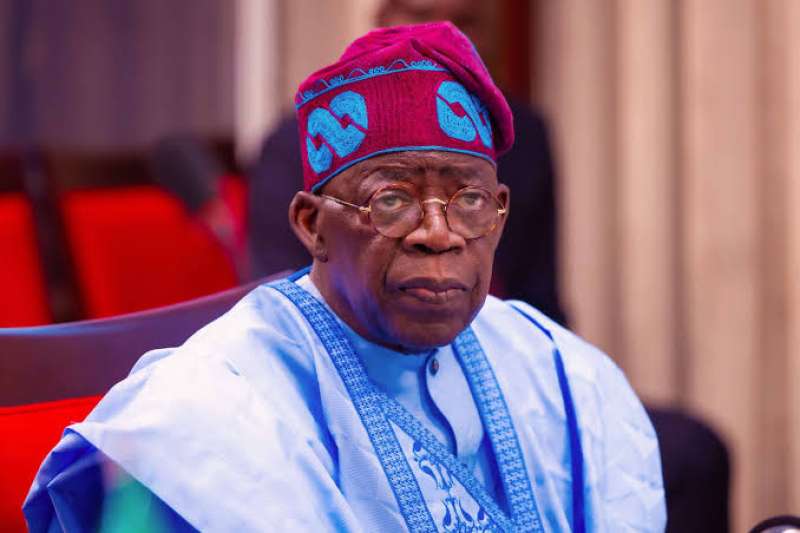




The incumbent President of Nigeria, Goodluck Jonathan has declared his intention to run for a second term in office on the platform of the Peoples Democratic Party (PDP).
Jonathan made the declaration at the Eagles Square, Abuja, Nigeria’s capital city on Tuesday. While giving the declaration speech, the president promised that his government would continue to place priority on the fight against terror, assuring that he would equip the military to ensure that the Chibok girls are freed.
He decried the bombing of a school assembly that occurred in Potiskum, Yobe State on Monday which claimed the lives of more than 40 pupils. He revealed that 60million naira has been set aside for the rehabilitation of victims of terror in the north east part of the country.
While speaking to the crowd of supporters at the Eagle Square, Jonathan reminded Nigerians that that under his watch as president the nation’s economy has been repositioned.
He pointed to the reforms in the power sector as one of his main achievements, saying progress is still been made in the sector and Nigeria remains on the firm path of achieving regular power supply.
He promised on behalf of himself and his party that if he is elected, Nigerian can always be assured of quality administration.
Full text of the declaration speech read:
Address by His Excellency, President Goodluck Ebele Jonathan, GCFR
On the Occasion of His Declaration of Intent to Run for the 2015 Presidential Elections under the Platform of the Peoples Democratic Party (PDP)
Eagle Square, Abuja
Tuesday 11th November, 2014
Dear Compatriots:
1. Four years ago, precisely September 18, 2010; I stood in this Eagle Square, to offer myself for election as the President of our beloved country on the platform of our great party; the Peoples Democratic Party (PDP).
2.Seven months after that declaration, you elected me to lead this country with overwhelming support from all parts of our Nation. I remain grateful for the trust you reposed in me to lead our Nation through uncommon challenges in our march of progress as a united and democratic country.
3. Over the years, the Almighty God has made it possible for me to develop a bond with you and I am grateful for your support and understanding in the difficult periods we have journeyed through.
4. Distinguished ladies and gentlemen, our stewardship has not been without challenges. We have had to deal with the wave of insurgency that has swept through some parts of our dear country. Only yesterday, Government Science Secondary School in Yobe State was bombed by insurgents, killing our promising young children who were seeking education to build the country and support their parents. Many Nigerians have lost their lives and property to these mindless killings. Let me crave the indulgence of all present here to stand up to observe a minutes silence in honour of these young lads who lost their lives. Clearly, this has cast a dark cloud on our Nation but we will surely win the war against terror. A number of young men and women have been kidnapped by these criminal elements including our daughters from Chibok. We will free our daughters and defeat terror.
5. We are equipping the armed forces and deploying special forces to engage the terrorist and end this senseless war. We must protect our country. We must save our people. I will do everything humanly possible to end this criminal violence in our Nation.
6.To ensure the long term stability and development of the affected areas, government has launched three programmes: The Presidential Initiative for the North East, the Victim Support Fund and the Safe School Initiative. The Presidential Initiative for the Northeast is focused on improving infrastructure and economic growth in the region. The Safe School Initiative is centred on creating a safe environment to encourage our children in the communities to acquire education. The Victim Support Fund, a partnership with the Private Sector, has raised about 60 billion Naira, which will help to empower and rehabilitate victims of terror. I promise the victims of these dastardly acts that we will continue to stand with you.
7. I am grateful to all Nigerians for standing with us.
8. Let me also thank the leaders and elders of our great party, the Peoples Democratic Party, for the opportunity you have given to me to serve our country, Nigeria.
9. I am overwhelmed by the trust, confidence and support of the various organs of our party, the Board of Trustees, the National Caucus, the National Executive Committee, the National Working Committee, the PDP Governors Forum, members of the PDP Caucuses of the National Assembly, and others.
10. This day affords me the opportunity to continue the conversation of development we started together. We must develop our country.
11. Infrastructure has been a major focus area of my administration and so, we pursued the power sector reform to this point of irreversible progress. Nigeria has undertaken a most transparent and corruption-free bidding process, attracting global commendation. The on-going 450MW Azura Power Plant in Edo State is a testimony to the success of this transformation.
12. We have also resumed development of our Hydro-Power potential, with the construction of the 700MW Zungeru Hydro-Power Plant, while construction work on the 3,050MW Mambilla Hydro-Power Plant is about to take off.
13. Our power generation and distribution companies have now been privatized. We are firmly on the road to guaranteed regular power supply in the months ahead. This our bold move, is paying off!
14. We are committed to environmental protection and conservation and reducing vulnerability to climate change. In this regard, we have embarked on a number of projects across the country. Of particular note is the African Great Green Wall Programmed, where we have released about 16 billion naira for implementation. The project will create a green belt across 11 states from Kebbi to Borno.
15. In the past three and half years, the water sector has witnessed unprecedented improvement. Access to potable water is now 67%, up from 58% in 2010, while sanitation coverage is 41%, from 32% within the same period.
16. Major developments in water include the completion of 37 Dams and rehabilitation of 10, with several others under-going construction. The flagship Kashimbila Multipurpose Dam which is being built to contain flood from Lake Nyos in Cameroon, is now at 90% completion. We have also completed about 5,000 rural and semi urban water schemes.
17. We are reforming the National Urban Water supply programmes in 12 states, with 385 formal and informal irrigation projects, covering a total land area of 118,000 hectares, cultivated mostly by small holder farmers. This has yielded over 3 million metric tons of assorted grains and vegetables, with a market value of about 45 billion naira
18. Before the advent of this administration, the Railway system was practically dead. Today, we have revived the rail sector. The narrow gauge line from Lagos to Kano has been rehabilitated with improved coaches providing regular services. The rehabilitation of the Port Harcourt-Maiduguri rail line is progressing with the Port Harcourt-Gombe segment as well as the branch line from Kafanchan to Kaduna expected to be completed and fully operational by December 2014.
19.Already, work on the Abuja-Kaduna standard gauge rail line, is progressing. The tracks of the rail line will be completed by December this year 2014. Upon completion of the project in the first quarter of 2015, it will be possible for Nigerians to live in Kaduna and work in Abuja. The Itakpe-Ajaokuta-Warri standard gauge line has attained an advanced stage, with the track completely laid. We hope to commence full operation before the end of 2015.
20. Other segments of the new standard gauge speed train network are planned, with contract already awarded for the Lagos –Ibadan Segment. There will be more of such modern and faster rail connections in the coming years. Already, discussions are now at advanced stage, for the Coastal rail line that will traverse through 10 states, from Lagos through the South-South and South-East, all the way to Calabar.
21. My administration has successfully completed the dredging of the lower River Niger from Baro in Niger State to Warri in Delta State. The cheering news is that over 6.7 million passengers and over 1.6 million tonnes of cargo have been moved through this channel in less than three years.
22. I am happy to also report that our ports now operate 24 hours service, which has led to the reduction of clearing time and improved efficiency.
23. When I assumed office in 2010, out of the 35,000km of federal roads nationwide, only about 5,000km were motorable. Today, that number has increased to about 25,000km. We expect to complete the remaining 10,000km in three years while initiating new ones.
24. I made a commitment to build two new major bridges across the River Niger and River Benue. Today, the new bridge over the River Benue, connecting Loko in Nassarawa State to Oweto in Benue State has reached an advanced stage of completion, while work has commenced on the Second Niger Bridge.
25.Beyond these, my administration has concluded plans to re-commence the construction of Bodo-Bonny Road with three major bridges on the alignment that will link the Island of Bonny with Rivers mainland.
26.Preliminary works have started on my administration’s planned re-construction and expansion of the Murtala Muhammed International Airport Road in Lagos to a world class entry point into our country. Only a few months ago, work started on the dualization of Kano-Katsina Road. While many Nigerians are celebrating the marked improvements on our roads, I want to assure that it will get even better as we move forward.
27.In the pursuit of an integrated transportation system, we embarked on the construction of five new Airport Terminal Buildings and Air-field facilities. We are also re-constructing existing ones. The re-construction upon completion, will lead to improved passenger processing, increased cargo handling capacity and enhanced Air-field facilities that meet international standards and improves safety. These efforts have been met with global acknowledgement including the attainment and retention of the FAA Category One status.
28.In housing, we signed the National Housing Policy to kick-start the framework for providing more affordable homes for our people. We have also expanded the National Housing Fund to accommodate more Nigerians. We have started a revolution in the housing sector with the start of the Nigerian Mortgage and Refinanced Company (NMRC), a new initiative of my administration, that will enable more citizens in the lower income bracket to become first time home owners.
29.Our partners such as the World Bank group are supporting this with US300million dollars interest free credit, while my administration will back it with over 100billion naira in bonds. We are already processing 66,000 mortgage applications for our young people. We have amended the PENCOM Act to enable the pension funds invest in housing sector bonds. This will create a boom in the housing sector.
30.In the Federal Capital Territory, we are rapidly building a befitting National Capital by expanding and providing new infrastructure, developing ten new districts and Satellite Towns to cater for the ever increasing population. In no distant future, you will be able to arrive at the Nnamdi Azikiwe International Airport and proceed to the city using the Abuja Light Rail. In addition to providing durable health, educational and transportation services, we are also collaborating with Organized Labour to build functional, affordable and social housing in Abuja.
31.Other critical capital developments that are being packaged by this Administration include the development of the Ultra-Modern World Trade Centre, the Abuja Town Centre, the Jabi Lake Comprehensive Centre, the Centenary City and the Land Swap Districts. This private sector driven infrastructural development will positively change the skyline of the city and provide the required office and residential accommodation, shopping and recreation as well as tourism and entertainment facilities in the FCT.
32. In our determination to encourage much greater participation of Nigerians in the oil and gas industry, one of the first actions I took, was the enactment of the Nigerian Oil and Gas Industry Content Development Act. As a result of this law, indigenous Nigerian participation levels, in upstream and downstream activities of the oil and gas industry have increased by over 45%, thereby increasing employment opportunities for our youth.
33. We have also succeeded in eliminating the long queues that previously characterised our filling stations, through regular and sustained product supply.
34. Gas infrastructure to ensure adequate Gas to Power and Gas to Industry, is being aggressively put in place. Over 450km of gas pipelines have been installed over the last 3years. Another 2,000km is planned over the next 4years. Critical petrochemical and fertilizer facilities have commenced including the gas industrial park in Delta State, for which I am scheduled to perform the ground-breaking ceremony this Friday. This will create millions of jobs and make Nigeria a regional hub.
35. In addition, as a result of government’s favourable policies the private sector is investing over 12 billion dollars in the petrochemical sector, over the next 4years. This will surely create millions of jobs for our people.
36. In terms of gas supply, we have grown from less than 500 million cubic feet per day, 4years ago, to about 1.5 billion cubic feet per day currently. Our goal is to attain 4 billion cubic feet per day, over the next 4years.
37. We have changed the face of agriculture. We moved agriculture away from a development Programme to agriculture as a business. My vision is to create wealth for our people through agriculture.
38. We have focused on encouraging the private sector to boost investments in the agricultural sector. As a result, the number of seed companies rose from five to eighty in the past three years. Private sector investment in the agricultural sector expanded by $ US 5.6 billion across the Agricultural value chain.
39. We ended decades of corruption in the fertilizer and seed sectors. We developed a transparent and efficient system of reaching farmers directly with subsidized farm inputs. Before our reforms, fertilizer procurement and distribution took from the needy and gave to the greedy. We restored dignity back to farmers. Today, 14 million farmers, of which 2 million are women, access fertilizers with their mobile phones, through an e-wallet system. Nigeria is the first country in the world to develop an e-wallet system to reach farmers with subsidized farm inputs on their mobile phones. Several African countries are now borrowing this transparent and efficient e-wallet system for their own countries.
40. Our national food production expanded by an additional 21 million metric tons between 2011 and 2014, a record, exceeding our set target of 20 million metric tons set for 2015. The Dangote Group, has committed to invest $US 1 billion in commercial rice production and processing. With all these developments, we are expected to be an exporter of rice in the next five years. This will be a new dawn!
41. The benefits are showing on our food imports. Our food import bill has declined from 1.1 trillion Naira in 2009 to 684 billion Naira by December 2013, even with our increasing population, a reduction of 40%.
42. Nigeria met its Millennium Development Goal One on reducing hunger and extreme poverty, two years ahead of the 2015 target set by the United Nations, and was given an award by the Food and Agriculture Organization of the United Nations.
43.To sustain this trend, we are encouraging young graduates through the Nagropreneurs Programme to go into commercial Agriculture. We are also encouraging our students in Post Primary Schools to embrace commercial Agriculture through the National School Agriculture Programme.
44.My dear people, corruption remains a big challenge in our national life. It corrodes our efforts at development and at motivating competence in critical sectors of our national growth. We have eradicated it in the agricultural sector and we will surely eradicate it in other sectors of our economy.
45.Going forward, my focus is to continue to reinforce institutions, systems, and processes to tackle corruption, and also to bring to justice those that perpetrate corruption. Through the Integrated Payroll and Personnel Information System (IPPIS), we have weeded out 56,000 ghost workers from the Federal Civil Service, saving 162 billion naira.
46.I have directed ICPC to bring the perpetrators of this criminal act to book. Let this be very clear, public officers must live by example, fully accounting for the national trust and resources in their care.
47.In our journey to progress, knowledge is indispensable. Knowledge is power! This is why my administration established 14 new Universities out of which 12 are conventional and two are specialized Police and Maritime Universities. Under my watch, every state in Nigeria, now has a Federal University.
48. In addition, over 500 billion naira has been spent, through the Tertiary Education Trust Fund (TETFund) and the special NEEDS assessment fund on various projects to increase access and improve the quality of infrastructure at the tertiary level of our education system.
49. To provide equal access and opportunities in education and ensure that no Nigerian child is left behind, we have established and equipped 150 Almajiri Schools across the Northern states and the Out-of-School-Children Programme including Specialized Boys and Girls Schools across the country.
50. Fellow Nigerians, our country was faced with a major National security, humanitarian, and economic threat in the form of the Ebola Virus Disease, which arrived in the country on July 20, 2014, by way of a foreign national, Mr Patrick Sawyer.
51. Realizing the imminent threat, I declared a national emergency, pulling states, local and federal government into action as well as individual Nigerians to combat this disease. Without the quick action of patriotic Nigerians at the First Consultants Hospital, as well as the co-operation of Lagos and Rivers States, where the disease occurred, working with the Federal Ministry of Health and the co-operation of all Nigerians we could not have succeeded in overcoming this deadly disease. Fellow Nigerians, we stopped Ebola together.
52. Just as we stopped Ebola, we are on our way to eradicating the Polio Virus in our country. We have reduced the incident of new Polio Virus from 300 in 2010, to 6 today.
53. My brothers and sisters, to encourage entrepreneurship and self-reliance among our teeming graduates, we have developed creative opportunities for enterprise for our young people.
54. Programmes such as YouWIN, the Graduate Internship Scheme, the Nagropreneurs Initiative, the 220 Billion Naira Micro, Small and Medium Enterprises Development Fund and the 3 Billion Naira Grant to Nollywood are empowering our graduates, the creative industry and other young people to start up their own businesses and employ others.
55. We have supported the growth of industry through policy and action. We launched The National industrial Revolution Plan (NIRP), and the National Enterprise Development Programme as key drivers to bring about our desires in the industrial sector and to diversify our economy. Our new National Automobile Policy is transforming Nigeria into a vibrant hub for the automobile industry. Our own Innoson Motors is producing world standard vehicles, and Nissan, Hyundai, and Kia, have set up factories in Nigeria and are employing thousands of our people.
56. Our support for cement production is unprecedented. We have increased our installed capacity from 16.5 million metric tons per annum in 2011 to 39.5 million metric tons per annum in 2014. Nigeria is now exporting cement. We are moving forward!
57. Our efforts to create an enabling environment for job creation in different sectors of the economy including the MSME sector, agriculture, housing and manufacturing have yielded results. Between the third quarter of 2012, when we started tracking jobs created and the end of 2013, 1.9 million jobs were created. To deepen our success in this area, I have created a Presidential Jobs Creation Board headed by the Vice President with the mandate to create at least two million jobs a year.
58. My brothers and sisters, our economy is heading in the right direction and our efforts are yielding positive results. Our economy continues to grow at the rate of 6 to 7 percent annually, one of the highest in the world. Our country is now the top investment destination and the largest economy in Africa, with a GDP of 80trillion naira (510billion dollars) as well as the 26th largest economy in the world.
59. As part of its efforts to support inclusive growth and economic development in Nigeria through the CBN, my administration has created and disbursed the sum of 200billion naira via the Commercial Agric and Credit scheme, 300billion naira Power and Aviation fund, 220billion naira Micro, Small and Medium Enterprise Fund, as well as 300 billion naira rail sector refinancing facilities at single digit interest rate. We will continue to deepen the reforms in the financial sector, in order to sustain the growth of our economy and uplift our people from poverty to prosperity.
60. Dear Compatriots, I promised as President, that we would sanitize and restore integrity in our electoral process, by ensuring that our votes are not only counted, but truly count. We have gone to great length to ensure transparent, free, fair, and credible elections. Elections have been conducted across the country with local and international election observers testifying to their transparency.
61. On the international scene, we have advanced our regional, continental and global objectives. We have strengthened our relationships with our neighbours and in many instances supported them to protect their democracy, security and stability. We are serving for a second time within a period of 4 years at the United Nations Security Council. This is unprecedented in our Nation’s history. My brothers and sisters, this is a growing attestation of our country’s growing influence.
62. In the first quarter of this year, our country celebrated its centenary. To prepare the nation for the challenges of the next one hundred years, I convened a National Conference where recommendations and resolutions were reached towards a more perfect union. We shall implement the report.
63. Four years ago, I made a commitment to advance the rise of womanhood. Today, I am glad that we have made remarkable progress in this regard, trusting in the potential of our women and reaping from their dedication and ingenuity. I believe that any nation that ignores womanhood cannot achieve its full potential. It is in this regard that I ensured that women were given more opportunities in government, and I have not been disappointed.
64. Specifically, I doubled the percentage of women in the cabinet and gave them more challenging assignments.
65. The Nigerian Defence Academy (NDA), is now admitting female cadets as regular combatants and it is now possible for a woman to rise through the ranks to the peak in military service, and become a full general.
66. We must continue to sustain the banner of freedom and justice that we have held high in our country. I am proud to say that there are no political prisoners in Nigeria today. No Nigerian has been driven into exile and no one will be, under my watch.
67. It is in furtherance of a peaceful, participatory and inclusive democracy that I signed the Freedom of Information (FOI) Bill into law, to expand the frontiers of our fundamental freedom.
68. Let me re-affirm that under a Jonathan Presidency, your views, no matter how freely expressed, will not send you to prison or into exile.
69. I am convinced that I have kept my pact with Nigerians, and it is now time to look to the future. With your tremendous support, we have collectively done so much in the last three and half years, but to take our country to the next level, there is still more to be done.
70. History has shown that the path of honour for any true leader is not to walk away from his people in moments of challenges. We must stand together in adversity and overcome all threats to our development. We must defend our future, for the sake of our children.
71. So many things have inspired me in the journey to this moment. I want to appreciate ordinary Nigerians, especially young people, for the solidarity shown to me by contributing their meagre resources to enable me arrive at this point.
72. I appreciate the kind gesture of the Cattle Breeders Union, Miyetti Allah, and the Market Women Association, who encouraged me by coming together to contribute to the purchase of my Nomination form.
73. In the same vein, I am touched by the National Association of Widows who also encouraged me with their widow’s mite.
74. This labour of love, from ordinary Nigerians, has increased my appreciation of your solidarity, my trust in our joint destiny, and all we have achieved together these past three and half years.
75. Therefore, after seeking the face of God, in quiet reflection with my family and having listened to the call of our people nationwide to run, I, Goodluck Ebele Azikiwe Jonathan, have accepted to re-present myself, on the platform of The Peoples’ Democratic Party, for re-election as the President of the Federal Republic of Nigeria, in the 2015 general elections.
76. Democracy is a collective action, energized by individual responsibility. Your mandate at this time will inspire in me the strength to complete the good work we have started together.
77. My dear people of Nigeria, we must complete the task of ensuring that we lift the poor out of the depth of want, and place their feet firmly on the ladder of prosperity.
78. In this election season, I appeal to all of you, not to harm, maim or kill; and not to incite violence of any kind. We must never forget our common bond, one people from the womb of one Nigeria. Again I say: My ambition to serve you is not worth the blood of any Nigerian. I remain committed to this principle of non-violence.
79. If you believe that we must build a country that works for all, where the strong lift up the weak, and not trample upon them, where the vote of every citizen determines who governs or represents you, where the democratic space is open to all citizens to fulfil their aspirations, irrespective of the circumstances of birth, your brother, Goodluck Ebele Azikiwe Jonathan stands ready to continue in service to you.
80. My brothers and sisters, we cannot go back to the old ways! Our railways were allowed to rot in neglect, we have revived and are modernising them.
81. Our road infrastructure collapsed. We are reconstructing, and expanding federal roads across the country.
82. Our airport terminal buildings were dilapidated and our airspace unsafe. We are fixing this.
83. Our agricultural practices did not benefit our farmers and our people. Fertilizer distribution was a major source of fraud and we were importing more food than our budget could support. Now we are on our way to self-sufficiency in food production.
84. We cannot go back to the old ways, where there were long queues at our filling stations due to irregular supply of products and our people were exploited.
85. We cannot go back to the old ways, when women and youths were denied opportunities in government and in responsible positions.
86. We had skewed distribution of tertiary institutions. Whereas some states had more than one degree awarding institution, some had none. We have now made sure all states have at least one Federal University.
87. Our economy is now the largest in Africa. Once, we were virtually importing everything, now we are exporting several products, including cement.
88. In 2009, average life expectancy was 47 years, by the end of 2013, it was 52 years. Some of our hospitals now perform open heart surgeries, kidney transplants and other challenging operations as we reposition our health service to end decades of medical tourism that drains our scarce resources.
89. Together, in unity, we overcame Ebola, and in the process demonstrated the strength of the Nigerian spirit. And together, united, we must maintain our vigilance.
90. We cannot go back to the old ways where individual freedoms were trampled upon and citizens were locked up for expressing their views or criticising government.
91. We must continue to have free and fair elections. We cannot go back to the era where ballot box snatching and stuffing became the norm. Where your votes never counted.
92. Certainly, we cannot!
93. We have to move forward! Only forward!!, my dear people, Forward!!!
94. In moving forward, I see a Nigeria that thirsts for progress with children across the nation, eager for knowledge and safely in schools!
95. I see a Nigeria where all who have taken up arms, would again embrace peace!
96. I see a Nigeria where our women can aspire to any heights, without hindrance!
97. I see a Nigeria where the flames in the Eagles will rekindle, and the Falcons will soar higher in victory!
98. I see a Nigeria where the children of Mustapha, and Christopher, Ade and Ada, Timi and Bunmi, Nnamdi and Namadi, do not go hungry!
99. I see a Nigeria where all, no matter their beliefs, live in peace and harmony!
100. I see a Nigeria where the green passport is accorded a royal reception the world over!
101. I see a Nigeria where one day the next generation will take us to outer space.
102. Distinguished ladies and gentlemen, leadership is about staying focused to achieve goals despite challenges. I have been faced with many challenges since coming to office as President. With your support and encouragement, we have stayed the course.
103. We are succeeding, against all odds. For the young Nigerian child, who grew up in the rural area, just like me, we are expanding opportunities and giving them hope. For the market woman, we are expanding opportunities. For our young entrepreneurs, we are expanding opportunities. For the right of our people to vote and for their voices to be heard, we are expanding opportunities. For Nigerians to have the right to free speech, we are expanding opportunities. For the job seekers, against all odds, we are expanding opportunities.
104. While serving our people, I will always ensure the rule of law. I do not intimidate, I expand the democratic space. I give voice to the voiceless and uphold the weak, for the nation belongs to us all. Fellow Nigerians, as we build our democracy, leaders must show temperance at all times. That is a virtue, one which I treasure, and will always uphold.
105. My people, Nigeria is destined for greatness. Today, here at Eagle Square, I say to Nigeria, that working together in love, in strength and in faith, we will build a nation of one people, united in purpose and in action.
106. Fellow Nigerians, it is forward ever! We must put our hopes to work! Together, we will realize our collective destiny.
107. Thank you.
108. God bless Nigeria.
 |
|

Former Anambra State governor and presidential candidate Peter Obi has disagreed with Atiku Abubakar’s proposal to restore Nigeria’s fuel subsidy if elected president in 2027.
Speaking on Monday at the Nigerian Bar Association conference in Port Harcourt, Rivers State, Obi argued that removing the subsidy was necessary but faulted the Federal Government for failing to properly manage the resources generated from its removal.
Atiku, who supported the removal of fuel subsidy during the 2023 presidential election, has since indicated that he would reconsider the policy and restore the subsidy if he wins the 2027 election.
Obi, however, maintained that reversing the policy would not address the underlying problems. According to him, the major failure has been the poor management of the funds saved after the subsidy was removed.
He said the government should have accompanied the policy with measures designed to reduce the hardship faced by Nigerians and should have channelled the resulting savings into productive areas of the economy.
“What we should have done is that when we removed it, we should have given the people alternative usage for the subsidy,” Obi said.
He further alleged that the funds recovered from subsidy removal had not been adequately accounted for, claiming that the resources were being “mismanaged and stolen.”
Obi said he had advocated a more structured approach to subsidy removal before the 2023 election, arguing that the savings should have been deliberately invested in areas capable of improving the lives of Nigerians and strengthening the economy.
“Go to my manifesto, I said it before, I said I will do it in an organised manner and whatever we recover would be invested appropriately,” he said.
President Bola Tinubu announced the removal of petrol subsidy during his inauguration on May 29, 2023. The decision led to a significant increase in petrol prices and intensified concerns over inflation and the rising cost of living.
While the Federal Government has defended the policy as necessary to reduce pressure on public finances and redirect government resources, the implementation of the reform and the management of the resulting savings remain contentious issues.
With the 2027 election approaching, the contrasting positions of Obi and Atiku have added fuel subsidy to the growing debate over how Nigeria should manage its economy, protect vulnerable citizens and use public resources more effectively.
News
The Nigerian Upstream Petroleum Regulatory Commission (NUPRC) has warned the 31 companies that emerged successful in the 2025 oil and gas licensing round to pay their required signature bonuses within the statutory timeframe or risk losing their provisional awards.
The warning comes one month after the commission conducted the commercial bid conference in Abuja, where the successful bidders were announced for 37 oil and gas blocks.
In a notice issued on Sunday, the NUPRC said the compliance process had commenced following the issuance of provisional award letters to the successful companies.
The commission stated that bidders who failed to meet the payment deadline in accordance with the Petroleum Industry Act (PIA) would forfeit their bid guarantees and have their provisional awards transferred to the next-ranked reserve bidders.
“Exactly a month ago, the NUPRC hosted the 2025 commercial bid conference in Abuja where 31 companies emerged winners of 37 oil and gas blocks. Having issued the winners with the provisional awards, compliance with the payment of signature bonuses has already begun,” the commission said.
The 37 blocks awarded in the licensing round cover several areas, including the Niger Delta onshore and shallow-water fields, deep offshore assets and frontier basins.
The assets include PPL 2A29 to PPL 2A62 in the Niger Delta, PPL 2010 in the deep offshore, PPL 308 in the Benin Basin, PPL 900 to PPL 903 in the Anambra Basin, PPL 700 in the Chad Basin, and PPL 800 and PPL 801 in the Benue Trough.
The NUPRC also released the names of the 31 successful companies, together with the ranked reserve bidders for each of the 37 blocks.
A total of 143 companies participated in the licensing exercise, submitting about 200 bids for the assets on offer. However, 13 of the 50 blocks originally listed for the round received no bids.
Under the PIA and the applicable licensing guidelines, successful bidders are required to pay signature bonuses ranging from $3 million to $7 million for each awarded block.
In addition to the signature bonus, the companies must provide the required guarantees, pay first-year rents and fulfil other post-award obligations within the prescribed period.
Failure to satisfy these requirements will result in the forfeiture of the affected company's bid guarantee and the revocation of its provisional award. The block will then be offered to the designated reserve bidder.
The NUPRC Chief Executive Officer, Oritsemeyiwa Eyesan, had previously urged the successful bidders to complete their payments promptly and move ahead with the development of their awarded assets.
The commission has advised bidders, industry stakeholders and members of the public to consult the 2025 Licensing Round portal for additional information on the awards and compliance requirements.
Under the applicable PIA framework, successful bidders have 90 days from the issuance of their provisional awards to complete the required payments and other conditions.
With the provisional awards issued following the July 21, 2026 commercial bid conference, the 90-day compliance period expires on October 19, 2026.
As of August 23, 2026, 33 days of the 90-day period have elapsed, leaving 57 days for the successful companies to complete their statutory obligations.
Companies that fail to pay their signature bonuses and first-year rents within the deadline risk losing both their bid guarantees and the provisional awards. The affected blocks would subsequently be reassigned to the respective reserve bidders in line with the licensing rules.
The NUPRC's latest notice therefore signals that the successful bidders have entered the final stages of the award process, with compliance now required before the provisional awards can progress toward full development of the assets.
Business
In The Spotlight
Vanguard recently published pathetic pictures of the Benin-Sapele-Warri Expressway; and Punch revealed to us what happens to the Lagos-Calabar Expressway, not even 15 per cent completed, each time there is a heavy downpour in the Lekki peninsula.
The road becomes so flooded, it becomes barely usable. Morning shows the day. If Tinubu-Umahi’s legacy road already shows evidence of long-term stress, pity the Nigerians who will ply that road ten years from now.
The Minister was in Lagos State recently, half-begging, half attempting to blackmail Governor Sanwo-Olu to cough up funds to repair the mistakes made by Engineer Umahi and the contractors who hastily embarked on the road without Environmental Impact Assessment. He is building in Lagos and coastal states the sort of rickety roads he left in Ebonyi State. He has the right President for that sort of shoddy business. Right now, parts of the road have been vandalized – even before completion. Fellow Nigerians are not paying attention as they should. Pity.
Vanguard, Punch and Daily Trust have been doing Nigerians a favour by pointing to one of the greatest failures of the Tinubu administration – the maintenance of federal highways under Minister David Umahi – whose major achievement in three years had been attracting attention to himself through a scandal involving homicide. On the whole, Nigerian roads, federal and state, have not been receiving the attention they deserve in the last eleven years; the neglect just got worse.
Experience on Nigerian roads from 1974-2019
“Hit the road, Jack”. Advice from my Sales Manager, in Boston, USA, 1968.
My first full time job was in selling. It was as a salesman for a leading pharmaceutical company, Lederle Laboratories, in 1968, that Mr. Al, for Albert, Abby, came into my life. As my Sales Manager, he monitored my activities and also as my mentor. He drilled into my head the idea that a salesman’s work consists of being on the road as much as possible; in order to meet customers. By the time I arrived in Nigeria, in 1974, to start work as the Marketing Manager of Abbott Laboratories, marketers of SIMILAC baby food, being on the road 70 per cent of the time had become routine. It was new to my sales staff, but proved rewarding for all concerned – company, staff and especially me.
Until August 1974, Ughelli, Delta State, was the farthest distance I ever traveled in Nigeria. I hit the road. By August 1975, I had covered all the 12 State capitals created by General Gowon, at least three times; and the trips had just begun. By 1998, after Abacha had increased the number of states to 36, I was in charge of Circulation in Vanguard; and my annual itinerary called for visiting all the offices at least once a quarter. In fact, I opened new Vanguard Offices in Ado-Ekiti, Yenagoa, Abakaliki, Gombe, Damaturu, Birnin Kebbi and Dutse. From 2001 to 2007, I traveled to all the stations at least three times a year. Over 80 per cent of the trips were by road – even though flight options were available to me. I got to know Nigerian roads as nobody I have ever met knew them. Divorce was threatened by the occupants of the home front. There was no major road constructed, expanded or diverted which I was not familiar with. By 2017, the trips were reduced to about 20 states every year.
Thus, each time a new Minister of Works is appointed, at least until 2019, I know the problems he faces. Shortly after President Jonathan assumed office, I published an article titled Nigeria’s 70 Most Important roads. These are the roads over which 70 to 80 per cent of goods are transported every day. Lagos-Ibadan Expressway remains the first one in all respects. I went further. The biggest map available at the CMS Bookshop was obtained and all the 70 roads were identified for the Minister in charge of roads with the advice: “take care of these roads and Nigerians will never forget you”. I wasted my time and effort; and Nigerians have been paying dearly for it. Since then, two Ministers of Works were appointed; each left Nigerian roads infinitely worse than when he started.
Three years of Umahi, more of the same
“It aint the things you don’t know that cause the problem; it’s things that you think you know that aint so.” Ralph Waldo Emerson, 1803-1882
To the best of my knowledge, no Minister of Works has been appointed in Nigeria, with the exception of late General Mamman Kontagora, who can be said to have had a fairly good knowledge of Nigerian roads by the time he was appointed. Consequently, we have selected so many good men; but, for the wrong task. Many people, including me, would have protested if Fashola was not appointed Minister by Buhari after his sterling performance as Governor of Lagos State. But, he failed dismally as Minister of Works. So, in all fairness to Umahi, many of the roads in terrible condition were inherited from past administrations. That said; it is also a fact that every new appointee is not compelled to accept the offer; and “if you can’t stand the heat, get out of the kitchen”. Umahi inherited several death traps; but, like all members of the All Progressives Congress, APC, he also helped to conceal the truth from Nigerians. Now, he is holding the bag; with all the incriminating evidence of poor performance. Umahi should also be excused for the failure to establish priorities. His boss, without consultations, despite all the lies told, had already conceived of a new road – the Lagos-Calabar Expressway – and the preferred contractor was determined, without bidding. The Minister spent his first year defending a decision made without his input. He added his own.
Umahi started out sounding like a “know-it-all”. He is an Engineer; so he knows all there is about road construction. He even dictated that all federal roads, irrespective of terrain, would be paved with cement – without consideration for the impact on the price of cement; which is essential for building construction.
Perhaps, not establishing objective priorities was his biggest blunder. Some Nigerian roads carry most of the heavy loads and require more attention. The Lapai-Bida, the Benin-Sapele and the Asaba-Onitsha roads each carry more loads than all the Federal roads in Taraba, Ebonyi and Kebbi states put together. I could not agree more with Senator Adams Oshiomole who recently carpeted Umahi for lack of priority in his selection of roads receiving his attention. The Okene-Auchi-Benin road carries the largest load of cement heading for Southern States, as well as fuel tankers moving North. Without prioritizing the most important federal roads, we are indirectly slowing down economic development, making products made in Nigeria less competitive and entrenching poverty. In the absence of rail nationwide, roads constitute the life-blood of our nation. They are soaked now with our blood.
By Dele Sobowale
In The Spotlight
How many fake agencies can the Tinubu Presidency go after at a time? When I posed this question in my column in early August, I intended it as rhetoric. The fake agencies and their operators apparently took it as a challenge.
On Friday evening, the ICPC Chairman, Dr Musa Aliyu, SAN, emerged from his second meeting with the President in 48 hours to announce the discovery of yet another fake agency, grandly named the National Brands Development and Made-in-Nigeria Special Project Office and promoted by one Prince George Buchi Nwabueze.
Side note: Because of the length of these agency names, I’ll refer to them by their promoters, who happen to be ‘Princes’. Say, Prince Adeyemi’s PFIFC or Prince George’s agency. Okay?
So, I sat there among my colleagues, listening to Aliyu reel out another episode of an ongoing soap opera whose production studio is in the Nigerian civil service. We were arguably the first set of ears to get the gist, a privilege that comes with the burden of sharing it with the rest of the world.
Twenty-four hours earlier, I spotted the ICPC chairman making his way through the corridors leading to the President’s office for the umpteenth time. Aliyu had since become a standard feature at the State House since revelations about Prince Adeyemi’s fake agency, the Presidential Foreign Investment Promotion Council, first went public.
Draped in a white agbada, Aliyu sounded fulfilled as he announced another big catch, Prince George. Unlike his counterpart in the PFIFC, Prince George did not settle for a spot in the Federal Secretariat. No! He operated from inside the Office of the Secretary to the Government of the Federation. He was also found to operate under at least five variations of his own name, which is fitting. A fake agency deserves a fake agency’s worth of aliases.
The President ordered his immediate arrest and suspended three permanent secretaries: M.S. Danjuma, Nadungu Gagare and Richard Pheelangwah.
If you are keeping count, you would have counted six fake agencies or actors in the past few months. Four! First came Prince Adeyemi’s now-dissolved PFIFC. Then the ICPC’s interim report of August 6 unearthed two more: the FCT Investment Promotion Agency and the Foreign Investment Promotion Agency and Public-Private Partnership.
There is also the Presidential Implementation Committee on the Alienation of Federal Government Properties, a body created in 2000 under Obasanjo to manage the sale and lease of federal landed assets.
Though now dissolved, its erstwhile secretary, B.S. Dutsin-Ma, had continued operating. In early August, the Presidency directed him to cease acting on behalf of the committee and the Federal Government.
Last September, the Presidency distanced itself from Mr Fegho Umunubo, an erstwhile Special Assistant on Digital and Creative Economy in the Vice President’s office, whom it warned was still acting in his old capacity despite being let go.
Now Prince George’s outfit makes six similar instances in under a year. At this rate, the fake agencies and actors may soon require their own coordinating ministry. And who knows if the next ‘Prince’ may be found operating from the Presidential Villa itself?
Lest we think this plague is new, history says otherwise. You see, Nigeria has always had people who understood that in a country where government is everywhere, the most profitable business is to impersonate it. From the 1980s and 1990s, there are tales of fake recruitment syndicates selling appointment letters into the Army, Customs and NNPC from rented offices with convincing letterheads. Some past regimes responded with periodic raids, tribunals and occasional decrees. But the racket always reincarnates.
Over the years, the ICPC and EFCC have busted fake job-racketeering “ministries” in Abuja that interviewed hundreds of applicants and collected “processing fees” for years before anyone really noticed. The sobering reality is that we have always chased the “Princes” one at a time. And there will always be another ‘Prince’ to sit on that throne.
Also, it is not uniquely a Nigerian thing. In California in 2015, authorities uncovered a self-declared “Masonic Fraternal Police Department”, a policing outfit with its own badges, uniforms and a website claiming a 3,000-year history. It was run by three “Princes” until the state of California charged them with impersonating officers.
The difference is not that other countries breed fewer fraudsters than we do. It is that their systems make the fraud quite short-lived because the list of legitimate agencies is knowable by the public, leaving the fake ones to glow in the dark.
Moreover, if government ministries, departments and agencies were fewer than they are now, there would be fewer hiding places for the fakes.
Which brings me, once again, to one document still gathering dust on the President’s desk: the Oronsaye report. Commissioned in 2011 and submitted in 2012, Steve Oronsaye’s committee found 541 federal parastatals, commissions and agencies and recommended pruning them to about 263. It recommended mergers, scrapping, subsuming and anything else that could shrink that number.
To his credit, President Tinubu revived it in February 2024, ordering full implementation. Two and a half years later, however, the rathole of redundant agencies has only widened, and now fake ones are camouflaging among the real ones. Implementing Oronsaye would arguably leave fewer agencies with clearer supervision and a slimmer cost of governance. Again, it is not a silver bullet. Matter of fact, the report is 14 years old; some recommendations would need fresh legislation. But why chase rats one by one when we can fumigate the entire network of holes?
While the ICPC is hunting “Princes”, President Tinubu is assembling his Avengers. According to the APC Presidential Campaign Council list the Presidency released on Saturday morning, Tinubu will sit as chairman; Vice President Kashim Shettima and party chairman Nentawe Yilwatda will co-chair the council. Ex-Zamfara governor Abdulaziz Yari will serve as DG, and Hope Uzodimma, still fresh from surviving the storm that rocked the Progressives Governors’ Forum months ago, will serve as secretary.
Senate President Godswill Akpabio, Speaker Abbas and Governor Buni will serve as zonal heads; Oshiomhole will head mobilisation, while James Faleke will return to his 2022 role in election planning.
The media directorate already looks like a special-purpose media house of its own. Information Minister Mohammed Idris will coordinate alongside Dr Dele Alake, Bayo Onanuga, Issa-Onilu, Mr Tunde Rahman, Dr Sunday Dare, Daniel Bwala and Felix Morka.
By Stephen Angbulu