






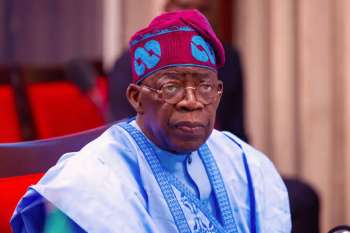



Mohammed Sambo Dasuki,Nigeria's National Security Adviser on Monday at the ECOSOC Chamber, United Nations Headquarters, New York, unveiled Nigeria's new approach to countering and dismantling violent extremism in Nigeria.
The Countering Violent Extremism (CVE) program, according to Dasuki, is aimed at identifying the underlying causes of radicalization (Social, Cultural, Religious, and Economic) and to develop strategies to solve the problem.
In his words, “advancements that have come with modernity such as technology and science have opened up the world in ways that our ancestors could not imagine. But with these advances have also come existential threats, which require us to come up with innovative solutions. As our world becomes smaller, problems are no longer isolated by region, state or even neighbourhood, the same technology that allows us to communicate with relatives thousands of miles away, and to witness events unfolding in distant shores as they happen, is also used to transport extreme ideas that entice youths to pick up arms against their country and fellow citizens, and in some cases abandon their homes to help others fight a war in a distant land.”
“Nation’s that have been directly affected by terrorism whether it is the IRA in Britain, or the FARC rebels in Columbia, or ETA in Spain and more recently IS in Iraq have shown us how difficult it is to eradicate. The terrorist lacks neither imagination nor capacity for evil, they operate outside of the bounds of conventional morality, while states must be guided in their responses by rules, the law, their own values and respect for civilian lives and property.”
“It is my belief that any response to terrorism must be long term, holistic and robust enough to address its root causes. A military approach can only be part of a solution, more importantly states must begin by understanding the causes of youth anomie, disillusionment, need for adventure and search for meaning that is at the heart of a lot of radicalization narratives, while also addressing more structural societal defects that make it difficult for some youth to access jobs, education or social security. While there is no defined pathway to terrorism, poverty, lack of opportunities for self actualization for youth, political and social marginalization, poor understanding of religion, the pull of a charismatic leader all play a role.”
“Before I outline Nigeria’s attempt to address these issues, I will just like to take a minute to explain the threat we face.”
"The current threat we face is mainly from a radicalized and fundamentalist Islamic group, the Jama’atul ahlul Sunnah Lidda’awati Wal Jihad, popularly known as the Boko Haram sect which emerged in Borno State North Eastern Nigeria in 2000. The group was founded by the late Mohammed Ali who moved to Kanamma, a small settlement in Yobe State, close to the border with Niger Republic in 2003 at a base dubbed ‘Afghanistan’. The movement then known as the ‘The Nigerian Taliban’ targeted the Police and other security agencies sourcing for weapons, creating fear and a sense of insecurity in the locals. This group was initially contained by the security forces but later metamorphosed into the Boko Haram Sect under the leadership of a very charismatic young man known as Mohammed Yusuf."
"Today, Boko Haram, is seeking to impose an extreme violent Salafist Sharia legal system in the North while holding strong abhorrence for Western ideas. Under the leadership of Abubakar Shekau, the profile of the sect continued to assume martyrdom status. In the past few years the group has targeted both Muslims and Christians, killing more than 10,000 civilians including women and children. The group has kidnapped hundreds of people, including the more than 200 young girls taken from their school in Chibok as they sat for their final year exams."
"In the last two years, Nigeria has had to innovate to meet the challenges posed by this deadly group. We have worked very hard to develop a National CVE Program which was unveiled on March 18th, 2014. The National CVE Program is the soft approach identified by the prevent strand of Nigeria’s Counter Terrorism Strategy. This aspect of our counter terrorism approach seeks to raise awareness of the threat of violent extremism, as well as shape policy and programming. While we have studied different CVE models around the globe we understood that we had to answer tough questions that are specific to our particular situation in countering violent extremism and it is with this in mind that we developed what we believe is a four pronged approach that encompasses peace, security and development. It is a totally non military approach that involves actors, within and out of government, civil society as well as religious institutions."
"Our CVE Programme is both vertical; involving three tiers of government, federal, state and local, and horizontal; involving civil society, academics, traditional, religious and community leaders. It consists of four streams with different layers of partners: ministries, departments and agencies (MDA’s), including the civil society. Rather than creating new structures that will not be sustainable in the long run, the program utilizes existing structures within and outside government to deliver targeted programs and activities that further the overall goal of stemming the tide of radicalization. This, in our view, will ensure the institutionalization of the programme and guarantee sustainability.”
De-radicalization- we have developed a three pronged program involving the following:
- Convicted terrorist offenders
- Terror suspects waiting trial
- An aftercare program for suspects released from custody and those who voluntarily renounce terrorism.
The de radicalization program involves the training of a new generation of practitioners in the areas of forensic psychology, religious instruction with particular emphasis on extremist narratives, art therapists, social workers and vocational and educational counselors. The government of Nigeria is refurbishing a number of prisons that are being configured specifically for this program.
- The aftercare program is community based designed to aid in the rehabilitation and reintegration of former extremists and will involve a host of civil society organizations.
We have identified and are training a multi-disciplinary prison based treatment team to manage terror suspects. This team is responsible for developing curriculum and training in religious education, cognitive behavior therapy, anger management, relapse prevention, empathy, risk management and risk assessment. Additionally Imams are being trained on dealing with ideologically driven conflict. By implementing this stream, we expect to achieve the following objectives;
a. Foster greater respect for human rights and rule of law.
b. Train relevant prison staff on CVE, to professionally handle terror suspects and issues of rehabilitation.
- c. Develop a range of expert psychologists and counsellors to pioneer rehabilitation efforts
- d. Introduce a more holistic approach to the rehabilitation of prisoners in the country, using in-depth psychological analysis and research to understand the root causes of extremism and other criminal ideologies.
- e. Utilize religious scholars to counter extremist narratives by training them on aspects of dialogue and counseling.
- f. Offer vocational training for inmates ensuring they have a basic level of education and skills to assist their reintegration into society.
- g. Institutionalize rehabilitation of suspected terrorists within the prison system.
Strategic Communication seeks to produce counter-narratives, by presenting moderate views as a stark contrast to violent extremism and promoting core national values. Through Strategic Communications we are working to counter extremist ideology and narratives. Extremists’ views are often based on ignorance, misconceptions, willful misinterpretation and twisted ideology. In the case of Boko Haram, narratives are founded on a set of core beliefs that are opposed to the state and aspects of western education. Our response targets those that hold radical views, without necessarily being violent, and the population at large; aiming to further diminish tolerance for extremist rhetoric. Media content for TV, radio and the internet is being developed in order to raise public awareness of the illegitimate claims of the terrorists.
Our Strategic Communications approach engages the press to ensure that reporting of terrorists’ activities are done responsibly. A voluntary code of conduct on reporting national security issues is being developed that will regulate crisis reporting especially with regard to terrorism. Furthermore we are creating a rapid response media team that will promptly address extremist messages in print or electronic media .
We are currently in the process of strengthening our public diplomacy efforts through the institutionalization of strategic communication capabilities across the civil service. We have begun this effort by training small groups of civil servants, with the aim of reaching over 500 over a two year period across 22 government agencies. This training is being carried out through the Public Service Institute of Nigeria. A parallel program is being developed and institutionalized through the Nigerian Defence Academy. It is envisioned that this will provide long term strategic communication capabilities for our armed forces.
Additionally we are developing messaging desks for the production of counter- narratives (This includes the production of a Website, CDs, Books, TV and Radio programs) including messages targeting youth at risk of radicalization.
In order to further our understanding of Boko Haram we have commissioned a documentary on Boko Haram and research on the Pathways to Radicalization
Accordingly, it is expected that by implementing this stream working closely with various organisations such as media-based NGOs, religious groups and government organisations at all levels the following would be achieved;
a. Government will be equipped with the capacity to manage its strategic communications network.
b. A comprehensive public relations strategy across all government agencies will be mainstreamed and harmonized with the ultimate objective of creating a one-voice information platform.
c. Credible voices on various platforms addressing national identity, tolerance and community resilience will be amplified while providing support and protection for those that speak out against violent extremism.
Counter Radicalization focuses on community engagement and education-based projects. It is designed to stem the flow of recruits and reduce the potential for radicalization. The Society Against Violent Extremism (SAVE) Project created in my office is responsible for this stream. Its entire focus is preventive and involves a whole of society approach. In this regard, the SAVE Project has the following objectives;
- a. Countering the drivers of radicalization
- b. Encouraging CVE action in communities, civil society and government institutions
- c. Building community engagement and resilience
- d. Using education as a tool for countering violent extremism
- e. Promoting religious tolerance.
In order to achieve the above objectives, key projects have been designed to do the following:
a. Ensure that education is used as a tool to stem extremism by emphasizing the teaching of critical thinking and logical reasoning as well as sports, music, arts, and drama. We believe that these will serve as buffers to imbibing a single compelling narrative,
b. Create psychological support structures for victims of terrorism through the main stream provision of PTSD.
We have conducted extensive assessments of schools across Northern Nigeria in order to gain a better understanding of the state of education. We have now begun preliminary consultations with the Ministry of Education with regard to potential changes to the national curriculum and will be hosting an Education Summit, bringing together key stakeholders and policy-makers. Additionally we are working on providing continuing education to Internally displaced people as well as those in states where schools have been closed through community radio schools. We already have a fully-operational Post-Traumatic Stress Disorder Centre in Kano and are working to open centres in at least six more states. Additionally we have worked with our National Primary Health Care Development Agency to add the provision of psychological services in particular post traumatic stress disorder therapy (PTSD) to the national mental health policy. Over the next year we will partner with them to train thousands of clinicians that will be deployed nationwide in PTSD.
The SAVE Project has met with various Civil Society Organizations working in diverse fields from all over the country. An initial introductory meeting has already been held and another meeting will be held later this year as a first step towards building a collaborative CVE network of civil society and government. Other projects are beginning to move beyond the conceptual stage and into implementation as partners are being identified and reached out to. We are beginning to make real progress but are aware that these are but the early stages of what must be an extensive and all-encompassing set of interventions.
In the pursuance of these goals and in order to drive these projects at the local level, we are engaging State Technical Assistants and Local Technical Assistants recruited from the areas most affected by terrorism to ensure continuous engagement with the states and Local Governments. They will all be in place by early next year.
Economic Regeneration- Based on our understanding of the economic root causes of terrorism and global best practices in addressing them, we worked with the Governors of six north eastern states of Nigeria in designing an economic revitalization program targeting the states most impacted by terrorism. An inter-ministerial committee consisting of the Ministries of Agriculture, Power, Finance, Works, Water Resources, Health, Education, Transport, Communication, Culture and Tourism, Industry-Trade and Investments, Solid Minerals Development, Science and Technology, Youth Development, and Lands and Housing, along with the National Planning Commission, development partners and my office are currently working with the region under the aegis of the Presidential Initiative for the Northeast (PINE). The activities of PINE include providing support and succor to a large quantum of internally displaced persons in the conflict areas in the form of emergency relief through the provision of food and medicines in designated camps. In this we are closely working with the State Governments.
These four streams have been structured to implement projects and activities that will ensure the achievement of the aims of the CVE programme.
An independent monitoring and evaluation framework has been developed to help guide our work and provide us with feedback on the impact of our efforts.
Closing Remarks
Ladies and Gentlemen, over the past few minutes, I have highlighted the efforts we have made in addressing the issue of terrorism which has led us to design a robust CVE Programme.
No nation has the monopoly of knowledge especially when it comes to dealing with terrorism, so for us today, is a day that we have come to share, but also to learn.
The ultimate success of our program will depend on how closely we work with our partners, communities, local organizations and institutions to ensure that CVE becomes rooted in their daily work practices. We are also clear that regional and international partners will be key to long term solutions to violent extremism and we are grateful to the numerous countries and international organizations that have supported the Nigerian CVE program.
I wish to convey appreciation for the immense support of the international community in our fight with this challenge of terrorism that is global in dimension and heavily local in its destructive impact."
I thank you for listening.
 |
|

The Chairman of the Economic and Financial Crimes Commission (EFCC), Ola Olukoyede, has offered whistleblowers between 2.5 per cent and 5 per cent of recovered stolen Nigerian assets held abroad for information that leads to their recovery.
Olukoyede disclosed this on Wednesday while delivering a lecture at the Cambridge International Symposium on Economic Crime in the United Kingdom.
According to him, the ability of EFCC operatives to trace assets, cooperation from the judiciary and access to credible intelligence have played important roles in the commission’s success in securing non-conviction-based forfeiture orders.
He also described the EFCC as having some of the best investigators in the world and stressed the importance of protecting and encouraging whistleblowers.
He said anyone with credible information about stolen Nigerian assets taken or hidden anywhere in the world could receive between 2.5 per cent and 5 per cent of the recovered assets as an incentive, with payment made after the recovery.
Olukoyede further revealed that the EFCC had forfeited cash and assets worth more than $500 million to the Federal Government within the past three years.
He cited several cases involving the recovery and forfeiture of assets, including cases linked to a former Chairman of the Central Bank of Nigeria and a former Attorney-General of the Federation.
The EFCC chairman explained that the commission is legally empowered to seek the forfeiture of suspected proceeds of crime by applying to the High Court for an order. He said the process is similar to procedures used in countries such as Australia and Canada.
Olukoyede also recalled a case involving an aircraft allegedly acquired by an individual who was accused of receiving about $30 million in bribes in connection with a power project. He said the aircraft was forfeited about three months ago and had subsequently been added to the presidential air fleet.
He also referred to a property containing about 753 housing units that was forfeited from a former CBN governor, against whom the EFCC has filed criminal charges in three courts.
Speaking about the immediate past Attorney-General of the Federation, Abubakar Malami, Olukoyede said the EFCC opened an investigation following allegations of abuse of office. He claimed that investigators traced about 57 properties to Malami and that approximately 48 of them had been forfeited.
The EFCC chairman further mentioned the forfeiture of a private university allegedly linked to a director in the Federal Ministry of Health. According to him, the official voluntarily surrendered the property following the commission’s investigation.
Olukoyede said the measures demonstrate the importance of asset tracing, international cooperation, credible intelligence and whistleblower protection in the fight against financial crime and the recovery of stolen public assets.
The Dangote Petroleum Refinery has raised concerns over the growing volume of imported petrol entering Nigeria, warning that it could be forced to export more of its own production if the trend continues.
The refinery said imported Premium Motor Spirit (PMS) made up roughly 43 per cent of the petrol supplied to the Nigerian market in July. It argued that the development was creating serious difficulties for a domestic refinery with the capacity to produce enough fuel for the country.
Dangote Refinery explained that it has maintained sizeable petrol reserves since commencing operations to ensure that consumers across Nigeria have access to a reliable supply. Keeping those reserves, it noted, requires substantial expenditure on storage, transportation and working capital.
However, the refinery said the continued granting of import licences without adequate information about expected import volumes has made it increasingly difficult to determine how much petrol should be produced and stored for the local market.
The company said holding large quantities of petrol becomes financially burdensome when there is no certainty about how much imported fuel will compete for the same market. It therefore considers exporting surplus stocks a more commercially viable option than allowing them to remain in storage indefinitely.
According to the refinery, increased exports in recent months should not be interpreted as evidence that Nigeria lacks sufficient refining capacity. Instead, the exports are being driven by excess stock resulting from unpredictable import volumes.
Dangote Refinery maintained that it remains fully committed to supplying the Nigerian market and has the capacity to meet or surpass the country's petrol requirements. It said its decision to export surplus products was aimed at managing inventory efficiently and avoiding unnecessary storage and financing expenses.
The refinery also warned that market disruptions caused by excessive imports could make it harder for domestic refiners to accurately predict demand. Any resulting supply problems, it said, should not automatically be blamed on local refineries.
It urged regulators and other industry stakeholders to improve transparency around petrol imports and strengthen coordination within the downstream petroleum market.
The company argued that policies that give greater support to domestic refining would help Nigeria reduce its dependence on imported fuel, conserve foreign exchange, strengthen energy security and maximise the economic benefits of investments in local refining infrastructure.
Dangote Refinery said it remains prepared to supply the country but stressed that a more predictable and transparent market environment is necessary for efficient production and inventory management.
Business
In The Spotlight
A group of heartless carpetbaggers have captured the Nigerian state, and it appears that they, their biological and political descendants, will hold the levers of government and access to Nigeria’s commonwealth for a long time to come.
When you consider news reports of how previous and current state actors steal public funds, buy choice properties in the toniest districts of Nigeria’s major cities, acquire private jets, and even establish private universities, you wonder if some people have more than two heads, to adopt a Yoruba phrase.
Either because of an inability to deliver the greatest good to the greatest number of Nigerian citizens, or by intention, the political elite have kept the people poor, causing them to depend on the largeness of heart of the same elite to meet their existential needs.
That explains why poor, downtrodden, and unconnected Nigerians eagerly collect crumbs of measly N5,000, rice, gari and whatever else the politicians offer to obtain their election votes or acquiescence after rigging the elections.
When watching an economically disadvantaged individual tell a politician who is seeking to become a legislator the good news that his wife just had a new baby, and he needed to prepare for the naming ceremony, it felt like the oppressed poor were enabling his oppressor to further oppress him.
It was like the classic case of Stockholm syndrome, of victims collaborating with their “captors” to cement the oppressive stranglehold that they already had over the state and the commonwealth of the nation, thus unwittingly arresting their own future development.
A running mate to a former governorship candidate in a Southwestern state hilariously regaled Nigerians with the story of how constituents would have raided all the alcoholic drinks in his refrigerator in the early hours of the morning, even before he woke from the hectic campaign tour of the previous day.
The political elite have practically cornered the Nigerian state for themselves, children, tribesmen and acolytes, and have devised a way to admit only those that they have found to be loyal, or pliable, into their rank of oppressors.
The oppression of the citizens of Nigeria is easily accomplished because of the high illiteracy level amongst the poor masses. The use of the weapon of illiteracy is more evident in Northern Nigeria, whose political leaders somehow turn a blind eye to the illiteracy and underdevelopment of their people.
In 2024, UNICEF revealed that out of Nigeria’s 18.3 million out-of-school children, about 12.1 million, or 66 per cent, were resident in the Northwest and Northeast regions. Yet, instead of expanding educational facilities and opportunities, some Northern governors are arranging mass weddings for children who are hardly out of their teen years.
And this is not to deny the weaponisation of illiteracy even in Obafemi Awolowo’s Western Region, which is regarded as the Athens of Nigeria, after its pre-Independence head start of free, universal and compulsory primary school education.
As if he had a premonition that Nigeria’s so-called democrats would eventually compromise education, to the detriment of the lowest and marginalised masses, that Karl Marx described as the “lumpen proletariat”, French political thinker Montesquieu argued a long time ago that “It is in a republican government that the whole power of education is required.”
Western Nigeria’s free education scheme was gradually abandoned from the days of the Second Republic when some Yoruba members of President Shehu Shagari’s political party knocked it off its bottom with the argument that “qualitative” education was better than “free” education.
It is more than a shame that a free, universal and compulsory primary school education scheme was abandoned under President Shagari, who not only was a trained teacher, but had a career as a teacher before his political career.
Awolowo had warned Nigeria’s political elite with the following quip: “The children of the poor that you failed to educate will not let your children sleep peacefully.” The insecurity that currently occurs in nearly every part of Nigeria only drives Awolowo’s point home.
Probably the realm of the Nigerian republic that has been most complicit with the carpetbagger political elite is the media, whose members either serve the elites as press secretaries who kill media brushfires, or editors who either run planted stories, or spike stories that the politicians do not want published.
The media is so compromised that it can hardly perform those responsibilities assigned to it by Section 22 of the Nigerian Constitution, which are to “be free to uphold the fundamental objectives contained in (Chapter II of the Constitution) and uphold the responsibility and accountability of the Government to the people.”
Some apologists have argued on behalf of the media that the political elite have so run the economy aground that the media, which can only thrive as commercial enterprises within Nigeria’s quasi-capitalist economy, cannot stay afloat, especially with the devastating inroads that the digital media are making into their audience, advertising revenue and profit.
The absence of regional economies, the argument goes, prevents the emergence of regional newspapers that can thrive on advertising revenues from regional companies, the way it obtains in the economies of North America and Western Europe. Many Nigerian newspapers, that are essentially regional, often pretend to be national to receive advertising revenue from companies whose market is national.
Two other collaborators of the political elite are the election management agencies and the judiciary at both the national and sub-national levels of government. The conspiracy between these agencies and the political elite is almost like that of Siamese twins conjoined by the belly button.
After the election management agencies may have deliberately bungled (especially) governorship and legislative house elections, and declared false reports, the losers, who felt that they won the election, would then approach the temple of justice, with significant financial inducement to ask for justice(?).
From that point on, the justice that both contestants hope to corruptly obtain could swing according to the heft of the naira in the Ghana-must-go bag that they will be hauling into the chambers of the denizens of the corrupted judiciary.
Thus, the “award” of electoral justice is “a matter of cash”, to quote Basi, the protagonist of “Basi & Co”, the television sitcom produced by environmental activist Ken Saro-Wiwa, who himself was denied justice from the judiciary that served the regime of General Sani Abacha, Nigeria’s most notorious military dictator.
In Nigeria, the lines of separation of powers that demarcate the duties of the three arms of government –the legislative, executive and judiciary– and the checks and balances that empower each arm to check the others have become almost irredeemably blurred.
As legislators use constituency projects as a ploy to carry out the functions of the executive, the president issues executive orders that are essentially legislative in nature. Though the judiciary does not perform the duties of the other arms, it fails to check them as it indulgently winks at their excesses.
If those who are regarded as Nigeria’s political elite really know what is in their enlightened self-interest and would like to protect the future of their descendants from what Thomas Hobbes described as a short, brutish and nasty existence, they will use their current privilege to correct the evil they have done to Nigerians.
They must urgently redeem the future before it delivers violence against their children.
By Lekan Sote
In The Spotlight
Lagos alone is worth more than Botswana, Namibia, Rwanda and Mauritius combined.
Let that sink in.
With an economy of N41.17tn — about $102bn in 2021 — Lagos State dwarfed the entire gross domestic products of four countries. Rivers, Akwa Ibom, Delta and Bayelsa sit on oil wealth that funds nations. Ogun, Anambra and Imo churn out goods, services and commerce that would make small economies jealous.
By the numbers, Nigeria’s states are giants.
But walk the streets of Lagos, and you will still find mothers cooking with firewood. Drive through Port Harcourt, and you will see communities drinking water polluted by the same oil that makes the state’s GDP glow. Visit Umuahia, Abeokuta, or Minna and ask the average trader what “trillion-naira economy” means to her dinner table.
The answer is: nothing.
That viral video telling you “10 Nigerian states are richer than countries” is both true and a lie. True, because the 2021 BudgIT figures don’t lie — Lagos at N41.17trn, Rivers at N7.96trn, and so on. A lie, because those numbers are GDP, not prosperity. They measure how much economic activity happens _in_ a place, not how much of it reaches the people who live there.
A country with $7,778 GDP per capita, like Botswana, will still feed its citizens better than a state with $102bn in total output but $2,058 per capita, like Nigeria. A state can host a port, an oil rig, and a tech hub, yet fail to build a hospital that works.
So, the real question isn’t “Which state is bigger than which country?”
The real question, and the one our governors should lose sleep over, is this: When your economy is bigger than a nation, why are your people still living like they have nothing?
In this edition of The Bottomline, we follow the money from GDP to the gutter — and ask why Nigeria’s trillion-naira states have not become trillion-naira lives.
The viral numbers are not new. They were lifted straight from BudgIT’s 2022 State of States report and reflected 2021 estimates: Lagos at N41.17tn, followed by Rivers at N7.96tn, Akwa Ibom at N7.77tn, Imo at N7.68tn, Delta at N6.19tn, Anambra at N5.14tn, Ondo at N5.10tn, Ogun at N5.03tn, Bayelsa at N4.63tn and Niger at N4.58tn.
The trick is in the timing. To pitch those 2021 figures against 2025 country GDPs is statistical fraud. Nigeria has since rebased. The NBS moved the base year from 2010 to 2019, and the whole map shifted. Lagos itself has moved on: its 2025 _Lagos Economic Development Update_ puts the state at N43.06tn in 2023, with forecasts of N54.77tn for 2024 and N66.47tn for 2025. Those are projections, not fresh NBS post-rebasing observations, but they tell you the direction: up.
There is no debate that Lagos is Nigeria’s economic engine. From a colonial port to federal capital until 1991, it never lost momentum. Today, trade, manufacturing, ports, telecoms, tech, entertainment, real estate and finance all cluster in just 3,345 square kilometres. Compare that footprint to Botswana’s 581,730 sq km, Namibia’s 825,615 sq km, Rwanda’s 26,338 sq km, and Mauritius’ 2,040 sq km. Yet in 2021, Lagos’ $102 billion economy was several times larger than Botswana’s $19.9bn, Namibia’s $15.1bn, Rwanda’s $16.4bn, and Mauritius’ $16.2bn, according to 2025 World Bank figures.
That comparison is legitimate. The conclusion people draw from it is not.
GDP tells you how much value was produced in a territory. It does not tell you who owns it, who earns it, or whether the roads work, the lights stay on, or the hospital has drugs.
A state can run a trillion-naira economy and still have mothers boiling water on firewood. A country can have a smaller GDP and deliver a better life. Look at the per capita numbers: Botswana at $7,778, Namibia at $5,309, Mauritius at $11,819. Nigeria sits at about $2,058. Even Rwanda, at just $773 per capita, has pushed its $3-a-day poverty rate down to 38.6 per cent — proof that size is not destiny.
The oil states expose the fraud most brutally. Rivers, Akwa Ibom, Delta and Bayelsa rank high because petroleum inflates their GDP. But oil wealth does not flow into state coffers in equal measure, and it certainly does not flow into household wallets. BudgIT’s own fiscal sustainability index proves this. In 2022, Rivers topped overall fiscal performance despite Lagos having the biggest economy. A big economy without revenue discipline, jobs, and services is just a billboard.
Nigeria does not have a GDP problem. We have a translation problem.
We have pockets of enormous economic power. Lagos. Rivers. Akwa Ibom. Ogun. Anambra. Delta. The output is real. What is missing is the bridge between that output and ordinary life.
Until economic activity creates real jobs, until IGR rises and addiction to federal allocation falls, until infrastructure supports production instead of strangling it, those trillion-naira figures will remain a cruel joke.
So let the video go viral. Let Lagos be “bigger than Botswana”.
But governors, commissioners, and citizens should ask only one question:
If my state can outproduce a country, why can’t it out-deliver a decent life for the people who call it home?
Until we answer that, we are not rich. We are just big.
By Raphael Mbamalu